Understanding Reactions to Alcohol
Some people experience uncomfortable or unusual symptoms after drinking alcohol. These reactions may be due to alcohol intolerance, sensitivity to ingredients in certain beverages, or a true allergic response to components such as grains, preservatives, or flavouring additives. Symptoms can range from mild facial flushing to more noticeable skin or breathing discomfort. Recognizing early signs and responding calmly is an important part of general first aid awareness.
First Aid & Workplace Relevance in Canada
In Canadian workplaces, social gatherings, celebrations, or client events may involve alcoholic beverages. Basic health and safety awareness helps coworkers notice when someone feels unwell, encourage hydration, and support respectful choices such as declining drinks. A calm, informed response helps prevent escalation and promotes inclusive workplace culture.
A Short Realistic Scenario
At a staff event, an employee notices their face becoming warm and red shortly after a small drink. A colleague familiar with basic first aid awareness suggests switching to water and taking a short break from the room. The flushing gradually fades, and the employee later chooses to avoid that beverage in future gatherings. Early awareness and supportive action keep the situation comfortable and low-key.
Common Symptoms After Alcohol Consumption
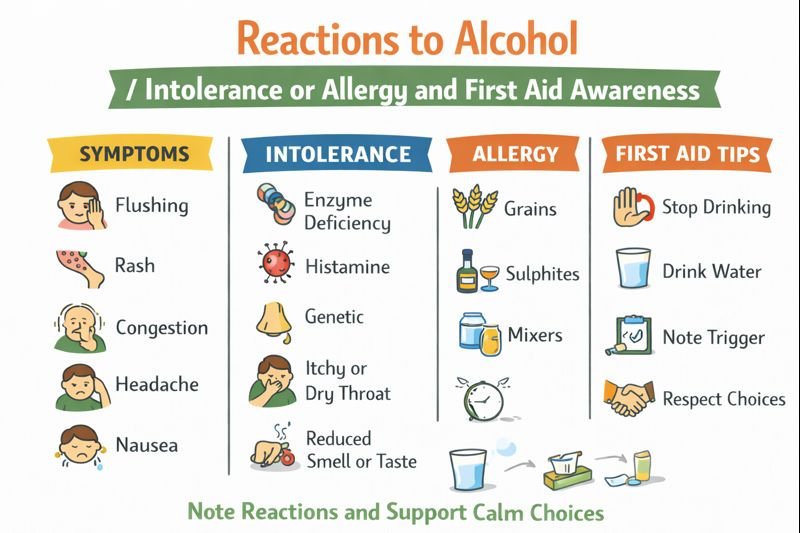 Reactions vary widely but may include:
-
Facial flushing or warmth
-
Skin redness or mild rash
-
Nasal congestion or runny nose
-
Nausea or stomach discomfort
-
Headache
-
Rapid heartbeat
-
Fatigue or dizziness
These symptoms can appear quickly or develop over a short period.
Alcohol Intolerance vs. Allergy
Alcohol Intolerance
Alcohol intolerance is related to how the body processes alcohol rather than the immune system. Some individuals lack sufficient enzymes needed to break down alcohol efficiently, which can lead to:
-
Flushing of the face or neck
-
Nasal stuffiness
-
Headache
-
Nausea
This response can be influenced by genetics and may occur even with small amounts of alcohol.
Alcohol or Ingredient Allergy
An allergy involves the immune system reacting to specific substances within a beverage. Potential triggers may include:
-
Grapes or hops
-
Sulphites used as preservatives
-
Flavourings, colourings, or mixers such as certain juices or tonic water
Allergic responses can affect the skin, breathing, or circulation and may vary in intensity.
First Aid Awareness and General Comfort Measures
For mild discomfort after alcohol exposure:
-
Stop drinking the beverage.
-
Drink water or non-alcoholic fluids.
-
Rest in a cool, well-ventilated space.
-
Note which drink or ingredient may have been involved.
If symptoms include difficulty breathing, significant swelling, or sudden weakness, professional assessment is generally recommended. First aid awareness focuses on early recognition and supportive comfort rather than treatment decisions.
Prevention and Workplace Considerations
-
Offer appealing non-alcoholic drink options at events.
-
Encourage respectful “no-thank-you” choices without pressure.
-
Be mindful of ingredient sensitivities in mixed beverages.
-
Promote hydration and balanced meals during social gatherings.
-
Include general allergy awareness in workplace first aid or wellness training.
Frequently Asked Questions
Is facial flushing always an allergy?
Not always. Flushing is often linked to alcohol intolerance rather than an immune reaction, but repeated or concerning symptoms deserve attention.
Can mixers cause reactions?
Yes. Juices, flavourings, or preservatives in mixed drinks may trigger sensitivity for some individuals.
Do reactions worsen over time?
They can. Repeated exposure to a trigger may increase discomfort or frequency of symptoms for some people.
Is it possible to react to one type of alcohol but not another?
Yes. Ingredient differences such as grains, sulphites, or additives can influence how someone responds.
How can workplaces help?
Providing non-alcoholic options and supporting informed personal choices helps create an inclusive environment.
Educational Note
This information is for general public education and first aid awareness. Individual responses to alcohol vary, and learning to recognize early signs of discomfort supports calm, everyday decision-making.
About The Author

Mark Kascha
Certified First Aid Instructor Trainer with 30+ years of real-world experience, including lifeguarding, workplace emergency response, and first aid program development across Canada. Has worked with WorkSafeBC, WSIB, and Manitoba Health.
👉 [View full credentials]🔗 View LinkedIn Profile
Last reviewed: March 2026