
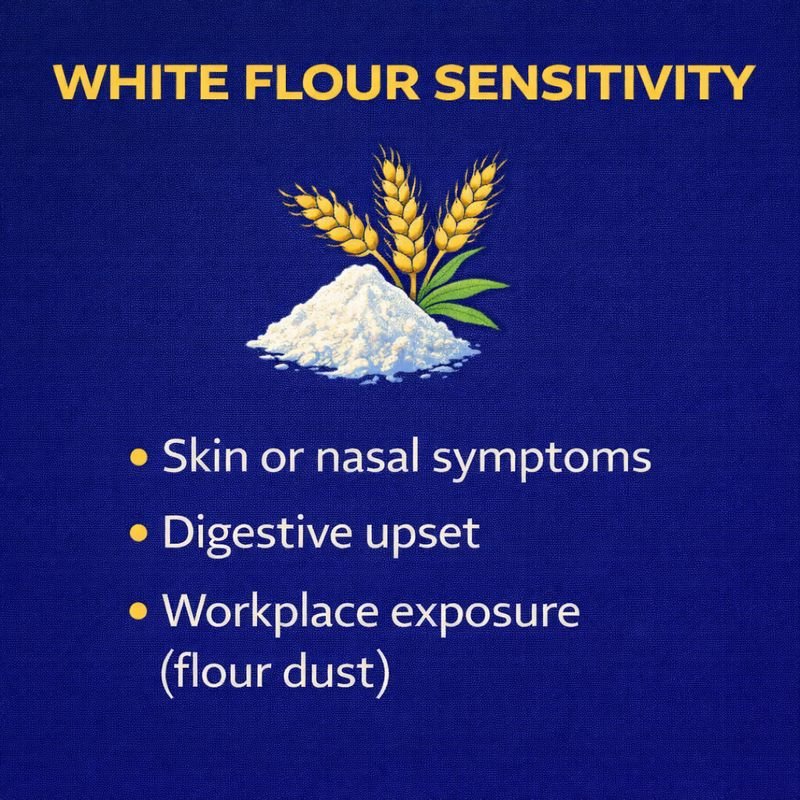
 Some individuals experience reactions after eating foods made with white flour. Reactions can range from mild to more noticeable and may involve the skin, digestion, or breathing. Although many people think of wheat, peanuts, or shellfish when they hear “food allergy,” sensitivities to refined products can also affect certain individuals.
Public & workplace relevance (Canada)
Food allergies and sensitivities matter in households, schools, restaurants, cafeterias, and workplace lunchrooms. Clear ingredient information and supportive communication help reduce uncertainty for individuals with food-related reactions.
Scenario story
At a team meeting, Ravi ate pastries made with white flour. Shortly afterward, he noticed itching around his mouth and a runny nose. The symptoms settled later in the day. Ravi began paying more attention to ingredient lists and spoke with his healthcare provider to better understand whether he was reacting to wheat, gluten, or another food component.
Possible symptoms of reactions to white flour
Reactions can vary depending on whether they are immune-based, sensitivity-based, or related to other digestive factors.
Skin & mouth symptoms
-
Itching (mouth, lips, or skin)
-
Red or patchy rash
-
Hives or swelling in more pronounced reactions
Nasal & breathing symptoms
-
Runny or itchy nose
-
Sneezing
-
Mild wheezing or tightness in the chest
-
Breathing difficulty in more serious reactions
Breathing-related symptoms should be assessed promptly as they may indicate a significant allergic response.
Digestive symptoms
-
Nausea or stomach discomfort
-
Bloating or gas
-
Loose stools or vomiting in some reactions
Because digestive symptoms overlap with many conditions, healthcare professionals can help determine whether the cause is allergy, intolerance, or another gastrointestinal issue.
Understanding “white flour” reactions
The term “white flour allergy” can refer to different underlying mechanisms:
-
Wheat allergy (immune-based)
-
Gluten-related conditions
-
Non-allergic food sensitivities
-
Irritation from airborne flour dust (common in baking or food-service workplaces)
Bakeries, food manufacturers, and restaurant kitchens may have airborne flour, which can irritate the nose or trigger respiratory symptoms in sensitized individuals.
Prevention & food awareness
Individuals who suspect a sensitivity may:
-
Read labels for wheat or flour content
-
Ask about ingredients in workplace cafeterias and restaurants
-
Notice how symptoms change with different foods (e.g., whole grain vs refined products)
-
Discuss patterns with a healthcare professional when reactions persist
FAQ
Is white flour allergy common?
It is less frequently discussed than peanut, wheat, or shellfish allergies, but individuals do report flour-related reactions.
Is white flour allergy the same as gluten sensitivity?
Not necessarily. Wheat allergy, celiac disease, and gluten sensitivity are distinct conditions.
Can flour trigger respiratory symptoms?
Yes. In some workplaces or bakeries, airborne flour can irritate airways or trigger allergy-related symptoms.
Can reactions appear only as digestive upset?
Yes. Some people notice stomach discomfort without skin or breathing symptoms.
Should someone avoid flour if symptoms occur?
Avoidance decisions vary. Healthcare professionals can help determine whether testing or further evaluation is appropriate.
Educational note
This content promotes food allergy and sensitivity awareness for public and workplace settings and does not replace clinical assessment, testing, or individualized dietary advice.
About The Author

Mark Kascha
Certified First Aid Instructor Trainer with 30+ years of real-world experience, including lifeguarding, workplace emergency response, and first aid program development across Canada. Has worked with WorkSafeBC, WSIB, and Manitoba Health.
👉 [View full credentials]🔗 View LinkedIn Profile
Last reviewed: March 2026