
A silent migraine, sometimes called an acephalgic migraine, is a type of migraine that occurs without the typical head pain. Instead, it causes other migraine-related symptoms such as visual disturbances, sensory changes, or speech difficulty. Because head pain is absent, silent migraines can be confusing and may be mistaken for other medical conditions.
Understanding common triggers—especially food-related ones—can help individuals recognize patterns and reduce future episodes.
First Aid & Workplace Relevance (Canada)
Silent migraines are relevant in Canadian workplaces because symptoms such as vision changes, difficulty speaking, dizziness, or sensory disturbances can interfere with communication, safety, and task performance. In some cases, symptoms may appear suddenly and cause concern among coworkers.
First aid awareness helps individuals recognize that not all migraines involve pain and supports calm, appropriate responses when neurological symptoms appear.
Scenario: Recognizing a Pain-Free Migraine Episode
An employee noticed shimmering visual patterns and temporary difficulty finding words during a morning meeting but did not have a headache. A coworker familiar with first aid awareness recognized the symptoms as possibly migraine-related rather than immediately assuming an emergency. The individual later identified food triggers that commonly preceded these episodes.
What Is a Silent Migraine?
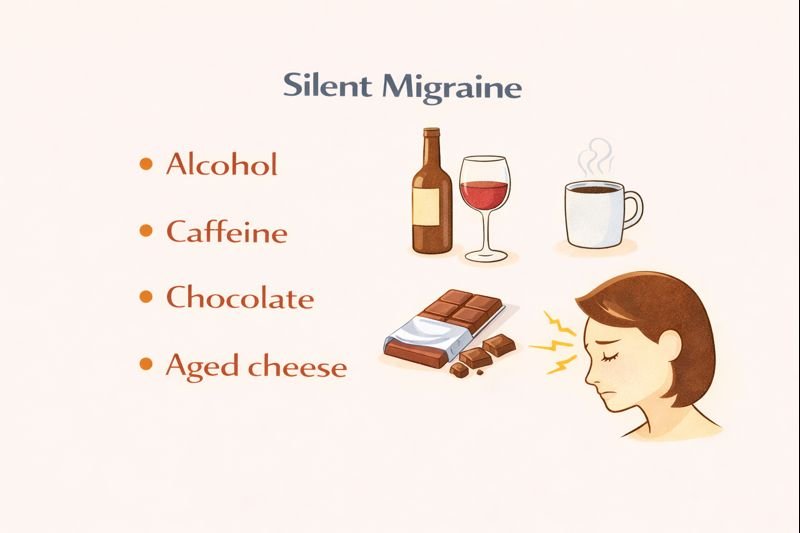 Silent migraines share many features with typical migraine headaches, except for head pain. Symptoms may include:
-
Visual aura (flashing lights, zigzag patterns, blind spots)
-
Temporary speech or language difficulty
-
Sensory changes such as tingling or numbness
-
Dizziness or balance issues
-
Sensitivity to light or sound
Because these symptoms overlap with other neurological conditions, medical assessment is important for accurate diagnosis.
Why Food Triggers Matter
Certain foods and beverages are known to trigger migraine activity in some individuals. Identifying personal triggers and reducing exposure may help lower the frequency of silent migraines.
First aid education emphasizes pattern recognition, not dietary prescriptions.
Alcohol and Caffeine Awareness
Alcohol
Alcohol—particularly red wine—is a commonly reported migraine trigger. Sensitivity varies widely:
-
Some individuals react to specific types of alcohol
-
Others may need to avoid alcohol altogether
Awareness of how the body responds after alcohol consumption can help identify patterns.
Caffeine
Caffeine affects people differently:
-
For some, caffeine may trigger silent migraines
-
For others, it may temporarily relieve symptoms
Sudden reduction after regular use may also cause withdrawal-related headaches. Gradual changes allow better observation of symptom patterns.
Chocolate Awareness
Chocolate contains multiple compounds that can influence the nervous system. Some individuals find it soothing, while others find it triggering.
If chocolate appears to precede silent migraine symptoms, avoiding it temporarily and observing symptom changes may be helpful for pattern recognition.
Legumes, Pickled Foods, and Certain Fruits
Some individuals report silent migraine symptoms after consuming:
-
Certain legumes (such as lima beans, fava beans, chickpeas, or pinto beans)
-
Pickled or fermented foods (including sauerkraut, kimchi, olives, pickles, raw garlic, and onions)
-
Specific fruits such as avocados, figs, papayas, prunes, and overripe bananas
Fermented and aged foods often contain naturally occurring compounds that may influence migraine activity.
Aged Cheese Awareness
Aged cheeses are frequently reported migraine triggers. They contain tyramine, a substance associated with migraine symptoms in some individuals.
Examples of aged cheeses often reported include:
-
Blue cheese
-
Brie
-
Cheddar
-
Parmesan
-
Gouda
-
Gruyère
Fresh cheeses are generally less problematic, but sensitivity varies.
Tracking Triggers and Symptoms
Keeping a simple food and symptom journal can help identify patterns over time. Writing down:
-
Foods eaten
-
Timing of symptoms
-
Type and duration of symptoms
can support informed discussions with healthcare providers and help reduce future episodes.
First Aid Awareness and General Management
From a first aid education perspective, managing silent migraines focuses on:
-
Recognizing non-pain migraine symptoms
-
Avoiding known triggers when possible
-
Understanding that silent migraines are real migraine events
-
Knowing when symptoms require medical evaluation
First aid training does not replace medical diagnosis but supports early recognition and appropriate response.
Frequently Asked Questions
Are silent migraines dangerous?
They are not usually dangerous but can mimic serious conditions, which is why assessment is important.
Can silent migraines happen without warning?
Yes. Symptoms may appear suddenly and resolve on their own.
Are food triggers the same for everyone?
No. Triggers vary widely between individuals.
Can silent migraines change over time?
Yes. Triggers and symptoms may evolve.
When should symptoms be checked by a doctor?
Any new, worsening, or unexplained neurological symptoms should be medically assessed.
Educational Note
This article is intended for general public education and first aid awareness. It does not provide medical diagnosis or treatment advice. First aid training focuses on recognizing migraine-related symptoms, identifying potential triggers, and understanding when professional medical assessment may be appropriate.
About The Author

Mark Kascha
Certified First Aid Instructor Trainer with 30+ years of real-world experience, including lifeguarding, workplace emergency response, and first aid program development across Canada. Has worked with WorkSafeBC, WSIB, and Manitoba Health.
👉 [View full credentials]🔗 View LinkedIn Profile
Last reviewed: March 2026