
 What is foot drop?
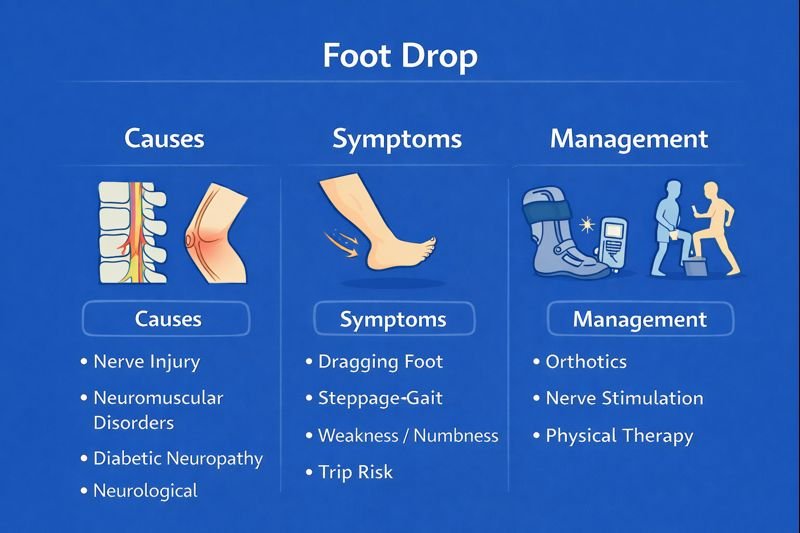
Foot drop refers to difficulty lifting the front part of the foot while walking. This can cause the toes to drag during gait and lead to changes in walking patterns. Foot drop results from weakness or impaired function of muscles below the knee, usually related to nerve, spinal, or muscular conditions.
Workplace & Canadian first aid relevance
Mobility changes can affect walking safety, balance, and participation in work or community activities. Awareness of symptoms and supporting devices can help individuals decide when to seek assessment and how to reduce trip hazards.
Scenario: Workplace mobility observation
A technician noticed that their right foot occasionally dragged while walking across the shop floor. A coworker pointed out an unusual gait pattern. The technician later consulted a healthcare professional, who assessed mobility and discussed supportive options.
Causes & contributing conditions (educational overview)
Foot drop is a symptom, not a condition on its own. It may be associated with:
-
Nerve compression or injury (e.g., lumbar spine conditions)
-
Neuromuscular disorders
-
Diabetic neuropathy
-
Muscular dystrophy (inherited muscle conditions)
-
Multiple sclerosis and other neurological disorders
-
Trauma to the leg or lower spine
The underlying cause influences prognosis and management options.
Symptoms & functional signs
Symptoms may include:
-
Dragging of the toes while walking
-
Higher-than-normal knee lift to clear the foot (“steppage gait”)
-
Difficulty with stairs or uneven ground
-
Occasional pain, numbness, or tingling depending on nerve involvement
-
Fatigue related to altered walking mechanics
Foot drop commonly affects one side, depending on the cause.
Assessment & diagnosis
Evaluation typically includes:
-
Physical examination of strength, sensation, and gait
-
Medical history and neurological review
-
Imaging (such as MRI) or electrical nerve testing when indicated
These assessments help determine if the cause is spinal, peripheral nerve-related, muscular, or neurological.
Supportive management & mobility options (non-prescriptive)
Management varies because the causes can differ significantly. Supportive approaches may include:
-
Physical therapy to maintain strength, joint mobility, and gait mechanics
-
Orthotic devices, such as lightweight braces or ankle-foot orthoses (AFO), to hold the foot in a neutral position during walking
-
Nerve stimulation devices, when clinically recommended, to assist muscle activation
-
Medical or neurological care, depending on underlying conditions
Some causes resolve over time (e.g., certain nerve injuries), while others require ongoing mobility support.
Workplace & safety considerations
Trip and fall risk can increase when the foot drags during gait. Helpful strategies may include:
-
Avoiding cluttered walkways
-
Using supportive footwear
-
Utilizing mobility aids or devices when recommended
-
Communicating with workplace health and safety teams if adjustments are needed
FAQ
Is foot drop permanent?
It depends on the cause. Some nerve injuries improve, while neurological or muscular disorders may be longer-lasting and require supportive devices.
Does foot drop always cause pain?
No. Some people experience numbness, tingling, or weakness without pain.
Can foot drop be treated?
Treatment focuses on the underlying cause and functional mobility. Physical therapy, braces, or nerve devices may assist mobility, depending on assessment.
Can foot drop affect only one foot?
Yes, it often does. Bilateral cases occur with specific neurological or muscular conditions.
Educational note
This post supports public and workplace mobility awareness. Foot drop is a symptom that may have multiple causes, and healthcare assessment helps determine individualized care and supportive options.
About The Author

Mark Kascha
Certified First Aid Instructor Trainer with 30+ years of real-world experience, including lifeguarding, workplace emergency response, and first aid program development across Canada. Has worked with WorkSafeBC, WSIB, and Manitoba Health.
👉 [View full credentials]🔗 View LinkedIn Profile
Last reviewed: March 2026