
Poison oak is a plant that produces urushiol, an oily resin found on its leaves, stems, and roots. When urushiol touches the skin, it can trigger an allergic contact dermatitis—an itchy, often blistering rash. Reactions can be uncomfortable but usually clear with time and basic care.
First Aid & Workplace Relevance
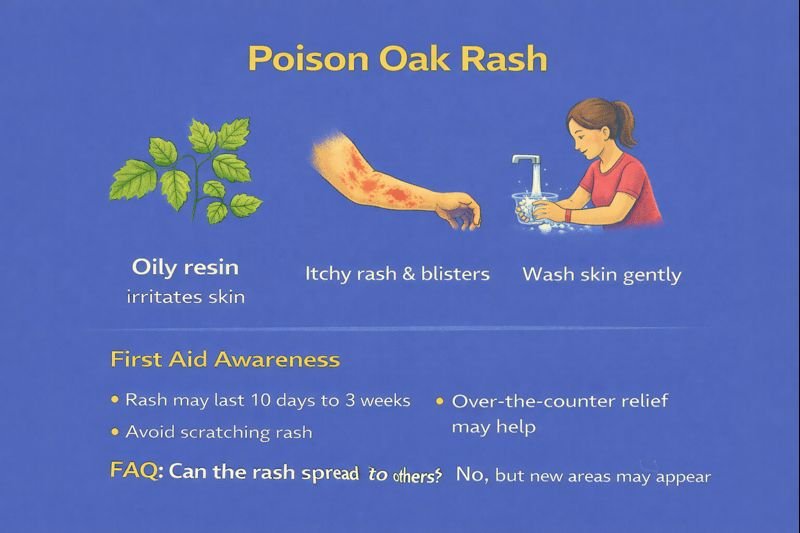 Canadians may encounter poison oak or similar plants (like poison ivy or poison sumac) while:
-
Hiking, camping, or trail running
-
Gardening or landscaping
-
Working in forestry, utilities, or outdoor maintenance
Poison Oak awareness helps workers, families, and outdoor groups reduce contact and respond calmly if a rash appears.
Scenario
During a youth outdoor program, a participant walked off the main trail to take photos and brushed against low shrubs. The next day, they noticed red, itchy streaks on their calf. A trained first aid rescuer asked about recent outdoor activities, suggested that it might be a plant-related rash, reminded them to avoid scratching, and helped them wash the area gently with lukewarm soapy water. The participant went home with information about monitoring the rash and when to speak with a healthcare professional.
Symptoms of Poison Oak Rash
Symptoms usually appear 30 minutes to 5 days after contact and can last 10 days to 3 weeks, depending on sensitivity and exposure.
Early / mild symptoms:
-
Itchy skin where the plant touched
-
Red streaks or overall redness
-
Small bumps, patches, or hives
-
Blisters filled with clear fluid that may ooze and then crust
More pronounced symptoms:
-
Large or widespread blisters
-
Significant swelling, especially around the face, eyelids, lips, or genitals
-
Rash that continues to spread or interferes with daily activities
The rash itself is a reaction to urushiol on the skin, not a “spread” of poison through the bloodstream, though new areas may appear over several days as delayed reactions develop.
Causes & Mechanism
-
Direct contact: skin touches the leaves, stems, or roots of poison oak.
-
Indirect contact: urushiol on clothing, tools, pet fur, or gear is transferred to the skin.
-
Smoke exposure: burning plants that contain urushiol can send irritant particles into the air (this is a more serious exposure requiring prompt medical assessment).
Urushiol binds quickly to skin proteins, which is why early washing after exposure is helpful.
First Aid / Management
If exposure to poison oak is suspected:
-
Limit spread of the resin
-
As soon as possible, gently wash exposed skin with lukewarm water and mild soap.
-
Wash under nails, and rinse thoroughly.
-
-
Remove and wash items
-
Carefully remove clothing that may have touched the plant.
-
Wash clothes, shoes, and gear to remove urushiol.
-
-
Ease itch and discomfort
People often use over-the-counter options (following package instructions or professional advice), such as:-
Anti-itch or low-strength corticosteroid creams
-
Oral antihistamines for itch and to support sleep
-
Calamine or similar soothing lotions
-
Cool showers or cool, damp compresses
-
Oatmeal or baking soda baths for generalized itch
-
-
Avoid scratching
-
Scratching can break the skin, increasing infection risk and slowing healing.
-
Keep nails short and clean.
-
-
Watch for signs that need medical care
-
Rash on the face, eyes, lips, or genitals
-
Extensive coverage (large areas of the body)
-
Pus, warmth, or strong odour from the skin
-
Fever, feeling unwell, or rash that doesn’t improve
-
Healthcare professionals may prescribe stronger medications or treat infections if they develop.
Prevention & Outdoor / Workplace Considerations
-
Learn to identify local poisonous plants (poison oak, poison ivy, poison sumac).
-
Wear long sleeves, long pants, and gloves when working in brush or wooded areas.
-
Stay on marked trails when hiking.
-
Wash pets that roam through tall grass or shrubs; urushiol can stick to fur.
-
In outdoor workplaces, include poisonous plant identification and prevention in safety training.
FAQ
1. Is the fluid in the blisters contagious?
The fluid in poison oak blisters does not contain urushiol. The rash is caused by the oil on the skin, clothing, or other surfaces. Once everything is washed, you cannot “spread” the poison by touching the blisters, although scratching can irritate the skin and make the rash look worse.
2. How long does a poison oak rash last?
Many rashes improve within 10–21 days, though small areas can linger longer. Severe reactions may take more time and sometimes need medical support.
3. Can you react to poison oak without touching the plant directly?
Yes. Urushiol can travel on pet fur, clothing, garden tools, or firewood. Handling these items without washing them first can cause a rash.
4. Is poison oak dangerous to breathe in?
Smoke from burning poison oak or similar plants can irritate the eyes, skin, and lungs. This is considered more serious than simple skin contact and should be assessed by a medical professional.
5. How can workplaces reduce risk?
Outdoor workplaces can map areas where these plants grow, provide protective clothing, and include plant-safety information in orientation and regular safety talks.
Educational Note
This article supports public and workplace awareness of poison oak reactions and first aid measures. It is not a substitute for professional medical assessment, diagnosis, or treatment. Individuals with severe or persistent symptoms should seek care from a qualified health professional.
About The Author

Mark Kascha
Certified First Aid Instructor Trainer with 30+ years of real-world experience, including lifeguarding, workplace emergency response, and first aid program development across Canada. Has worked with WorkSafeBC, WSIB, and Manitoba Health.
👉 [View full credentials]🔗 View LinkedIn Profile
Last reviewed: March 2026