 Whether travelling across Canada or abroad, first aid awareness helps families respond to minor injuries and health concerns away from home. Travel adds variables such as climate, food changes, outdoor activities, limited supplies, and unfamiliar medical systems. A travel first aid kit helps you stay prepared and enjoy your trip with confidence.
Why it matters in Canada & workplaces
Canadian travellers often explore remote parks, camps, cities, and international destinations. Work-related travel—such as field research, construction, sport coaching, or cultural exchange—may place employees in varied environments where early first aid skills are useful.
Scenario
On a family camping trip, a child scraped their knee while hiking. A small travel kit supplied wipes and bandages, and the child returned to play without interrupting the trip.
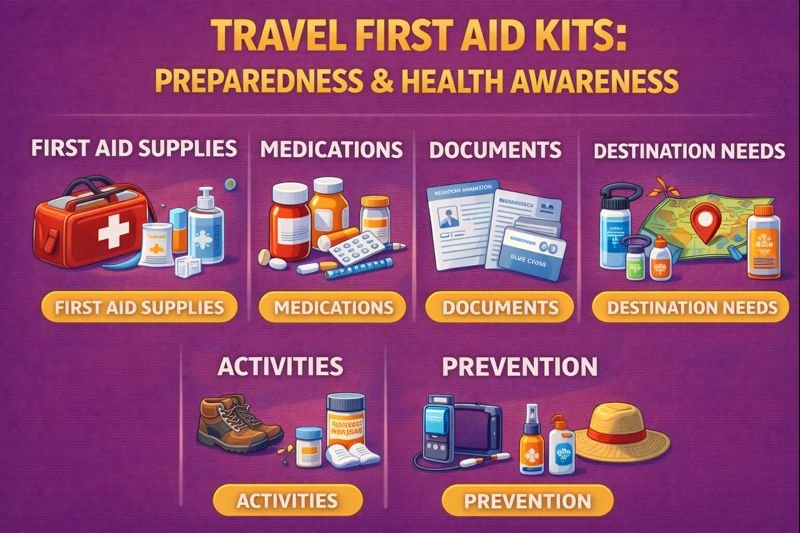
What to include in a travel first aid kit
Kits can be customized based on:
-
Participants (children, adults, or special health needs)
-
Destination (urban, remote, wilderness, international)
-
Length of stay (short weekend vs. multi-week travel)
-
Activities planned (hiking, boating, camping, sports)
Common travel kit contents may include:
-
Basic first aid items for small cuts, scrapes, and blisters
-
Adhesive bandages and gauze
-
Small scissors, tweezers, and tape
-
Alcohol-based hand sanitizer or wipes
-
Sunscreen and insect repellent
-
After-bite or mild skin soothing products
-
Motion sickness or allergy awareness items
-
Personal hygiene supplies
For backcountry or wilderness travel, some travellers also pack:
-
Compass or map
-
Signalling whistle
-
Water purification or filtration options
-
Outdoor-specific first aid references
Medications & health documentation
For travellers who use prescription medications or chronic health supplies:
-
Pack enough for the full trip plus spare for unexpected delays
-
Keep medications in original labelled containers
-
Carry essential medications with you—not in checked baggage
Travellers with serious allergies, asthma, diabetes, or other medical conditions may discuss travel needs with a health professional. Auto-injectors (e.g., for allergic reactions) or daily-use medications should travel in carry-on bags for accessibility.
Some individuals use medical identification bracelets or cards to help responders understand key health needs during emergencies.
Vaccination & destination health awareness
Depending on destination and planned activities, health professionals may advise routine or travel-specific vaccines. This is common for international trips or remote wilderness travel. Checking early allows time for any required planning before departure.
First aid considerations during travel
-
Sun safety and hydration during heat exposure
-
Managing blisters and minor cuts during hiking
-
Planning for motion-sensitive travellers during boating or driving
-
Managing insect exposure in outdoor settings
-
Food and water safety when travelling internationally
Prevention & organisational tips
-
Store travel kits in waterproof or zippered cases
-
Restock seasonally or after trips
-
Check expiry dates for sunscreen, insect repellents, and medications
-
Add items for children, older adults, or pets if applicable
FAQ
Why travel with a first aid kit?
Minor injuries or discomforts can happen anywhere. Kits reduce stress and limit disruptions during trips.
Do all destinations require the same supplies?
No. Outdoor camping, international travel, and urban tourism each have different needs.
Is a travel kit the same as a home kit?
They overlap, but travel kits often include motion sickness items, insect repellent, and documents.
Should travellers bring medication?
Travellers using daily medications should plan for the full trip and possible delays. Health professionals can help with questions.
What documents are helpful to carry?
Some travellers carry a brief health summary (conditions, medications, allergies, emergency contacts, and insurance details) to support care in unfamiliar settings.
Educational note
This information supports first aid and travel safety awareness. Individual health needs vary; health professionals can advise on travel-specific medical questions.
About The Author

Mark Kascha
Certified First Aid Instructor Trainer with 30+ years of real-world experience, including lifeguarding, workplace emergency response, and first aid program development across Canada. Has worked with WorkSafeBC, WSIB, and Manitoba Health.
👉 [View full credentials]🔗 View LinkedIn Profile
Last reviewed: March 2026