
What Is an Eye Cream Allergic Reaction?
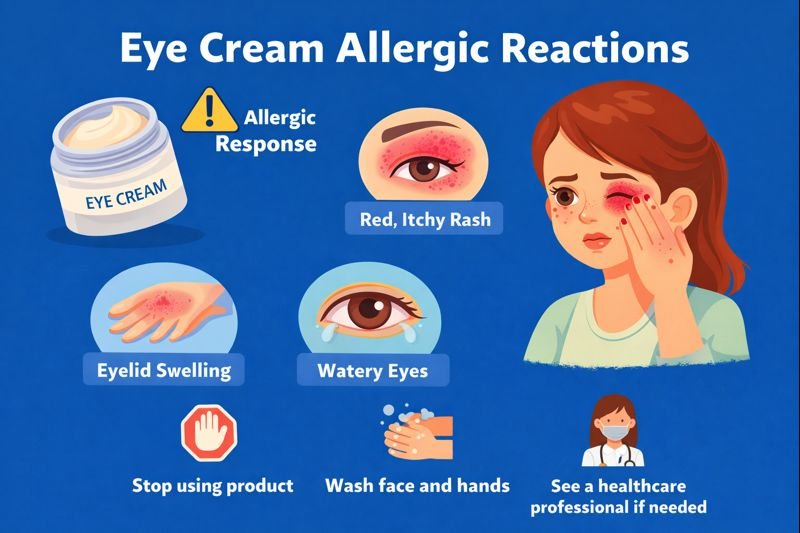 Some eye creams and cosmetic products contain fragrances, preservatives, and other chemical compounds that give them their scent, colour, or texture. In sensitive individuals, these ingredients can trigger contact dermatitis, a type of skin irritation or allergic response that affects the outer layers of the skin. Reactions can vary from mild redness to swelling or itching, especially around the delicate skin of the eyelids.
Recognizing early signs of allergic reactions allows the product to be removed quickly and helps prevent symptoms from worsening.
Why This Matters in Canadian First Aid and Workplace Settings
In Canada, eye irritation and cosmetic reactions can occur in offices, retail settings, childcare environments, salons, and shared washrooms where personal-care products are commonly used. First aid awareness is not about diagnosing allergies—it focuses on recognizing irritation, removing potential triggers, and maintaining comfort while encouraging appropriate follow-up if symptoms persist.
A Simple, Realistic Scenario
During a workday, an employee applies a new eye cream during a break. Within an hour, their eyelids feel itchy and slightly swollen. A coworker with basic first aid awareness suggests gently washing the area with mild soap and water and avoiding further use of the product. The employee reports the incident to a supervisor and monitors the irritation for improvement.
Common Symptoms of an Eye Cream Reaction
Symptoms often appear where the product was applied or where it was accidentally transferred by touch:
-
Redness or rash on the eyelids or around the eyes
-
Itching or burning sensation
-
Swelling or puffiness of the eyelids
-
Dry, flaky, or irritated skin
-
Rash or irritation on fingers used for application
-
Watery, red, or itchy eyes if the product contacts the eye surface
These symptoms may develop quickly or gradually depending on skin sensitivity and product ingredients.
Causes and Mechanisms
Eye cream reactions usually occur due to fragrances, preservatives, dyes, or strong active ingredients. The skin around the eyes is thinner and more sensitive than other areas of the face, which increases the likelihood of irritation. Some reactions are allergic (immune-related), while others are irritant responses caused by harsh substances rather than true allergies.
First Aid Awareness and General Management
From a first aid and workplace awareness perspective, the goal is to remove the trigger and support skin comfort:
-
Stop using the suspected product immediately
-
Gently wash the face and hands with mild soap and lukewarm water
-
Avoid rubbing or scratching the affected area
-
Keep the skin clean and dry
-
Monitor for improvement over the next day or two
Persistent or worsening reactions may require professional assessment. First aid awareness focuses on early recognition and safe removal of irritants rather than treatment.
Prevention and Workplace Considerations
Preventive steps can reduce the likelihood of reactions:
-
Choose fragrance-free or “sensitive skin” labelled products when possible
-
Test new cosmetics on a small area of skin away from the eyes before regular use
-
Avoid sharing personal cosmetic products in workplaces or communal areas
-
Read ingredient labels carefully if you have known sensitivities
-
Maintain clean shared washroom or locker-room spaces
These practices are especially helpful in Canadian workplaces with shared facilities or customer-facing roles.
Frequently Asked Questions About Eye Cream Reactions
Can eye cream cause a rash even if it worked before?
Yes. Skin sensitivity can change over time, and repeated exposure to certain ingredients may eventually trigger irritation.
Why does the rash sometimes appear on the fingers too?
The same product applied around the eyes can also irritate the skin on the fingers used during application.
Is watery or red eye involvement possible?
Yes. If the cream contacts the surface of the eye, irritation similar to allergic conjunctivitis can occur.
How can reactions be prevented when trying a new product?
Testing a small amount on another area of skin first can help identify sensitivity before applying near the eyes.
When should irritation be checked by a professional?
If redness, swelling, or discomfort continues or worsens despite removing the product, further assessment is recommended.
Educational Note
This article is intended for general public and workplace education in Canada. It supports awareness of cosmetic-related skin irritation and basic first aid recognition but does not replace guidance from qualified healthcare professionals.
About The Author

Mark Kascha
Certified First Aid Instructor Trainer with 30+ years of real-world experience, including lifeguarding, workplace emergency response, and first aid program development across Canada. Has worked with WorkSafeBC, WSIB, and Manitoba Health.
Last reviewed: March 2026