 Workplaces benefit from having clear first aid arrangements so that employees can receive timely assistance for illness or injury on the job. Many incidents are minor, but rapid care and awareness can prevent worsening symptoms, support comfort, and improve workplace confidence and safety.
Relevance in Canadian Workplaces
In Canada, occupational health and safety programs often include elements such as first aid kits, emergency communication procedures, and access to trained individuals. Planning varies based on workplace size, activity level, and potential hazards.
Scenario (Mild & Realistic)
During a warehouse shift, an employee scraped their hand while moving boxes. A co-worker provided basic first aid supplies, documented the incident, and the worker returned to duty after a short break. The quick response kept a small injury from disrupting work.
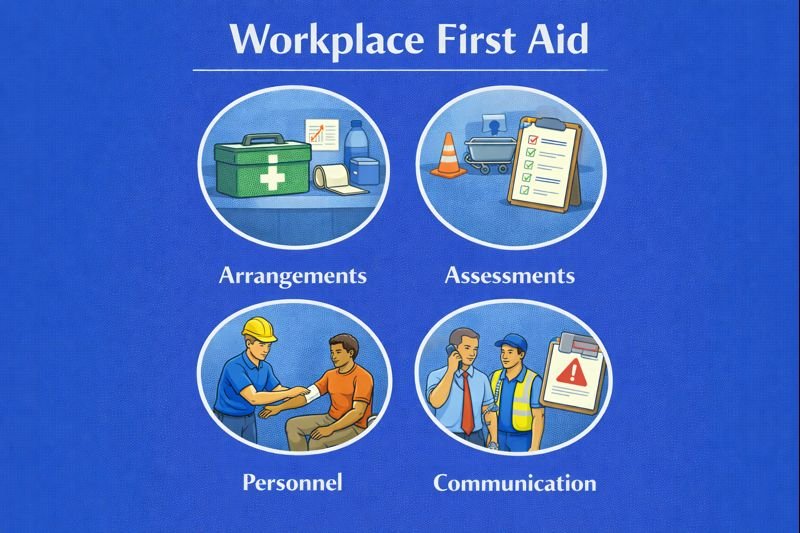
Workplace First Aid Arrangements (Awareness)
First aid arrangements help ensure that:
-
Employees know where to access supplies
-
Someone can initiate response during illness or injury
-
Communication with emergency services is clear
-
Workplaces are prepared for a range of minor and more serious situations
These arrangements may be part of larger safety programs that also address training, equipment, hazard awareness, and prevention.
Understanding Workplace Differences
First aid planning can vary depending on factors such as:
-
Workplace size
-
Number of employees
-
Distribution of workers across floors or sites
-
Hazards or equipment present
-
Workforce characteristics (shift work, public-facing roles, etc.)
-
Proximity to external emergency services
For example:
-
Low-risk office settings may require basic supplies and clearly identified helpers.
-
Higher-risk environments such as construction, forestry, manufacturing, or laboratories may incorporate more structured first aid resources and trained responders.
Assessment of First Aid Needs
Many organizations conduct a first aid needs assessment, which considers:
-
Types of tasks performed
-
Possible injury patterns
-
Workforce size and layout
-
Access to emergency services
-
Seasonal or temporary risks (e.g., heat, ice, crowds)
Results from this assessment inform decisions about:
-
First aid kits and equipment
-
Facilities (e.g., designated first aid rooms in larger workplaces)
-
Trained personnel
-
Information sharing for staff
First Aid Personnel & Training Awareness
Some workplaces choose to have individuals who receive formal training in:
-
First aid
-
CPR
-
AED awareness
Training increases responder confidence and supports coordinated action during incidents. Large worksites, public venues, and environments with crowds often benefit from having identifiable trained responders.
Communication & Employee Awareness
Effective workplace first aid plans typically ensure that employees know:
-
Where first aid kits are located
-
Who to contact for assistance
-
How to alert supervisors or emergency services
-
What information needs to be shared after an incident
This communication allows even minor incidents to be handled smoothly.
Workplace Culture & Safety
First aid planning often reinforces a broader safety culture that includes:
-
Hazard identification
-
Prevention strategies
-
Injury reporting
-
Wellness initiatives
Organizations may pair first aid planning with training opportunities that empower employees to assist others confidently.
FAQ
Is first aid only for hazardous workplaces?
No. First aid awareness is useful in all workplaces, though needs vary by environment.
Who provides first aid in a workplace?
Organizations may designate employees or use trained personnel depending on their safety planning.
Why train staff in CPR or AED use?
Training increases familiarity and confidence, helping responders act calmly during emergencies.
Does first aid replace professional medical care?
No. First aid focuses on initial response while professional care addresses diagnosis and treatment.
Educational Note
This article supports public and workplace education about first aid preparedness. Workplaces differ in hazards, staffing, and layout, so arrangements may vary accordingly. Trained health and safety professionals can assist organizations in building effective safety practices.
About The Author

Mark Kascha
Certified First Aid Instructor Trainer with 30+ years of real-world experience, including lifeguarding, workplace emergency response, and first aid program development across Canada. Has worked with WorkSafeBC, WSIB, and Manitoba Health.
👉 [View full credentials]🔗 View LinkedIn Profile
Last reviewed: March 2026