 Hives are raised, itchy patches or welts on the skin caused by fluid shifting into the upper layers of skin. They can appear suddenly, vary in size, resemble mosquito bites, and move or fade within hours. While often mild and temporary, hives can cause significant discomfort, especially if itch or swelling is pronounced.
Identifying possible triggers helps many Canadians prevent future flare-ups.
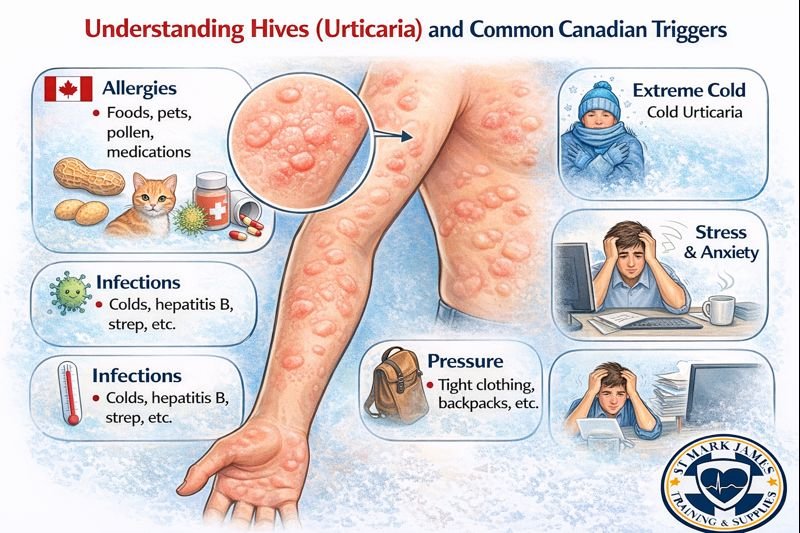
Allergic Triggers
Allergies are one of the most common causes of hives. During an allergic response, the immune system releases histamine and other chemicals that can cause swelling and redness.
Possible allergens include:
-
Foods (e.g., nuts, eggs, shellfish)
-
Medications
-
Pollen
-
Pet dander
-
Dust or mould
Mild allergies may be managed with over-the-counter antihistamines, but more serious symptoms require medical attention. Severe allergic reactions can involve breathing difficulty, swelling of the lips or face, vomiting, or feeling faint — situations in which emergency care and knowledge of CPR and AED response can be life-saving in workplaces, schools, or public settings.
Cold Exposure (Cold Urticaria)
Some individuals develop hives after exposure to cold environments, cold water, or cold air. This is known as cold urticaria, and symptoms may appear immediately or within 24–48 hours.
Although it can affect people of any age, young adults are more frequently affected. Healthcare providers may perform a cold-stimulation test to confirm.
Infections
Certain viral and bacterial infections may trigger temporary hives, especially in children. Examples include:
-
Common cold viruses
-
Hepatitis B
-
Streptococcal infections
-
Herpes viruses
Breakouts can occur as the body begins to recover and may last up to two weeks before resolving.
Pressure and Skin Sensitivity
Pressure on the skin from tight clothing, backpacks, jewelry, or sports equipment can trigger hives in some people. A related condition called dermatographia causes the skin to welt from light scratching or pressure. Although typically harmless, it can be frustrating or uncomfortable.
Stress and Anxiety
While stress does not directly cause histamine release, it can weaken immune responses, making hives more likely among people who do not normally experience them. Flare-ups may happen during exams, busy work seasons, or high-stress periods — something workplaces and safety educators increasingly take into account when supporting employee health and well-being.
Workplaces, Training, and Preparedness
Although hives are not usually a workplace emergency, understanding allergic reactions is relevant in Canadian food service, childcare, education, and industrial settings. This connects naturally to:
-
Food safety training (allergen awareness)
-
CPR & AED certification
-
Mask fit testing and PPE programs (for skin-sensitive workers)
Organizations that prepare for allergies and emergencies create safer environments for staff, customers, and the public.
Disclaimer
This post is for public education only and should not replace medical advice or diagnosis. Canadians with severe, persistent, or recurrent hives should seek guidance from a qualified healthcare professional.
About The Author

Mark Kascha
Certified First Aid Instructor Trainer with 30+ years of real-world experience, including lifeguarding, workplace emergency response, and first aid program development across Canada. Has worked with WorkSafeBC, WSIB, and Manitoba Health.
👉 [View full credentials]🔗 View LinkedIn Profile
Last reviewed: March 2026