Understanding Ragweed Allergy
Ragweed allergy is a common form of seasonal allergic rhinitis, often called “hay fever.” It occurs when the immune system reacts strongly to ragweed pollen in the air. In Canada, ragweed season usually peaks from late summer into fall, often between August and November depending on the region and weather patterns. While symptoms are usually not dangerous, they can be uncomfortable and distracting, especially in workplaces and schools.
First Aid & Workplace Relevance in Canada
Seasonal allergies can affect concentration, productivity, and overall comfort at work. Canadian workplaces often encourage general health awareness so employees can recognize symptoms early, take short breaks if needed, and reduce exposure. Simple actions — such as closing windows during high-pollen days or washing hands after outdoor tasks — can help minimize irritation and support a comfortable shared environment.
A Short Realistic Scenario
An employee who works near an open warehouse door begins sneezing frequently and develops itchy, watery eyes during early autumn. A coworker familiar with basic first aid awareness suggests stepping indoors for a short break and washing hands and face to remove pollen. After a few minutes away from the draft and some water, the employee feels more comfortable and continues the shift with fewer symptoms.
Common Eye Symptoms
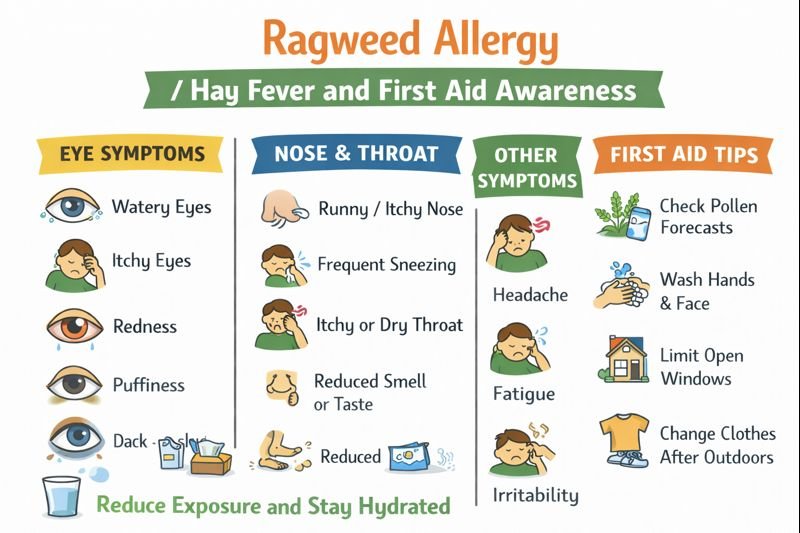
Ragweed pollen often irritates the eyes first. Symptoms may include:
-
Watery or teary eyes
-
Itchiness around the eyes
-
Red or bloodshot appearance
-
Puffiness or dark circles after prolonged exposure
-
Mild light sensitivity
Mouth and Throat Symptoms
Airborne pollen can also affect the mouth and throat:
-
Itchy or dry throat
-
Frequent sneezing
-
Runny or itchy nose
-
Reduced sense of smell or taste
-
Occasional coughing
Nasal and Sinus Symptoms
The nose and sinuses are commonly affected:
-
Nasal congestion or stuffiness
-
Sinus pressure or facial discomfort
-
Continued sneezing
-
Ear fullness or clogged sensation
Individuals with existing respiratory sensitivities, such as asthma, may notice increased irritation during high-pollen periods.
Other Possible Symptoms
Some people experience broader effects, including:
-
Headache
-
Fatigue or low energy
-
Irritability
-
Mild difficulty concentrating
Symptom intensity can change with weather conditions, pollen counts, and time spent outdoors.
First Aid Awareness and General Comfort Measures
For mild seasonal allergy discomfort:
-
Wash hands and face after outdoor exposure.
-
Change clothing if heavily exposed to pollen.
-
Drink water to stay hydrated.
-
Keep indoor air clean by closing windows on high-pollen days.
-
Use clean tissues and avoid rubbing the eyes.
These steps focus on everyday comfort and awareness rather than treatment decisions.
Prevention and Workplace Considerations
-
Monitor local pollen forecasts when planning outdoor tasks.
-
Keep doors and windows closed during peak pollen hours when possible.
-
Encourage regular handwashing and surface cleaning.
-
Provide flexible short breaks for fresh air indoors.
-
Support wellness education that includes seasonal allergy awareness.
-
Consider indoor air filtration in shared environments.
Frequently Asked Questions
When is ragweed season in Canada?
It often peaks from late summer into fall, though timing varies by region and weather conditions.
Why do symptoms feel worse outdoors?
Direct exposure to airborne pollen increases irritation, especially on windy or dry days.
Can allergies affect concentration?
Yes. Ongoing sneezing, itchiness, or fatigue can make it harder to focus on tasks.
Do symptoms change from year to year?
They can. Weather patterns, pollen levels, and personal sensitivity may vary each season.
How can workplaces help?
Clean indoor air, flexible short breaks, and general awareness of seasonal triggers can support comfort for everyone.
Educational Note
This information is for general public education and first aid awareness. Seasonal allergies vary by individual, and learning simple comfort and hygiene measures can help people respond calmly during high-pollen periods.
About The Author

Mark Kascha
Certified First Aid Instructor Trainer with 30+ years of real-world experience, including lifeguarding, workplace emergency response, and first aid program development across Canada. Has worked with WorkSafeBC, WSIB, and Manitoba Health.
Last reviewed: March 2026