
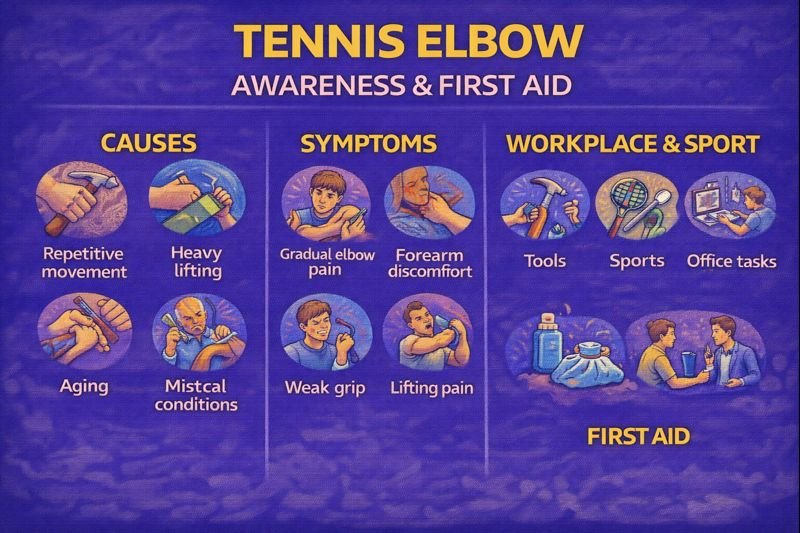
 Tennis elbow (lateral epicondylitis) is a painful irritation of the tendons that attach to the outside of the elbow. It most often develops from repetitive hand, wrist, and forearm movements—not just tennis.
Why It Matters for First Aid & Workplaces
Tennis elbow is common among workers who use hand tools, athletes, and people who spend long hours typing or lifting. Mild cases can interfere with work tasks, driving, and household activities. Knowing early signs of tendinitis and basic first aid steps can help reduce discomfort and keep people active.
Scenario Example
During a busy spring weekend, Harjit spent several hours sanding wood for a backyard project. By Monday, he noticed a sharp tenderness on the outer side of his elbow when gripping his coffee mug. A coworker suggested he rest the arm and use cold packs. After a few days of lighter activity and better tool handling, the discomfort improved, and Harjit was able to continue working safely.
Common Symptoms
Symptoms typically develop gradually:
-
Pain or tenderness on the outer elbow
-
Discomfort that may radiate into the forearm or wrist
-
Difficulty gripping objects (weak grasp)
-
Pain when shaking hands, lifting, or rotating the wrist
-
Pain that worsens with repetitive motion
Causes & Risk Factors
Tennis elbow is usually linked to overuse of the forearm muscles. Common contributing activities include:
-
Racquet sports (e.g., tennis, squash)
-
Hand tools (e.g., screwdrivers, hammers, wrenches)
-
Repetitive mouse/keyboard work
-
Gardening and painting
-
Lifting objects with the elbow extended
Other factors can include:
-
Aging
-
Poor posture while working
-
Reduced grip strength
-
Repetitive workplace tasks
First Aid & Early Management (Non-Clinical)
For mild cases, first aid focuses on rest and reducing irritation:
-
Rest the arm from repetitive motion when possible
-
Cold packs may temporarily soothe discomfort
-
Gentle stretching after a period of rest may help mobility
-
Workplace adjustments (e.g., tool choice, task rotation, ergonomic setup)
If symptoms persist or worsen, a healthcare provider may suggest physiotherapy, braces/supports, or other management options.
Prevention Tips (Workplace & Daily Life)
-
Alternate repetitive tasks when possible
-
Use proper grip and tool positioning
-
Warm up before sports
-
Maintain general arm and shoulder strength
-
Adjust workstation ergonomics (especially for computer users)
-
Take scheduled breaks to reduce strain
FAQs
Is tennis elbow only caused by sports?
No. Many cases occur in workplaces involving tools, typing, lifting, or repetitive wrist motion.
Can tennis elbow go away on its own?
Mild cases often improve over time with reduced strain and rest. Persistent or worsening symptoms may require professional assessment.
Does it affect grip strength?
Yes, weakened grip is a common symptom due to discomfort and tendon irritation.
Can teenagers or young adults get it?
Yes—especially those involved in racquet sports, music, or repetitive hand activities, though it is more common in adults.
Is surgery common for tennis elbow?
Surgery is rarely required and typically only considered for long-standing cases that do not respond to other management strategies.
Educational Note
This information supports general first aid understanding and awareness. It is not a substitute for assessment, diagnosis, or treatment from a qualified health professional.
About The Author

Mark Kascha
Certified First Aid Instructor Trainer with 30+ years of real-world experience, including lifeguarding, workplace emergency response, and first aid program development across Canada. Has worked with WorkSafeBC, WSIB, and Manitoba Health.
Last reviewed: March 2026