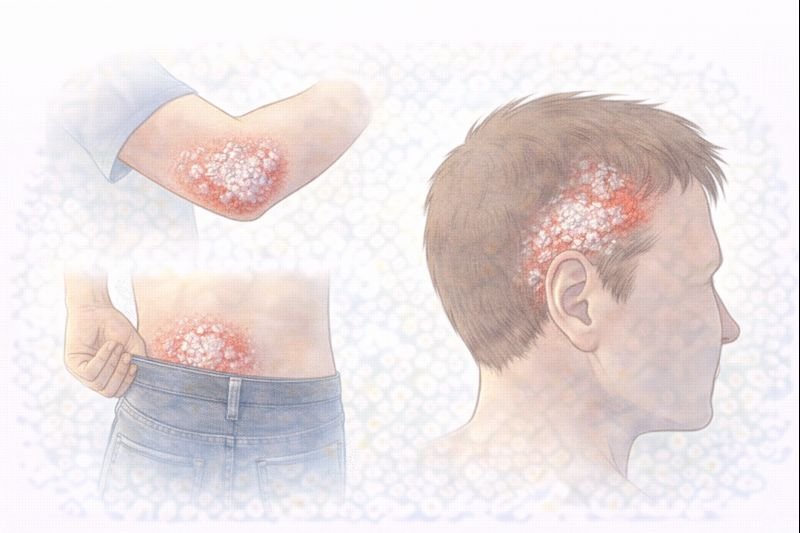
 Psoriasis is a long-lasting skin condition that causes areas of red, flaky skin covered with silvery scales. These patches most commonly appear on the knees, elbows, lower back and scalp, but they can develop elsewhere. For many people, the patches are mild, while others may experience itchiness, discomfort, or periods when symptoms significantly affect daily life.
Psoriasis can begin at any age but often appears in early adulthood. It affects men and women at similar rates and typically follows a cycle of flare-ups and calmer periods.
Why Psoriasis Develops
In psoriasis, skin cells are produced much faster than normal. Healthy skin renews approximately every three to four weeks, but in psoriasis the process may occur within three to seven days. This rapid turnover leads to buildup on the skin’s surface and the development of visible plaques.
The exact cause is not fully understood, but immune system activity and genetics are believed to play a role. The condition can run in families, though not everyone with a family history develops it. Psoriasis is not contagious and cannot be spread through contact.
Symptoms can also flare in response to triggers such as:
-
Skin injuries
-
Certain medications
-
Stress
-
Throat infections
-
Cold or dry weather
Triggers vary widely between individuals.
Diagnosis
Most cases are diagnosed based on the appearance of the skin and a clinical examination. In less common situations, a small skin sample may be examined to clarify the type of psoriasis or exclude other skin conditions. Dermatology referral may be recommended when symptoms are significant or when diagnosis is uncertain.
Treatment and Management
There is currently no cure, but many treatment options can help reduce symptoms and improve skin appearance. Management may include topical medications, phototherapy, or systemic therapies when symptoms are severe or persistent. Treatment choices depend on symptom severity, location on the body, overall health, and personal preferences.
Healthcare providers may also discuss lifestyle approaches such as moisturizing, stress reduction, or identifying personal triggers. Responses to treatment vary, and adjustments are common over time.
Living With Psoriasis
For many Canadians, psoriasis is a mild irritation. For others, it can influence body image, sleep, comfort and self-esteem. Some individuals also develop joint or connective tissue symptoms, sometimes referred to as psoriatic arthritis, which may require further medical assessment.
Supportive workplaces, social environments and awareness can help reduce stigma and improve quality of life for those managing visible skin conditions.
First Aid & Health Literacy Relevance
Psoriasis itself is not a first-aid emergency. However, learning to recognize when symptoms change, when infections require assessment, and how skin conditions may affect daily function contributes to broader health awareness. First aid and CPR/AED training through St. Mark James Training strengthens community health literacy and supports safe, informed responses to a range of health concerns across Canada.
Educational Disclaimer
This material is for general public education in a Canadian context. It is not intended for diagnosis or treatment guidance. Individuals with worsening, persistent or concerning symptoms should consult a licensed healthcare professional.
About The Author

Mark Kascha
Certified First Aid Instructor Trainer with 30+ years of real-world experience, including lifeguarding, workplace emergency response, and first aid program development across Canada. Has worked with WorkSafeBC, WSIB, and Manitoba Health.
👉 [View full credentials]🔗 View LinkedIn Profile
Last reviewed: March 2026