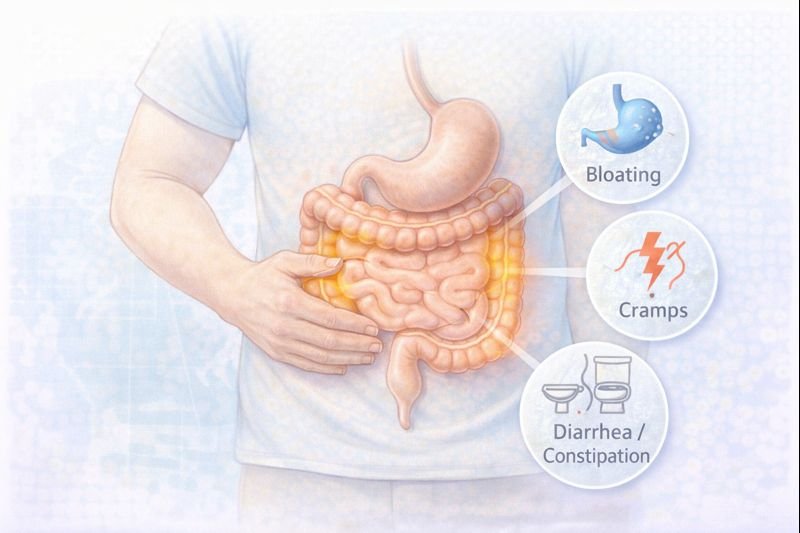
 Irritable bowel syndrome (IBS) is a long-term digestive condition that can cause episodes of abdominal cramping, bloating, diarrhea, constipation, or alternating patterns of both. Many Canadians experience symptoms at some point, with most cases developing in early adulthood.
IBS tends to flare and settle in cycles, often triggered by stress, certain foods, infections, or changes in routine. Although uncomfortable and disruptive, IBS does not damage the intestine and does not increase the risk of cancer.
Common Symptoms
IBS symptoms vary widely between individuals. During a flare, people may notice:
-
Abdominal cramping or discomfort
-
Bloating and excess gas
-
Constipation, diarrhea, or both
-
Symptoms that improve after a bowel movement
-
Changes in stool frequency or appearance
Stressful events or diet changes can worsen symptoms for many Canadians, including in work or school settings.
What Causes IBS?
The exact cause is still being studied, but contributing factors may include:
-
Increased gut sensitivity (heightened response to pain or intestinal movement)
-
Altered digestion speed (food moving too quickly → diarrhea; too slowly → constipation)
-
Gut-brain interaction involving stress and nervous system pathways
-
Post-infectious changes after foodborne illness or gastroenteritis
IBS can coexist with anxiety or stress-related conditions, which may make workplace demands or major life transitions more challenging.
Diagnosis & When to See a Doctor
IBS is typically diagnosed based on symptoms. A doctor may order blood work or stool tests to rule out other conditions such as celiac disease, inflammatory bowel disease, or infections.
It is important to seek care if symptoms:
-
Change suddenly
-
Continue for several months
-
Interfere with daily life
-
Occur with fever, bleeding, or unintended weight loss
Managing IBS
There is no single cure, but symptoms can be managed through lifestyle and dietary strategies such as:
-
Regular physical activity
-
Reducing stress and improving sleep
-
Adjusting fibre intake (increasing or decreasing depending on symptoms)
-
Identifying trigger foods (e.g., caffeine, fatty foods, artificial sweeteners, or lactose)
-
Considering structured diets such as low-FODMAP with professional guidance
In some cases, medications may be prescribed to manage diarrhea, constipation, pain, or bloating.
Living With IBS
IBS can be unpredictable and may impact mental well-being, social routines, and work performance. Individuals with persistent symptoms may benefit from psychological support or cognitive behavioural therapy, especially if anxiety or stress play a major role in flares.
Most people with IBS can live active, healthy lives with the right tools and supports. Importantly, IBS does not damage the digestive tract and is not linked to cancer.
Workplace & Training Relevance (Canada)
IBS doesn’t require emergency first aid, but it can affect workplace comfort, absenteeism, and stress levels. Canadian employers and workers benefit from education around:
-
Stress awareness and prevention
-
Healthy workplace habits
-
Understanding non-emergency health conditions
St. Mark James Training offers courses such as First Aid, CPR/AED, and Workplace Safety that build confidence in recognizing when a health concern is non-emergent versus when emergency help is needed — a valuable distinction in offices, job sites, and public settings.
Educational Disclaimer
This article is for general learning only and should not replace medical advice, diagnosis, or treatment. If symptoms persist or worsen, consult a qualified healthcare professional in Canada.
About The Author

Mark Kascha
Certified First Aid Instructor Trainer with 30+ years of real-world experience, including lifeguarding, workplace emergency response, and first aid program development across Canada. Has worked with WorkSafeBC, WSIB, and Manitoba Health.
👉 [View full credentials]🔗 View LinkedIn Profile
Last reviewed: March 2026