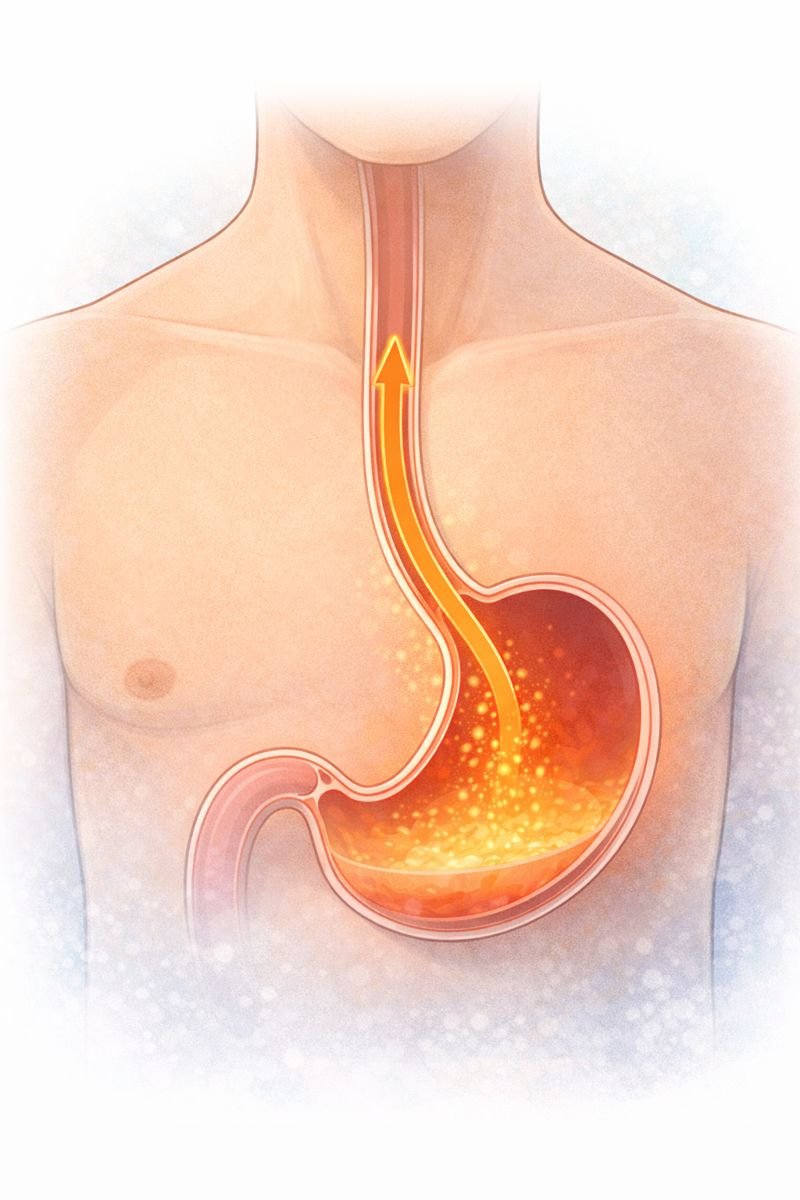
Heartburn happens when stomach acid moves upward into the esophagus, causing a burning sensation behind the breastbone that may extend to the throat or neck. Some people notice a sour or bitter taste in the mouth. Heartburn may last only a few minutes but can continue for hours and may feel worse after eating or lying down.
Occasional heartburn is common. However, frequent or severe episodes may indicate a condition such as gastroesophageal reflux disease (GERD), which requires medical assessment.
Common Symptoms of Heartburn
 Symptoms can include:
-
Burning discomfort behind the breastbone
-
Burning or irritation in the throat
-
Sour or acidic taste in the mouth
-
Discomfort after eating, bending over, or lying down
-
A sensation of food “sticking” in the throat or chest
-
Occasional swallowing difficulty
Why Heartburn Happens
Heartburn can be triggered or worsened by:
Eating patterns
-
Large meals
-
Eating close to bedtime
-
Eating quickly
Foods & beverages
-
Chocolate, peppermint, high-fat meals
-
Tomato products and spicy foods
-
Citrus juices, caffeine, and carbonated drinks
-
Alcohol
Lifestyle factors
-
Smoking
-
Stress
-
Tight clothing or belts
-
Overweight or pregnancy
Medical or structural factors
-
Hiatal hernia
-
GERD
-
Certain medications (e.g., aspirin or NSAIDs)
When to See a Healthcare Provider
Although heartburn is common, ongoing or severe symptoms should be assessed. Medical evaluation is recommended if:
-
Heartburn becomes frequent or persistent
-
Swallowing is painful or difficult
-
Symptoms disrupt daily activities or sleep
-
Vomiting or unexplained weight loss occurs
-
OTC medications do not improve symptoms after 2+ weeks
-
Hoarseness, wheezing, or chronic cough develop
Managing Heartburn
Supportive strategies may include:
-
Avoiding large meals before bedtime (allow 3–4 hours before lying down)
-
Eating smaller, more frequent meals
-
Wearing loose-fitting clothing
-
Eating slowly
-
Reducing trigger foods or beverages
-
Avoiding overeating
Over-the-counter antacids may offer temporary relief for mild episodes. Persistent symptoms should be reviewed by a healthcare provider.
Health & Safety Awareness in Canada
While heartburn itself is not a first-aid emergency, some symptoms — such as sudden chest pain — can resemble more serious cardiac concerns. First aid and CPR/AED training through St. Mark James Training helps Canadians recognize when chest discomfort may require urgent action, and when to activate emergency medical services.
Workplaces, athletic groups, and community organizations often integrate first aid learning into their safety culture to improve readiness and confidence during unexpected health events.
Educational Disclaimer
This article is intended for public education in a Canadian context. It is not a diagnostic tool or treatment guide. If symptoms worsen, become persistent, or resemble cardiac distress, seek medical care or call 9-1-1 in Canada.
About The Author

Mark Kascha
Certified First Aid Instructor Trainer with 30+ years of real-world experience, including lifeguarding, workplace emergency response, and first aid program development across Canada. Has worked with WorkSafeBC, WSIB, and Manitoba Health.
Last reviewed: March 2026