
What is a bone bruise?
A bone bruise is a term commonly used in medical imaging to describe microscopic damage inside a bone. While the word “bruise” often makes people think of skin discolouration, a bone bruise happens within the bone itself. It is usually identified on an MRI and is also known as bone marrow edema.
Unlike a full fracture, a bone bruise involves tiny internal stress injuries to the bone’s structure. These small areas of damage can cause bleeding and inflammation inside the bone, leading to pain, stiffness, and tenderness—similar to a soft-tissue bruise, but deeper and slower to settle.
Bone bruises were not well understood before MRI technology became widely available, which is why the term can still feel confusing today.
Why bone bruises matter in Canadian workplaces and daily life
Bone bruises can occur during falls, slips, sports activities, and workplace incidents—all common risks in Canadian environments such as construction sites, warehouses, offices, schools, and winter outdoor conditions.
While bone bruises are not usually emergencies, they can affect mobility, comfort, and return-to-work timelines. First aid awareness helps people recognize when an injury may need medical assessment rather than being dismissed as a minor bump.
Scenario: First aid awareness in action
During a winter team-building activity, an employee slipped on packed snow and landed hard on their knee. There was no obvious swelling or deformity, but the knee became sore and stiff over the next few days. A trained coworker encouraged them to rest the joint and report the injury rather than pushing through the discomfort. Medical imaging later showed a bone bruise, helping explain the lingering pain and supporting a gradual return to normal activity.
Common symptoms
Symptoms of a bone bruise can vary depending on location and cause, but often include:
-
Deep, aching pain that lasts longer than a typical bruise
-
Tenderness over the affected area
-
Swelling around a nearby joint
-
Stiffness or reduced range of motion
-
Pain that worsens with weight-bearing or movement
Because these symptoms can resemble ligament or cartilage injuries, imaging is often needed to clarify the cause.
Causes and mechanisms
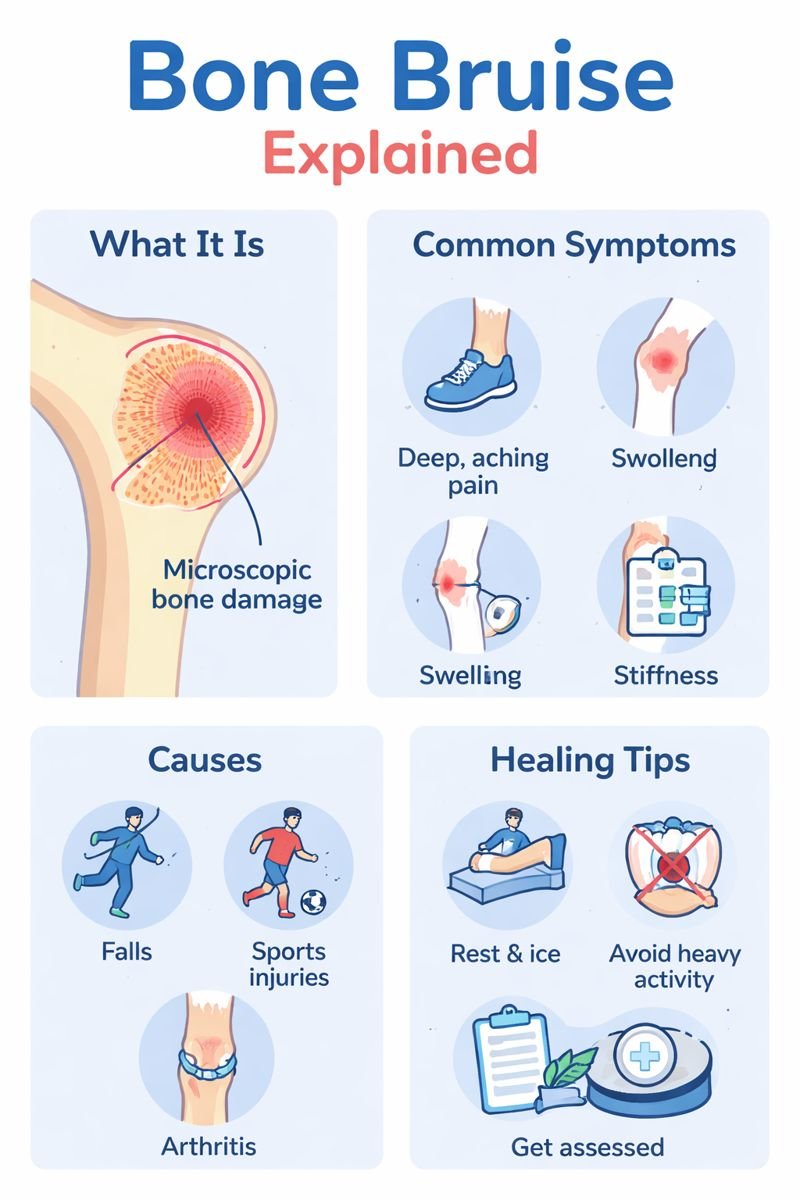 Bone bruises usually occur when bone tissue is exposed to sudden or repeated stress.
Common causes include:
-
Trauma: Falls, collisions, or direct blows can compress bone tissue.
-
Sports and overuse injuries: Repetitive impact or twisting motions may cause internal bone stress.
-
Ligament injuries: For example, knee ligament injuries can cause bones to shift suddenly, creating compression patterns that result in bone bruising.
-
Arthritis-related changes: Worn cartilage may expose underlying bone to higher stress.
-
Reduced bone blood supply: Conditions that affect bone strength may make it easier for microscopic damage to occur.
First aid awareness and general management
From a first aid and workplace awareness perspective, bone bruises highlight the importance of:
-
Allowing injured areas time to recover
-
Avoiding activities that increase pain or stress on the affected joint
-
Monitoring symptoms that persist or worsen after an injury
-
Seeking medical assessment when pain does not improve as expected
Bone bruises can take weeks to months to resolve, depending on severity and contributing factors. Pushing through pain too soon may increase stress on nearby joints and tissues.
Prevention and workplace considerations
While not all bone bruises are preventable, risk can be reduced by:
-
Maintaining clear walkways, especially during icy conditions
-
Using appropriate protective equipment for physical tasks
-
Encouraging early reporting of slips, falls, and joint injuries
-
Promoting gradual return to activity after injury
-
Supporting ergonomic and injury-prevention training in the workplace
Frequently Asked Questions
How is a bone bruise different from a fracture?
A fracture involves a clear break in the bone, while a bone bruise involves microscopic internal damage without a visible break.
Why do bone bruises take longer to heal than soft-tissue bruises?
Bones have a slower healing process than skin or muscle, so internal bone inflammation can last longer.
Can you walk or work with a bone bruise?
Some people can continue light activities, but pain levels and location matter. Ongoing discomfort should be assessed to avoid further stress.
Are bone bruises visible on X-rays?
Bone bruises usually do not appear on standard X-rays and are most often identified through MRI imaging.
Do bone bruises always cause swelling?
Not always. Some people experience deep pain without obvious swelling, especially early on.
Educational note
This article is intended for general first aid and workplace education. Bone injuries can vary widely, and persistent pain or functional changes should be assessed by a qualified healthcare professional.
About The Author

Mark Kascha
Certified First Aid Instructor Trainer with 30+ years of real-world experience, including lifeguarding, workplace emergency response, and first aid program development across Canada. Has worked with WorkSafeBC, WSIB, and Manitoba Health.
👉 [View full credentials]🔗 View LinkedIn Profile
Last reviewed: March 2026