
Breastfeeding provides nutrition, immune support, and bonding benefits for infants. In rare cases, babies may show sensitivity to proteins or other components passed through breast milk. These reactions can affect feeding comfort, digestion, or breathing.
First Aid & Workplace Relevance (Canada)
Infant feeding concerns often involve family caregivers, lactation consultants, and early childhood educators. Awareness around infant sensitivities helps families navigate feeding choices, discuss concerns with health professionals, and support infant growth and comfort.
Scenario (Mild & Realistic)
A new parent noticed that their baby became fussy and gassy after feedings. Over time, they kept notes about feeding patterns and shared observations during a routine health check.
Digestive or Gastrointestinal Changes
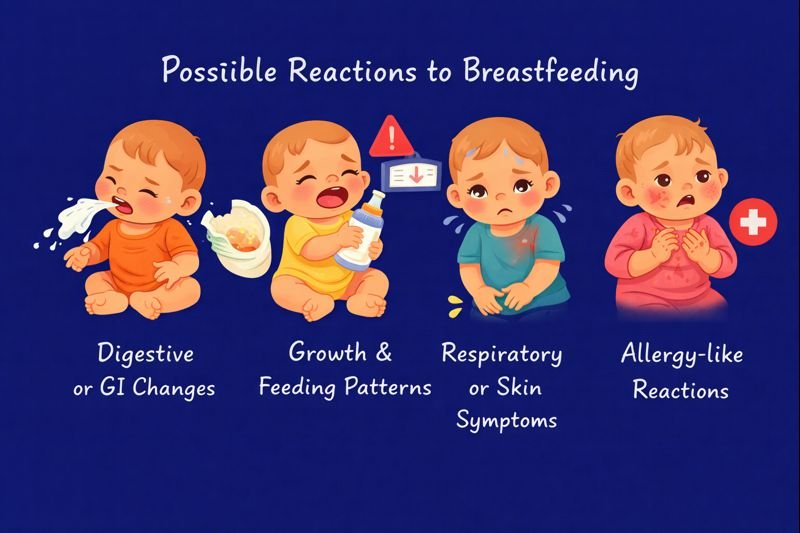 Infants with sensitivities may:
-
Spit up more than usual
-
Show increased gassiness or colic-like discomfort
-
Have loose stools
-
Occasionally show mucus in stool
Timing varies—spit-up may be immediate, while changes in stool or fussiness may take days to appear.
Growth & Feeding Patterns
Some infants may:
-
Seem less interested in feeding
-
Feed more frequently but take smaller amounts
-
Have slower weight gain over time
Growth is monitored during routine well-baby visits, where families can ask questions about feeding and development.
Respiratory or Skin Symptoms
Some sensitivities can appear as:
-
Nasal stuffiness
-
Coughing or watery eyes
-
Small patches of skin irritation or rash
These symptoms may relate to something the breastfeeding parent consumed, rather than the breast milk itself. Health professionals sometimes explore dietary patterns when discussing possible triggers.
Allergy-Like Reactions
Food allergies in infancy are uncommon but possible. Signs may include:
-
Irritability during feeding
-
Skin hives or redness
-
Digestive upset
-
Breathing discomfort
More serious reactions are rare but may involve sudden breathing changes or swelling. Families who observe these types of symptoms typically follow up with healthcare teams for assessment and guidance.
Possible Triggers
Reactions may relate to:
-
Dairy proteins
-
Soy
-
Nuts
-
Eggs
-
Wheat
-
Food sensitivities in the breastfeeding parent’s diet
Healthcare professionals sometimes use elimination diets or ingredient reviews to help identify patterns, but approaches are individualized.
FAQ (Educational)
Can infants be allergic to breast milk itself?
True allergy to breast milk is rare. Reactions are more often related to ingredients passed through milk from the breastfeeding parent’s diet.
Is fussiness always related to allergy?
No. Feeding, digestion, sleep patterns, and growth spurts can all affect infant behaviour.
Do symptoms always appear immediately after feeding?
Not always. Digestive changes can take hours or days to become noticeable.
Can sensitivities improve over time?
Yes. Many infants outgrow early sensitivities as their digestive and immune systems mature.
Educational Note
This article supports public health and first aid awareness around infant feeding. Feeding and growth concerns vary widely, and healthcare professionals can assist families in exploring possible sensitivities and feeding approaches.
About The Author

Mark Kascha
Certified First Aid Instructor Trainer with 30+ years of real-world experience, including lifeguarding, workplace emergency response, and first aid program development across Canada. Has worked with WorkSafeBC, WSIB, and Manitoba Health.
👉 [View full credentials]🔗 View LinkedIn Profile
Last reviewed: March 2026