 Most spider bites cause mild, localized skin irritation, including redness, soreness, and swelling around the bite area. In many cases, symptoms improve over several hours to days. Only a small number of spiders have medically significant venom, and serious reactions are uncommon in Canada.
Workplace and first aid relevance (Canada)
Outdoor workers, gardeners, warehouse staff, delivery personnel, and those handling stored materials may encounter spiders. First aid awareness helps workers recognize normal bite reactions, identify signs of potential infection, and know when professional assessment may be appropriate.
Scenario story
While moving boxes in a garage, Taylor felt a quick pinch on the forearm. Over the next hour, the area became red and tender. Taylor washed the skin with soap and water, applied a clean bandage, and monitored the area over the next day. The symptoms slowly subsided without complications.
Common symptoms from spider bites
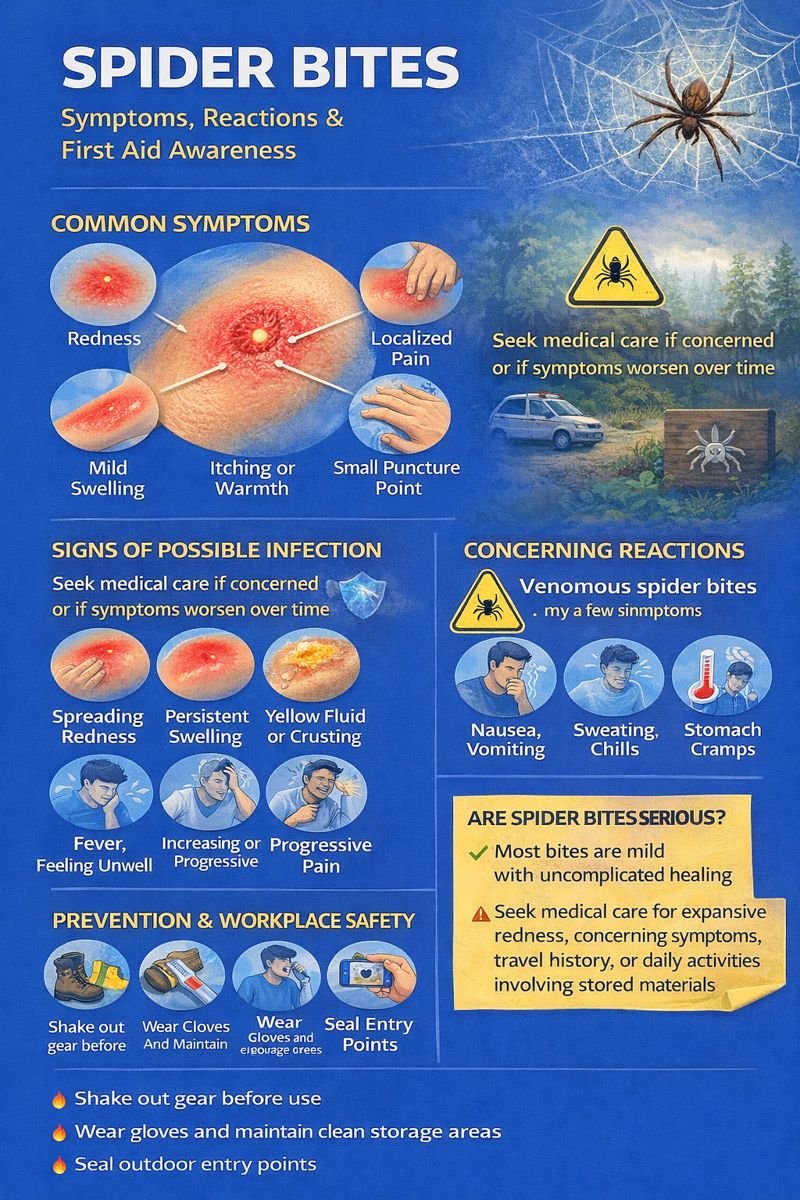
Spider bites often resemble other insect bites. Typical symptoms include:
-
Redness
-
Localized pain or irritation
-
Mild swelling
-
Itching or warmth
-
Small central puncture point
Most bites resolve without major concerns.
Signs of possible infection
Any skin break can become infected, including insect bites. Signs that may indicate infection include:
-
Increasing redness or spreading irritation
-
Warmth or persistent tenderness
-
Progressive swelling
-
Yellowish fluid or crusting
-
Fever or feeling unwell
Medical assessment may be appropriate if symptoms worsen or fail to improve over time.
Venomous spiders and concerning reactions
Only a few spider species worldwide cause medically significant venom effects. In Canada, serious reactions are rare. For bites that may involve venomous species (e.g., from travel or imported goods), symptoms may include:
-
Sweating or chills
-
Headache
-
Stomach discomfort or cramping
-
Fever or general illness
If someone experiences these symptoms after a suspected spider bite—especially in travel-related or occupational contexts—seek medical assessment promptly.
First aid awareness for spider bites
General first aid considerations include:
-
Washing the affected area with mild soap and water
-
Applying a clean dressing to protect irritated skin
-
Avoid scratching to reduce irritation and infection risk
-
Monitoring symptoms over time
Avoid applying home remedies or attempting to “identify the spider” through capture. Photos of the surroundings or the spider (if safely photographed and without handling) can be helpful for context without increasing risk.
Prevention and workplace considerations
-
Shake out gloves, boots, and stored items before use
-
Keep storage areas clean and free of clutter
-
Use gloves when working in gardens, warehouses, or sheds
-
Seal openings and gaps that allow insects or spiders to enter indoor spaces
Outdoor or travel-related exposures may vary based on location and species.
FAQ
Are spider bites dangerous?
Most are mild and resolve quickly. Serious reactions are uncommon but can occur with certain species or in special circumstances.
Can a spider bite become infected?
Yes. Like any skin break, infection can develop. Increasing redness, swelling, or fever may suggest infection.
Should I bring the spider for identification?
Handling spiders can increase risk of another bite. If safely possible, a photo is preferable to physical capture.
How do I know if the spider was venomous?
Many bites cannot be identified by appearance alone. Concerning symptoms, travel history, or occupational exposure may guide assessment.
Do spider bites always look like insect bites?
Most do. In some cases, the area may become more irritated than typical mosquito or fly bites.
Educational note
This article supports public first aid and workplace safety awareness and does not replace professional medical assessment for persistent or concerning symptoms.
About The Author

Mark Kascha
Certified First Aid Instructor Trainer with 30+ years of real-world experience, including lifeguarding, workplace emergency response, and first aid program development across Canada. Has worked with WorkSafeBC, WSIB, and Manitoba Health.
👉 [View full credentials]🔗 View LinkedIn Profile
Last reviewed: March 2026