
Modified Citrus Pectin Supplements: First Aid Awareness in Canada
What Is Pectin?
Pectin is a naturally occurring carbohydrate fibre found in many fruits and vegetables—especially in the pulp and peel of citrus fruits such as oranges and lemons. In everyday foods, pectin helps thicken jams and jellies.
Modified citrus pectin (MCP) is a processed form of this fibre that is sold as a dietary supplement. While many people tolerate it well, some individuals may notice side effects or sensitivities, just as with other supplements.
Why Supplement Awareness Matters in Canadian Homes and Workplaces
Supplements are widely available across Canada in pharmacies, grocery stores, and online shops. First aid awareness emphasizes reading labels, introducing new products cautiously, and recognizing early discomfort, rather than treating supplements as medicines. This approach helps reduce unexpected reactions in shared spaces such as offices, schools, and community events.
A Simple, Realistic Scenario
A staff member adds a new fibre supplement to their routine after seeing it online. After a day, they notice mild stomach upset. Remembering basic awareness practices, they pause the supplement, drink water, and review the ingredient list before deciding their next step.
Possible Sensitivities and Side Effects
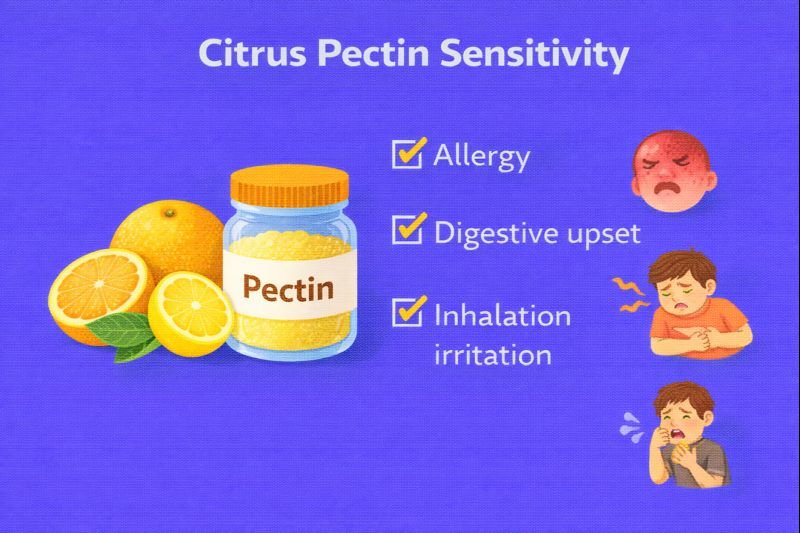
Allergic or Respiratory Sensitivity
-
Individuals who are sensitive to citrus fruits may notice itching, skin redness, or throat irritation.
-
Fine powders can irritate airways in some people if inhaled during mixing.
Digestive Discomfort
-
Because pectin is a fibre, higher amounts may lead to bloating, gas, loose stools, or abdominal cramping.
-
Effects can depend on dose, hydration, and personal tolerance.
Interactions and Label Awareness
Some fibres can affect how quickly the body absorbs other products taken at the same time. Reading instructions and spacing supplements thoughtfully can help avoid unwanted overlap. Labels may also list additional ingredients, flavours, or fillers that vary by brand.
Pregnancy, Infants, and General Caution
Public health guidance often encourages extra care with supplements during pregnancy or breastfeeding, as research on many products is limited. When in doubt, seeking professional guidance supports safer decision-making.
First Aid Awareness and General Safety Measures
 From a public-education perspective, the focus is on observation, moderation, and communication:
-
Introduce only one new supplement at a time
-
Follow package directions and avoid excess amounts
-
Drink adequate water when increasing dietary fibre
-
Stop use if unusual skin, breathing, or digestive symptoms appear
-
Keep product containers and ingredient lists accessible
-
Recognize urgent signs—such as breathing difficulty, rapid swelling, or faintness—and contact emergency services immediately
These steps support early recognition and calm response rather than diagnosis.
Prevention and Everyday Considerations in Canada
-
Store supplements separately from regular foods to prevent mix-ups
-
Use clear labelling in shared kitchens or lunch areas
-
Maintain balanced nutrition through whole foods first
-
Discuss supplement plans openly in households with known allergies
-
Practise general wellness habits—sleep, hydration, and regular meals
Frequently Asked Questions
Is pectin the same as medication?
No. It is a dietary fibre ingredient commonly used in foods and supplements.
Why can fibre cause stomach upset?
Large or sudden increases in fibre intake can temporarily change digestion.
Do all brands contain the same ingredients?
No. Formulations and added flavours or fillers can differ.
Should supplements be mixed with other products freely?
Reading labels and introducing items gradually can help reduce overlap concerns.
When is urgent help needed?
If there is difficulty breathing, throat tightness, rapid swelling, or faintness, emergency assistance is required immediately.
Educational Note
This article is intended for general public and workplace education in Canada. It promotes supplement awareness and first aid recognition but does not replace evaluation or care from qualified healthcare professionals.
About The Author

Mark Kascha
Certified First Aid Instructor Trainer with 30+ years of real-world experience, including lifeguarding, workplace emergency response, and first aid program development across Canada. Has worked with WorkSafeBC, WSIB, and Manitoba Health.
Last reviewed: March 2026