Can Potatoes Be Eaten Raw?
Potatoes are commonly enjoyed baked, boiled, or roasted in Canadian kitchens. While they can technically be eaten raw, many people avoid doing so because raw potatoes are hard to digest and may cause stomach discomfort. Cooking changes the texture and improves digestibility, making potatoes easier on the body.
Why Awareness Matters in Canadian Homes and Workplaces
Potatoes are a staple food at home, in school cafeterias, restaurants, and workplace events. First aid awareness focuses on safe food preparation, proper washing, and recognizing early digestive discomfort, rather than diagnosing illness. Clean handling and thorough cooking help reduce unnecessary stomach upset and food-borne risks.
A Simple, Realistic Scenario
At a community potluck, someone samples a raw potato slice while preparing a salad and later feels mild bloating. Remembering basic food-safety awareness, they drink water, avoid further raw potato, and choose cooked dishes instead.
Possible Effects of Eating Raw Potatoes
Gas and Bloating
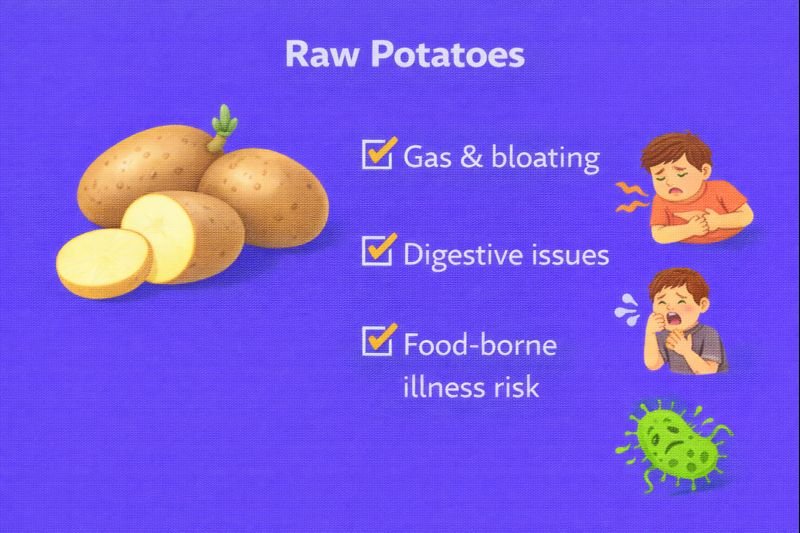 Raw potatoes contain resistant starch that can be difficult to break down. In some people this may lead to:
-
Mild cramping
-
Increased gas
These effects are usually uncomfortable rather than dangerous.
Indigestibility
Cooking helps soften starches and improves nutrient availability. Raw potatoes may provide less usable nutrition and can be harder on digestion, especially in larger amounts.
Food-Borne Illness Risk
Like many raw foods, unwashed potatoes can carry soil bacteria. Awareness steps include:
-
Washing thoroughly under running water
-
Peeling if needed
-
Using clean cutting boards and utensils
-
Refrigerating leftovers promptly
Natural Plant Compounds (Green or Sprouted Potatoes)
Potatoes belong to the nightshade family and naturally contain compounds that increase when potatoes turn green or sprout. These compounds can cause nausea, headache, or stomach upset if eaten in larger quantities. Discarding green or heavily sprouted potatoes is a practical food-safety habit.
First Aid Awareness and General Comfort Measures
From a public-education perspective, the emphasis is on hydration, rest, and hygiene if mild stomach discomfort occurs:
-
Sip water or clear fluids
-
Rest and avoid heavy meals temporarily
-
Wash hands and food-prep surfaces thoroughly
-
Monitor symptoms and seek further guidance if discomfort is persistent or worsening
First aid awareness supports comfort and cleanliness rather than medical treatment.
Prevention and Everyday Considerations in Canada
-
Choose cooked potatoes for easier digestion
-
Store potatoes in a cool, dark, dry place
-
Discard potatoes that are green, soft, or heavily sprouted
-
Practise proper kitchen hygiene and cross-contamination prevention
-
Label dishes at shared events when unusual ingredients are used
Frequently Asked Questions
Are raw potatoes poisonous?
Small tastes are usually not harmful, but larger amounts—especially green or sprouted potatoes—can cause stomach upset.
Why do raw potatoes cause gas?
They contain resistant starch that ferments in the intestines for some people.
Is washing enough to make raw potatoes safe?
Washing reduces surface dirt and bacteria, but cooking still improves digestibility.
What does the green colour mean?
It indicates increased natural compounds that can irritate the stomach; discarding is recommended.
When should discomfort be checked further?
If nausea, vomiting, or severe stomach pain persists or worsens, further assessment is advisable.
Educational Note
This article is intended for general public and workplace education in Canada. It supports food-safety awareness and first aid recognition but does not replace evaluation or care from qualified healthcare professionals.
About The Author

Mark Kascha
Certified First Aid Instructor Trainer with 30+ years of real-world experience, including lifeguarding, workplace emergency response, and first aid program development across Canada. Has worked with WorkSafeBC, WSIB, and Manitoba Health.
Last reviewed: March 2026