
A peptic ulcer is an open sore that forms in the lining of the stomach or the upper portion of the small intestine. Ulcers may be referred to as gastric or duodenal ulcers depending on their location. One known contributor to ulcer development is the bacterium Helicobacter pylori (H. pylori), though other factors may also play a role.
First Aid & Workplace Relevance (Canada)
Digestive discomfort can affect hydration, concentration, and mealtime routines—important considerations in workplaces with shift work, food service, or high stress. Awareness helps individuals recognize when persistent symptoms may require assessment from a healthcare professional.
Scenario (Mild & Realistic)
A retail worker noticed a burning stomach discomfort that came and went over several weeks, especially between meals. They started logging symptoms and shared their notes during a routine check-up.
Common Symptoms
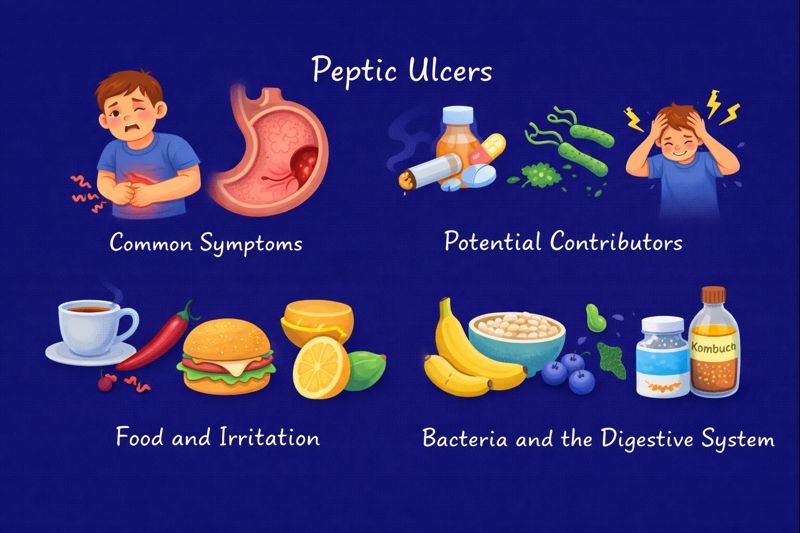 Peptic ulcers often cause a burning or gnawing sensation in the upper abdomen. Symptoms may:
-
Fluctuate across days or weeks
-
Appear between meals or at night
-
Temporarily improve after eating in some cases
Other digestive symptoms—such as bloating, burping, or early fullness—may also occur.
Potential Contributors
Several factors may contribute to ulcer formation or irritation, including:
-
H. pylori infection
-
Medications that affect the stomach lining
-
Smoking
-
Stress
-
Dietary patterns
-
Individual sensitivity to certain foods and drinks
Food and Irritation
Some people notice that certain foods feel more irritating during an ulcer flare-up, while others feel soothing. Irritation can vary widely between individuals, but commonly reported triggers include:
-
Highly acidic foods
-
Spicy dishes
-
Very fatty or fried items
-
Caffeine or alcohol
Others find that milder foods (such as bananas, oatmeal, or soft fruits) feel easier to tolerate. These observations are based on individual comfort rather than treatment.
Bacteria and the Digestive System
Interest in the role of bacteria—both harmful and beneficial—continues to grow in digestive research. Foods like yogurt and fermented products contain live cultures that contribute to discussions about the microbiome, though their role in ulcer management varies and remains individualized.
Hydration & Mealtimes
Drinking fluids and eating smaller, more frequent meals can help some individuals manage discomfort. Reactions to dairy, fruit, grains, or herbal products vary between people, and healthcare guidance is commonly used to avoid interactions with medications.
FAQ (Educational)
Are ulcers caused only by stress?
No. Stress may influence symptoms for some people, but ulcers can also involve bacteria or irritation of the stomach lining.
Does diet alone cause ulcers?
Diet does not usually cause ulcers, though certain foods or drinks may worsen discomfort for some individuals.
Can symptoms come and go?
Yes. Many people describe a pattern of pain relief and recurrence over days or weeks.
Is H. pylori common?
Yes. Many people worldwide carry H. pylori, but not everyone develops symptoms.
Educational Note
This article supports public awareness and first aid education regarding digestive symptoms. Persistent or disruptive symptoms can be discussed with healthcare professionals, who help determine causes and management options.
About The Author

Mark Kascha
Certified First Aid Instructor Trainer with 30+ years of real-world experience, including lifeguarding, workplace emergency response, and first aid program development across Canada. Has worked with WorkSafeBC, WSIB, and Manitoba Health.
Last reviewed: March 2026