What Are Scalp Bumps?
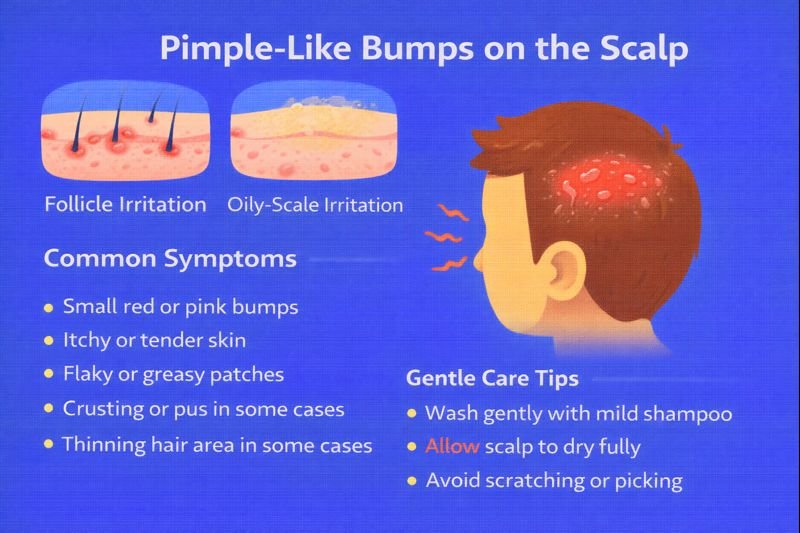
Pimple-like bumps on the scalp are small raised spots that may look similar to acne. They can be itchy, tender, or scaly and sometimes appear with redness or mild swelling. Several skin conditions can cause these bumps, most commonly follicle irritation (often called folliculitis) or oily-scale irritation (often associated with seborrheic dermatitis). While uncomfortable, many cases are manageable with gentle care and hygiene awareness.
Why Scalp Awareness Matters in Canadian Workplaces and Communities
Across Canada, helmets, hats, headsets, and seasonal weather can trap heat and moisture on the scalp. First aid awareness focuses on recognizing irritation early, keeping the skin clean, and reducing friction, rather than diagnosing or prescribing treatment. Early attention helps prevent ongoing discomfort and limits the chance of secondary skin irritation from scratching.
A Simple, Realistic Scenario
A warehouse employee who regularly wears a hard hat notices itchy bumps along the hairline after long shifts. Remembering basic skin-hygiene guidance, they start washing the scalp gently after work, allow the area to dry fully, and avoid tight headwear when off duty. The irritation gradually settles.
Common Signs and Symptoms
 Scalp bumps may present in different ways:
-
Small red or pink raised spots
-
Itchiness or tenderness when touched
-
Flaky or greasy-looking patches of skin
-
Crusting or mild oozing if scratched repeatedly
-
Temporary thinning of hair around irritated areas in some cases
Symptoms can vary depending on the underlying skin irritation and personal sensitivity.
Possible Contributing Factors
Several everyday factors can increase the likelihood of scalp irritation:
-
Excess oil or sweat buildup under hats or helmets
-
Infrequent washing or harsh hair products
-
Friction from tight headwear or headsets
-
Stress and seasonal changes affecting skin balance
-
Minor skin damage around hair follicles from scratching or shaving
Both yeast-related oil imbalance and hair-follicle irritation can produce similar-looking bumps, which is why gentle care and monitoring are emphasized.
First Aid Awareness and General Comfort Measures
From a public-education perspective, the focus is on cleanliness, reduced friction, and gentle handling:
-
Wash the scalp regularly with a mild, fragrance-free cleanser or gentle shampoo
-
Rinse thoroughly and allow the scalp to dry before wearing hats or helmets
-
Avoid scratching or picking at bumps to reduce further irritation
-
Use clean towels, pillowcases, and headwear
-
Pause the use of strongly scented or alcohol-based hair products if irritation appears
-
Monitor changes and seek further guidance if bumps persist or worsen
These steps support comfort and reduce the risk of additional skin irritation.
Prevention and Workplace Considerations
-
Clean shared helmets or headsets between users when possible
-
Rotate or loosen headwear during safe breaks to reduce moisture buildup
-
Keep hair tools, combs, and brushes clean
-
Encourage regular handwashing before touching the scalp
-
Choose breathable fabrics for hats and liners in warmer seasons
Such habits help maintain scalp comfort in offices, industrial settings, schools, and sports environments across Canada.
Frequently Asked Questions About Scalp Bumps
Are scalp bumps the same as facial acne?
Not always. They can resemble acne but may also relate to oil imbalance or hair-follicle irritation.
Why does itching make bumps worse?
Scratching can damage the skin surface and increase redness or crusting.
Can helmets or hats contribute to irritation?
Yes. Heat, sweat, and friction can aggravate sensitive skin if the scalp is not cleaned and dried regularly.
Do strong hair products help clear bumps faster?
Harsh or alcohol-based products can sometimes increase dryness and irritation.
When should persistent bumps be checked further?
If discomfort continues, spreads, or shows ongoing swelling or drainage, further assessment is advisable.
Educational Note
This article is intended for general public and workplace education in Canada. It supports awareness of scalp irritation and first aid recognition but does not replace evaluation or care from qualified healthcare professionals.
About The Author

Mark Kascha
Certified First Aid Instructor Trainer with 30+ years of real-world experience, including lifeguarding, workplace emergency response, and first aid program development across Canada. Has worked with WorkSafeBC, WSIB, and Manitoba Health.
Last reviewed: March 2026