Understanding Lung-Related Chest Discomfort
Lung and airway conditions can sometimes cause chest pain, tightness, coughing, wheezing, or shortness of breath. These sensations may feel sharp, dull, or pressure-like and can be temporary or ongoing. Because chest discomfort can also be linked to heart or digestive issues, public first aid awareness focuses on recognizing patterns and responding promptly when symptoms change, rather than diagnosing the cause.
Why Awareness Matters in Canadian Homes and Workplaces
Across Canada, cold weather, seasonal infections, air quality changes, and physical exertion can all influence breathing comfort. First aid awareness emphasizes early recognition of breathing difficulty, safe positioning, and knowing when to call for help—especially in offices, schools, sports facilities, and community events.
A Simple, Realistic Scenario
During a winter commute, a commuter develops a tight chest sensation and persistent cough. Remembering basic first aid awareness, they pause activity, focus on slow breathing, and ask a nearby coworker to stay with them while they monitor how they feel.
Common Signs That May Involve the Lungs
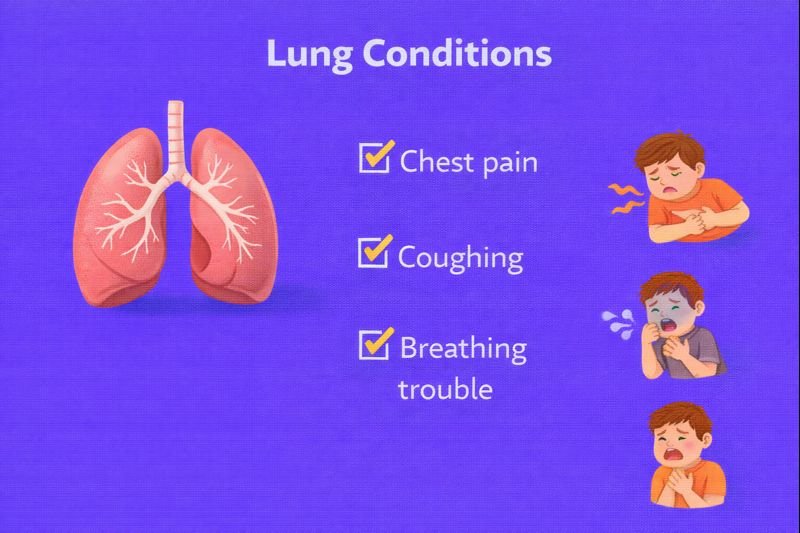 Symptoms vary by person and situation, but may include:
-
Ongoing or severe cough
-
Wheezing or noisy breathing
-
Shortness of breath during rest or light activity
-
Fatigue or light-headedness
-
Bluish lips or fingertips in more serious breathing difficulty
Any sudden change in breathing or chest comfort deserves attention.
Examples of Lung-Related Situations That Can Cause Chest Pain
Persistent Cough
Coughing is a protective reflex that clears irritants or mucus. When coughing becomes frequent or forceful, the chest muscles can become sore, leading to discomfort.
Lung Infections
Respiratory infections can irritate lung tissue and the lining around the lungs, sometimes causing sharper pain when inhaling deeply or coughing.
Air Around the Lung (Collapsed Lung)
Injury or sudden pressure changes can allow air to collect around the lung, creating abrupt chest pain and breathing difficulty. This situation requires urgent medical attention.
Long-Term Lung Disease
Chronic conditions affecting the lungs can lead to ongoing cough, fatigue, and chest discomfort. Early recognition of worsening symptoms is important for safety.
First Aid Awareness and Immediate Actions
From a public-education perspective, the emphasis is on calm observation, supportive positioning, and quick access to help:
-
Stop strenuous activity and encourage rest
-
Sit upright or in a comfortable position that eases breathing
-
Loosen tight clothing around the chest or neck
-
Offer reassurance and stay with the person
-
Monitor breathing, colour, and responsiveness
-
Call emergency services immediately if there is severe shortness of breath, chest pressure, bluish skin, confusion, or fainting
These steps support comfort and rapid response without attempting diagnosis.
Prevention and Everyday Considerations in Canada
-
Practise hand hygiene during cold and flu seasons
-
Dress for cold weather to reduce airway irritation
-
Follow workplace safety guidance around dust, fumes, or chemicals
-
Maintain smoke-free environments
-
Stay active within personal limits and pace physical exertion
Frequently Asked Questions
Can lung discomfort feel like heart pain?
Yes. Chest sensations can overlap, which is why sudden or severe symptoms should be treated seriously.
Why does deep breathing sometimes hurt?
Irritated chest muscles or lung linings can make deep breaths uncomfortable.
Is wheezing always asthma?
No. Wheezing can occur with infections, allergies, or airway irritation.
What position helps breathing?
Sitting upright or slightly leaning forward often feels more comfortable.
When is urgent help needed?
If there is intense chest pressure, difficulty breathing, bluish lips or fingertips, fainting, or confusion, contact emergency services right away.
Educational Note
This article is intended for general public and workplace education in Canada. It supports awareness of breathing-related chest symptoms and first aid recognition but does not replace evaluation or care from qualified healthcare professionals.
About The Author

Mark Kascha
Certified First Aid Instructor Trainer with 30+ years of real-world experience, including lifeguarding, workplace emergency response, and first aid program development across Canada. Has worked with WorkSafeBC, WSIB, and Manitoba Health.
👉 [View full credentials]🔗 View LinkedIn Profile
Last reviewed: March 2026