The hobo spider is a funnel-web spider found in and around homes. While many bites are minor or “dry” (with little to no venom), some may cause local skin irritation. Reports of more significant symptoms are uncommon and often vary in reliability. Awareness of spider bite symptoms and when to seek healthcare advice can support better outcomes.
Relevance for First Aid & Canadian Settings
Spiders occasionally enter homes, garages, and sheds in Canada. Workplace exposures may occur in landscaping, warehousing, construction, agriculture, and property maintenance. Although spider bites are rarely serious, public awareness of bites helps people respond calmly, monitor symptoms, and decide whether a healthcare assessment is appropriate.
Scenario: Mild & Realistic
A warehouse worker felt a brief sting on their forearm while unpacking a pallet from storage. A small red bump developed later that day, similar to a mosquito bite. A supervisor suggested washing the area and keeping an eye on it. The bump faded over several days without complications.
What Is a Hobo Spider?
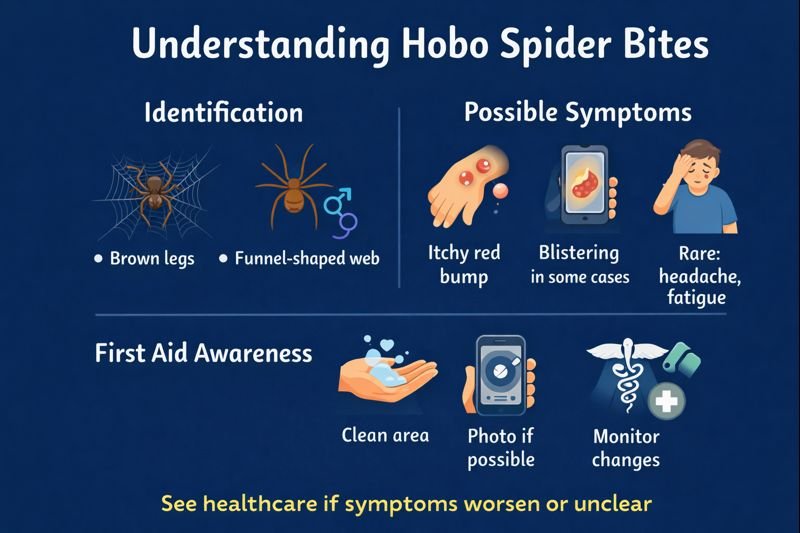 Hobo spiders can resemble many other brown house spiders. General features may include:
-
Females approx. 11–14 mm in body length
-
Brown legs without distinct striping
-
Females with slightly larger abdomens
-
Males with enlarged reproductive appendages that can appear intimidating but are not dangerous
These spiders build funnel-shaped webs that allow them to hide and ambush insects.
Localized Symptoms (Awareness Overview)
Most reported hobo spider bites are mild. Possible localized effects may include:
-
Noticeable bite mark(s)
-
Redness around the bite site
-
Mild discomfort or itching
-
Small firm bump that may resemble a mosquito bite
Some reports describe blistering or a bull’s-eye pattern. Peeling or scabbing may occur as the area heals. These patterns can also appear with other insect bites, skin reactions, or infections; therefore, healthcare assessment may be useful if symptoms worsen or are unclear.
Systemic Symptoms (Less Common, Variable Reports)
Systemic symptoms linked to hobo spider bites have been described in past literature but are considered uncommon and inconsistent. Reports have included:
-
Headache
-
Fatigue or weakness
-
Dry mouth
-
Dizziness
Older reports have mentioned visual changes, nausea, vomiting, or joint discomfort. Severe complications are rarely confirmed and may be related to other conditions. Persistent, unusual, or worsening symptoms should be evaluated by a healthcare professional.
Important Considerations
-
Identification: Spiders are frequently misidentified. If safe and possible, a clear photo may assist with identification—there is no need to attempt catching a spider.
-
Monitoring: Any worsening skin reaction, spreading redness, fever, or prolonged symptoms may warrant medical assessment.
-
Variability: Reactions vary among individuals and depend on multiple factors, not only species.
-
Children & workplaces: Curiosity and storage environments increase chances of exposure; education reduces unnecessary concern.
First Aid & Management (General Awareness)
For minor skin reactions from suspected insect or spider bites, general first aid education often includes:
-
Cleaning the area with mild soap and water
-
Avoiding scratching
-
Monitoring changes over time
-
Seeking healthcare assessment if symptoms worsen, become unusually painful, or do not improve
Healthcare professionals may provide assessment, differential considerations, and guidance if needed. Severe or rapidly progressing symptoms require prompt evaluation.
Prevention & Workplace Considerations
-
Avoid reaching into boxes, storage bins, or gloves without checking first
-
Shake out workwear and gear stored in sheds or garages
-
Maintain tidy storage environments to reduce nesting spaces
-
Use gloves during landscaping, warehouse picking, or outdoor tasks
-
Encourage early symptom reporting so supervisors can support assessment
FAQ
1. Are hobo spider bites dangerous?
Most bites are mild. Reports of more serious effects exist but are uncommon and often hard to confirm.
2. Do hobo spiders live in Canadian homes?
They can be found in and around indoor and outdoor spaces, particularly in storage or sheltered areas.
3. How can I tell if a bite is from a spider?
Many insect bites look similar. Healthcare professionals may consider the pattern, symptoms, and exposure history.
4. Should I capture the spider?
There is no need to handle a spider. If safe, a photo may help with identification.
5. When should I seek healthcare assessment?
If symptoms worsen, spread, cause significant discomfort, or do not improve, a healthcare professional can evaluate next steps.
Educational Note
This article supports public education and first aid awareness. It does not identify or diagnose skin problems or venomous exposures. Healthcare assessment is recommended if symptoms are persistent, unexplained, or worsening.
About The Author

Mark Kascha
Certified First Aid Instructor Trainer with 30+ years of real-world experience, including lifeguarding, workplace emergency response, and first aid program development across Canada. Has worked with WorkSafeBC, WSIB, and Manitoba Health.
👉 [View full credentials]🔗 View LinkedIn Profile
Last reviewed: March 2026