
 What is facial sunburn?
Facial sunburn is a skin reaction that occurs when ultraviolet (UV) radiation from the sun damages the outer layers of the skin. Sunburn can range from mild redness and warmth to more painful burns with swelling or blisters.
Workplace & Canadian first aid relevance
Sunburn can affect outdoor workers, gardeners, beachgoers, and anyone exposed to the sun for prolonged periods. Occupational sun safety is increasingly recognized in construction, agriculture, recreation, and landscaping sectors.
Scenario: Gardening on a sunny afternoon
A home gardener spent the afternoon working without sunscreen. By evening, their face was warm, red, and sensitive. They used cool compresses, stayed hydrated, and monitored symptoms through the next day, adjusting outdoor habits to avoid repeat discomfort.
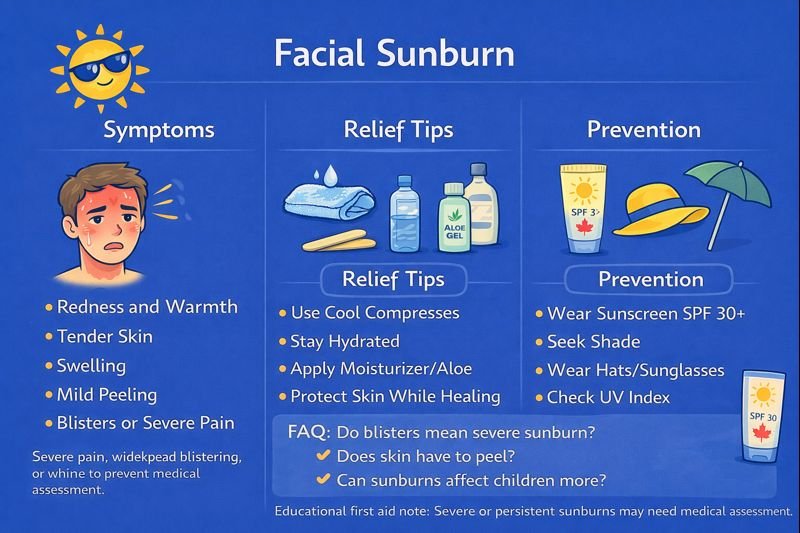
Symptoms of facial sunburn
Common symptoms may include:
-
Redness and warmth
-
Tender or sensitive skin
-
Swelling
-
Mild peeling during healing
-
In more significant burns, blisters may form
Severe pain, widespread blistering, or swelling may warrant medical assessment.
Cooling & comfort (non-prescriptive overview)
Initial comfort measures for mild sunburn may include:
-
Cool compresses or cool water
-
Staying hydrated
-
Keeping the skin clean and protected
Individuals often choose soothing moisturizers such as aloe-based gels or gentle creams to reduce tightness as the skin heals.
(No step-by-step procedures or facial immersion instructions are provided for safety.)
Moisturizing & skin care
Once heat sensation decreases, keeping the skin moisturized may support comfort. Products marketed for sensitive skin or after-sun care are commonly used. Avoid abrasive scrubs on sunburned skin, as they may worsen irritation.
What to avoid
For facial sunburn, avoid:
-
Hot showers or heat exposure
-
Harsh exfoliants
-
Homemade acidic mixtures (e.g., lemon, vinegar, tomato, yogurt)
-
Scrubbing or peeling flaking skin
-
Re-exposure to sun during healing
These practices may irritate the skin or delay recovery.
When to seek assessment
Healthcare evaluation may be useful when:
-
Blisters are extensive
-
Pain or swelling is significant
-
Fever or malaise accompanies the burn
-
Sunburn occurs in infants or young children
-
Sunburn recurs frequently or affects work/sport participation
Blistering burns may indicate deeper skin injury.
Prevention & sun safety
Safer sun habits include:
-
Broad-spectrum sunscreen use
-
Wearing hats, UV-protective eyewear, or clothing
-
Seeking shade during peak UV hours
-
Planning breaks during outdoor work
-
Checking UV index forecasts
-
Staying hydrated in hot weather
Workplaces may include UV protection in safety policies for outdoor staff.
FAQ
Does sunburn always peel?
Peeling may occur as the skin sheds damaged cells, but not all sunburns peel.
Are blisters a sign of severe sunburn?
Blisters indicate deeper skin involvement. Large blistered areas may need medical assessment.
Do darker skin tones get sunburn?
Yes. Melanin provides some protection but does not eliminate UV damage risk.
Can children sunburn more easily?
Children have more sensitive skin and may require additional protection and supervision outdoors.
Educational note
This post supports public and workplace sun safety awareness. Persistent or severe sunburn symptoms may benefit from medical assessment for supportive care.
About The Author

Mark Kascha
Certified First Aid Instructor Trainer with 30+ years of real-world experience, including lifeguarding, workplace emergency response, and first aid program development across Canada. Has worked with WorkSafeBC, WSIB, and Manitoba Health.
Last reviewed: March 2026