
Understanding Stingray Stings
A stingray sting occurs when a stingray defends itself by striking with its tail, which contains one or more barbed spines. These spines can puncture the skin and deliver protein-based venom, leading to significant pain and tissue injury. While stingray stings are uncommon, they can be serious and require prompt first aid awareness and medical assessment.
Stingrays do not actively attack humans. Most stings happen accidentally when someone steps too close in shallow water.
Why This Matters for First Aid and Water Safety in Canada
Although stingrays are more commonly associated with warmer coastal waters, Canadians may encounter them while travelling, vacationing, or participating in water sports abroad. First aid and workplace safety training often includes marine injury awareness, especially for lifeguards, camp staff, outdoor educators, and travellers. Knowing how to respond helps reduce pain, complications, and panic.
A Realistic Scenario
While wading in shallow coastal water during a vacation, a swimmer suddenly feels sharp pain in their foot. They exit the water with help from others, noticing swelling and bleeding. Someone with first aid training recognizes the injury as a possible stingray sting, helps control the bleeding, and arranges medical care while keeping the injured person calm.
Common Symptoms of Stingray Stings
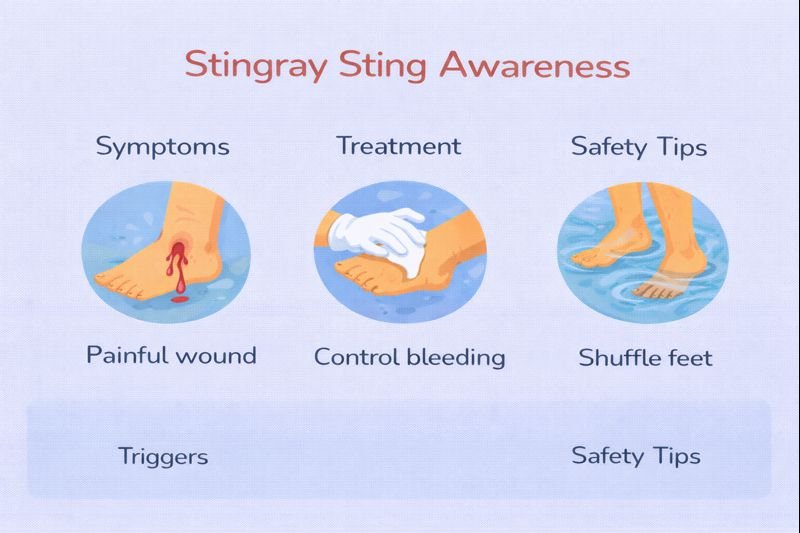 Symptoms can vary depending on the location and severity of the sting. Common signs include:
-
Bleeding at the wound site
-
Intense pain, which may last for hours or up to two days
-
Swelling around the sting area
-
Redness or bluish discoloration of the skin
-
Dizziness or light-headedness
-
Muscle cramping or weakness
Less common but more serious symptoms may include:
-
Irregular pulse
Prompt care helps prevent symptoms from worsening.
First Aid Awareness for Stingray Stings
Stingray stings require immediate first aid attention and medical follow-up. From a first aid perspective, priorities include safety, bleeding control, pain management awareness, and preventing complications.
Key first aid awareness steps include:
-
Ensure safety first and move the injured person out of the water carefully
-
Encourage calm breathing and limit movement
-
Call for emergency medical assistance as soon as possible
-
Use gloves or protective barriers if available
-
Control bleeding with direct pressure if bleeding is present
Wound Care Awareness
-
Gently clean the wound with clean water and mild soap when possible
-
Small, superficial spine fragments may sometimes be removed only if medical help is significantly delayed
-
Do not remove deeply embedded spines, especially in the chest, abdomen, or neck, as this can cause severe bleeding
If emergency care is delayed, warm (not hot) water immersion may help reduce pain by neutralizing some venom activity. Care should be taken to avoid burns.
When to Seek Medical Care
Medical assessment is recommended for all stingray stings, even if symptoms seem mild at first. Medical care may be needed to:
-
Manage severe pain
-
Assess for retained spine fragments
-
Reduce infection risk
-
Monitor for systemic symptoms
Emergency care is especially important if symptoms worsen or involve dizziness, breathing changes, or abnormal heart rhythm.
Prevention and Water Safety Tips
Although stingray stings receive a lot of attention, they are rare. Simple precautions greatly reduce risk:
-
Shuffle feet when walking in shallow coastal waters to alert stingrays
-
Avoid stepping blindly into murky water
-
Stay aware of local marine safety guidance
-
Wear protective footwear where appropriate
Statistically, people are far more likely to stub a toe on a rock than step on a stingray.
Frequently Asked Questions (FAQ)
Are stingray stings common?
No. Stingray stings are uncommon and usually occur accidentally.
Why are stingray stings so painful?
The spine causes tissue injury and delivers venom that triggers intense pain.
Should a stingray spine always be removed?
No. Deeply embedded spines should only be removed by medical professionals.
Is warm water helpful for stingray stings?
Warm water may help reduce pain if medical care is delayed, but it should not be hot enough to burn.
Why is first aid awareness important for marine injuries?
Early recognition and proper response help reduce pain, complications, and panic until medical care is available.
Educational Note
This article is intended for general first aid and water safety education. It promotes awareness and preparedness but does not replace professional medical assessment or emergency care.
About The Author

Mark Kascha
Certified First Aid Instructor Trainer with 30+ years of real-world experience, including lifeguarding, workplace emergency response, and first aid program development across Canada. Has worked with WorkSafeBC, WSIB, and Manitoba Health.
👉 [View full credentials]🔗 View LinkedIn Profile
Last reviewed: March 2026