
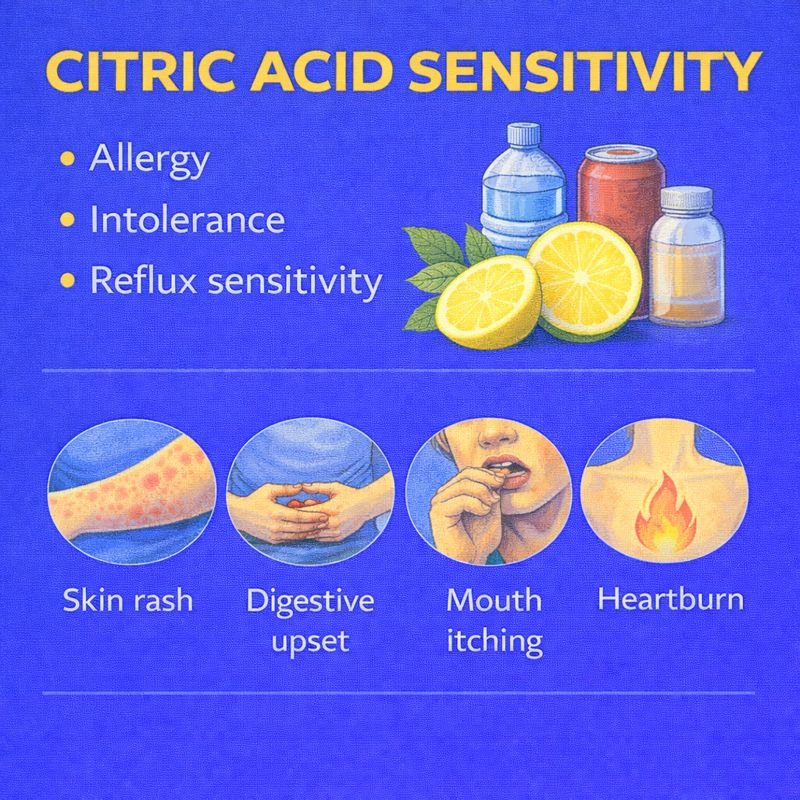
Citric acid is a natural compound found in many fruits, juices, and processed foods. It contributes flavour, acidity, and preservation. Most people tolerate citric acid without issues, but a small number may experience digestive discomfort, skin irritation, or allergic-type symptoms linked to certain citrus fruits.
Public & workplace relevance (Canada)
Food sensitivities matter in households, workplaces, schools, and food-service environments. Labelling, cafeteria options, and ingredient awareness can help individuals who notice symptoms after eating specific fruits or packaged foods.
Scenario story
During a workplace lunch, Jamie noticed mouth itching and mild stomach discomfort after drinking orange juice. Jamie began paying attention to citrus intake and later discussed symptoms with a healthcare professional, who helped clarify whether it was allergy, sensitivity, or intolerance.
What is citric acid?
 Citric acid:
-
Occurs naturally in citrus fruits (lemon, lime, orange, grapefruit)
-
Is present in small amounts in certain vegetables and dairy
-
Is produced commercially for use in foods, beverages, and pharmaceuticals
Lemons and limes contain the highest natural levels of citric acid among common fruits.
Allergy vs intolerance vs sensitivity
Reactions to citrus or citric acid are not all the same. Three concepts are often mixed together:
1. Citrus fruit allergy
Linked to immune-system responses to proteins in citrus fruits, not the citric acid itself. Symptoms may include:
-
Itching in the mouth or lips
-
Mild swelling
-
Hives or rash
-
Sneezing or runny nose
-
Digestive upset
Significant breathing difficulty or rapid progression of symptoms may indicate a more serious allergic reaction requiring emergency care.
2. Citric acid intolerance
Much rarer. Involves difficulty breaking down or digesting citric acid. Symptoms may include:
-
Stomach cramps
-
Nausea or vomiting
-
Bloating or discomfort
-
Changes in stool patterns
-
Irritated skin in some cases
Intolerance does not involve the immune system.
3. Acid sensitivity or reflux
Some individuals experience heartburn or reflux after consuming acidic foods. This relates to stomach acid levels, not allergy.
Digestive symptoms
People who react to citrus or citric acid commonly report:
-
Cramping or bloating
-
Nausea
-
Loose stools or urgency
-
Mouth irritation (in citrus reactions)
-
Mild skin irritation around the mouth in young children
Because symptoms overlap with other digestive concerns, healthcare assessment may help clarify the cause.
Foods containing citric acid
Naturally high:
-
Lemon
-
Lime
-
Orange
-
Grapefruit
Lower amounts:
-
Apples
-
Pears
-
Grapes
-
Cherries
Commercially added citric acid may appear in:
-
Drinks and flavoured waters
-
Candies and snacks
-
Sauces, dressings, and canned foods
-
Some vitamins and supplements
Food awareness & avoidance strategies
Individuals who react to citric acid or citrus may:
-
Read ingredient labels
-
Note which fruits or products trigger symptoms
-
Ask about ingredients in workplace cafeterias or restaurants
-
Choose lower-acid fruits if tolerated better
Avoidance strategies vary from person to person and should not replace clinical guidance when symptoms are persistent.
FAQ
Can citric acid cause allergy?
True citric acid allergy is uncommon. Citrus reactions often involve other fruit proteins.
Why do some people get stomach pain from citrus?
Acidity, intolerance, or reflux sensitivity may contribute.
Is citrus allergy the same as oral allergy syndrome?
Some individuals with pollen allergies may react to certain fruits due to protein similarities.
Do children outgrow citrus reactions?
Patterns vary. Some mild reactions improve with age, others persist.
Should citrus be avoided completely if reactions occur?
Avoidance depends on severity and individual tolerance. Healthcare professionals can guide decisions.
Educational note
This resource supports food allergy and sensitivity awareness for home and workplace settings and does not replace clinical assessment or dietary advice.
About The Author

Mark Kascha
Certified First Aid Instructor Trainer with 30+ years of real-world experience, including lifeguarding, workplace emergency response, and first aid program development across Canada. Has worked with WorkSafeBC, WSIB, and Manitoba Health.
👉 [View full credentials]🔗 View LinkedIn Profile
Last reviewed: March 2026