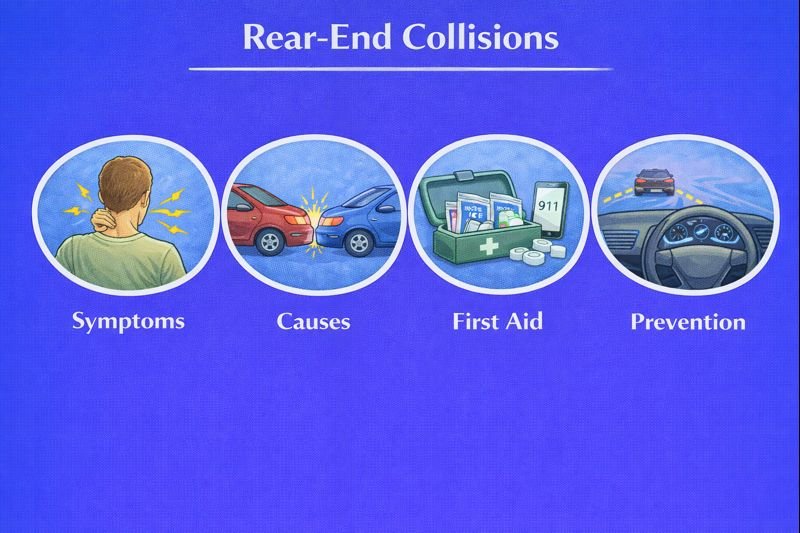
 Rear-end collisions are among the most common road traffic incidents. Even with good driving habits and seatbelt use, sudden impacts can be surprising and may lead to discomfort or injury. Awareness of possible physical effects and the role of safety systems helps people understand why first aid, prevention, and proper vehicle maintenance matter.
Canadian & Workplace Relevance
In Canada, motor vehicles are used in daily commuting, work-related travel, commercial driving, and community transportation. Collisions can affect individuals on and off the job, and many workplaces include driving in their safety programs. First aid kits in vehicles and basic training can support early response while waiting for emergency services when required.
Scenario (Mild, Realistic, Non-Alarmist)
On the way home from work, a driver is stopped at a traffic light when another vehicle makes light contact with the back bumper. Both drivers pull over safely, assess for injuries, and exchange information. The front driver notices mild neck stiffness later that day and decides to monitor symptoms and arrange follow-up once home.
What Happens in a Rear-End Collision
In a rear-end impact, one vehicle strikes the back of another. Sudden force can cause a rapid back-and-forward motion of the head and torso, sometimes called a “whiplash” mechanism. This motion can lead to discomfort in the neck, shoulders, or upper back.
Common Symptoms After Rear-End Collisions
Symptoms vary widely and can be mild or delayed. People may experience:
-
Neck or shoulder soreness
-
Stiffness or reduced range of motion
-
Headaches
-
Upper back discomfort
-
Fatigue or general soreness
-
Anxiety or startle reactions related to the event
Symptoms may not appear immediately and can develop over several hours.
Causes & Mechanisms
Rear-end collisions involve:
-
Sudden deceleration
-
Transfer of energy between vehicles
-
Rapid movement of the head and torso
-
Activation of seatbelts and vehicle safety systems
-
Possible airbag deployment in higher-energy collisions
Vehicle design, speed, seating position, and occupant awareness at the moment of impact can all influence outcomes.
First Aid & Health Awareness (Non-Prescriptive)
Public first aid and health awareness emphasizes:
-
Checking for immediate hazards and ensuring safety before exiting a vehicle
-
Observing for pain, dizziness, confusion, or breathing difficulties
-
Monitoring symptoms over time and seeking assessment when needed
-
Using vehicle first aid kits for minor cuts or scrapes if present
-
Contacting emergency services for significant collisions or serious symptoms
Vehicle Safety Considerations (Educational)
Modern vehicles use features designed to manage crash forces, including:
-
Crumple zones
-
Seatbelt pre-tensioners
-
Head restraints
-
Sensors for airbag deployment
After a collision, qualified mechanics or vehicle inspectors evaluate structural components, alignment, and safety systems to determine whether repairs are needed.
Prevention & Risk Reduction
Safer driving habits and system checks can reduce collision impacts:
-
Maintaining safe following distances
-
Avoiding distracted driving
-
Performing regular brake, tire, and light maintenance
-
Ensuring correct head restraint positioning
-
Keeping emergency supplies and first aid kits in vehicles
Many workplaces incorporate fleet safety programs, defensive driving training, and vehicle inspection protocols to support prevention.
FAQ (Educational)
Q: Are rear-end collisions always serious?
Not necessarily. Some are minor and involve little vehicle damage, while others produce significant forces and may require emergency response.
Q: Why can symptoms be delayed?
Muscle tension and soft tissue reactions can develop over time, which is common after sudden or surprising events.
Q: Do airbags always deploy in rear-end collisions?
Airbag deployment depends on sensors and impact direction. A mechanic or qualified inspector assesses vehicle safety systems after a collision.
Q: Should first aid kits be kept in vehicles?
Many workplaces and drivers choose to keep basic first aid supplies in vehicles for minor injuries.
Educational Note
This material supports injury awareness, vehicle safety understanding, and first aid learning. It does not replace professional medical assessment, collision reporting requirements, or vehicle inspection procedures.
About The Author

Mark Kascha
Certified First Aid Instructor Trainer with 30+ years of real-world experience, including lifeguarding, workplace emergency response, and first aid program development across Canada. Has worked with WorkSafeBC, WSIB, and Manitoba Health.
👉 [View full credentials]🔗 View LinkedIn Profile
Last reviewed: March 2026