Sinus headaches occur when the sinuses—air-filled spaces behind the eyes, nose, and cheeks—become inflamed and congested. This inflammation creates pressure that can lead to a dull, throbbing headache, often felt in the forehead, cheeks, or around the eyes.
In children, sinus headaches are commonly linked to colds, respiratory infections, or allergies. First aid awareness focuses on recognizing symptoms, supporting comfort, and understanding when further medical assessment may be needed.
First Aid & Workplace / School Relevance (Canada)
Sinus headaches are relevant in Canadian schools, childcare settings, and workplaces where adults care for or supervise children. Headaches caused by sinus congestion can affect concentration, sleep, and participation in daily activities.
First aid awareness helps caregivers, educators, and parents distinguish sinus-related discomfort from other types of headaches and supports early, non-invasive comfort measures.
Scenario: Supporting a Child With Sinus Discomfort
A child at school complained of pressure around the eyes and forehead following a week of cold symptoms. A staff member trained in first aid recognized the pattern as possible sinus congestion. The child was encouraged to rest, hydrate, and avoid strenuous activity until symptoms improved, while caregivers monitored for ongoing concerns.
What Causes Sinus Headaches?
Sinus headaches usually develop when sinus inflammation prevents normal air flow and mucus drainage. This blockage increases pressure inside the sinuses.
Common contributing factors include:
-
Upper respiratory infections
-
Seasonal or environmental allergies
-
Nasal congestion related to colds
-
Ongoing sinus irritation
When mucus becomes trapped, pressure builds and pain may be felt in specific areas of the face or head.
Common Signs and Symptoms
Sinus headaches in children and adults may include:
-
Dull or throbbing headache
-
Pressure around the eyes, nose, cheeks, or forehead
-
Facial tenderness
-
Nasal congestion or blocked nose
-
Thick nasal discharge
-
Headache that worsens when bending forward
Symptoms often appear alongside cold or allergy symptoms.
First Aid Awareness and Comfort Measures
From a first aid education perspective, managing sinus headaches focuses on comfort and monitoring, not treatment.
General supportive measures may include:
-
Encouraging rest
-
Supporting hydration
-
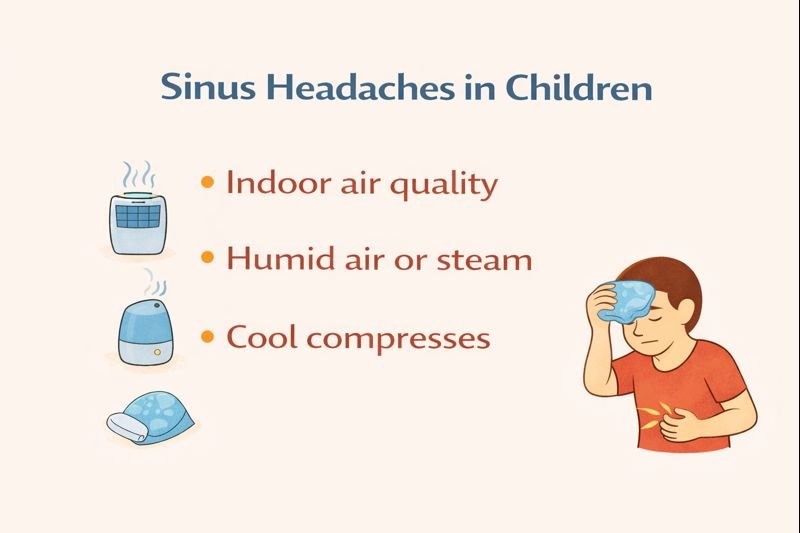
Maintaining comfortable indoor humidity
-
Using gentle comfort measures such as a cool compress over the face or forehead
Keeping the child calm and avoiding activities that worsen discomfort can also help.
Lifestyle and Environmental Awareness
Reducing factors that contribute to sinus irritation may help lower the frequency of sinus headaches.
Helpful awareness strategies include:
-
Keeping indoor air clean and well-ventilated
-
Reducing exposure to dust, pet dander, and other allergens
-
Regular cleaning of living and sleeping areas
-
Supporting relaxation and gentle stretching of the neck and shoulders
These measures are supportive and non-invasive.
Supplements and Herbal Products: Safety Awareness
Some supplements and herbal products are often discussed in relation to sinus symptoms. However, evidence is limited, especially regarding safety and effectiveness in children.
First aid education emphasizes:
-
Avoiding supplements or herbal products for children unless specifically recommended by a healthcare professional
-
Recognizing that “natural” does not always mean safe
-
Consulting a healthcare provider before introducing any supplement or herbal remedy
This is particularly important for young children.
Other Home Comfort Approaches (General Awareness)
Some families use non-medicated comfort strategies to support sinus pressure relief, such as:
-
Cool compresses applied briefly to tender areas
-
Encouraging quiet rest in a comfortable position
Food-based or aromatic remedies should be approached cautiously and discussed with a healthcare provider, especially for children.
When Further Assessment May Be Needed
A child should be assessed by a healthcare professional if:
-
Headaches are persistent or worsening
-
Facial pain is severe
-
Symptoms interfere with sleep or daily activities
-
Fever or significant illness is present
Medical professionals can assess whether sinus inflammation requires further care.
Frequently Asked Questions
Are sinus headaches common in children?
They can occur, especially during colds or allergy seasons, but other causes of headaches should also be considered.
How is a sinus headache different from other headaches?
Sinus headaches are often linked with nasal congestion and facial pressure rather than generalized head pain.
Can allergies trigger sinus headaches?
Yes. Allergies can cause sinus swelling and blocked drainage, leading to pressure-related pain.
Are home remedies enough to treat sinus headaches?
Comfort measures may help mild symptoms, but ongoing or severe headaches should be medically assessed.
When should a child see a doctor for headaches?
Any persistent, severe, or recurring headache should be evaluated by a healthcare professional.
Educational Note
This article is intended for general public education and first aid awareness. It does not provide medical diagnosis or treatment advice. First aid training focuses on recognizing symptoms, supporting comfort, and understanding when professional medical assessment may be appropriate.
About The Author

Mark Kascha
Certified First Aid Instructor Trainer with 30+ years of real-world experience, including lifeguarding, workplace emergency response, and first aid program development across Canada. Has worked with WorkSafeBC, WSIB, and Manitoba Health.
👉 [View full credentials]🔗 View LinkedIn Profile
Last reviewed: March 2026