Chickenpox is a highly contagious viral infection that causes an itchy rash with fluid-filled blisters. While most cases in children are mild, the illness can spread easily within families, schools, childcare centres, and workplaces.
Staying Home to Reduce Spread
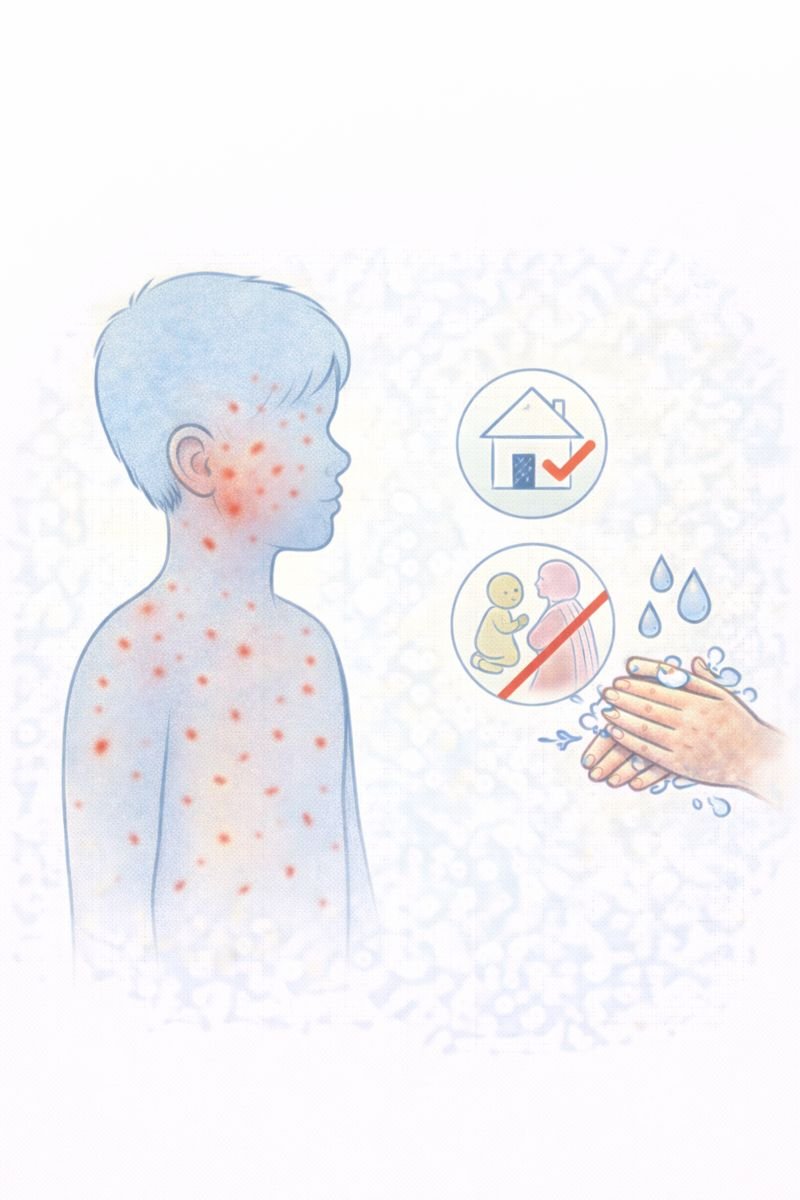 If a child has chickenpox, caregivers should notify the school and keep the child home for approximately 5 days after symptoms begin. Adults should stay home until no longer infectious, which is typically when the last blister has burst and crusted over — usually 5–6 days after the rash first appears.
During the infectious period, close contact with:
-
newborns
-
pregnant individuals
-
immunocompromised individuals (e.g., those undergoing chemotherapy or long-term steroid treatment)
should be avoided whenever possible.
Air Travel Considerations
A child or adult with active chickenpox may be restricted from flying until the infectious phase has passed. Many airlines require that all blisters be crusted over, which generally takes around 6 days after the last new spot appears. Policies vary, so checking with the airline is recommended.
How Chickenpox Spreads
Chickenpox spreads through:
-
direct contact with fluid from blisters
-
respiratory droplets
-
shared surfaces and objects such as bedding, clothing, and toys
To reduce spread in the home:
-
Disinfect frequently touched surfaces
-
Launder bedding, towels, and clothing regularly
-
Encourage frequent handwashing
Vaccine Information (Public Health Context)
In Canada, the varicella (chickenpox) vaccine is part of routine childhood immunization schedules. It helps protect individuals and reduces outbreaks in schools, sports groups, and community settings.
The vaccine may also be recommended for:
-
healthcare workers without immunity
-
household contacts of immunocompromised individuals
The vaccine is not recommended during pregnancy. Individuals who receive it are generally advised to avoid pregnancy for a period afterward. Those with weakened immune systems may have restrictions and should follow medical advice.
Two recommended doses are estimated to provide high levels of protection for children (around 98%) and strong protection in teens and adults (around 75%). A very small number of vaccinated individuals may still develop chickenpox, usually in a milder form.
First Aid & Public Health Awareness in Canada
Chickenpox itself is not a first aid emergency, but recognizing infectious symptoms and supporting hydration and itch management contributes to comfort and safety at home. Parents, educators, and childcare providers can benefit from first aid training through St. Mark James Training, often paired with CPR/AED certification for workplace and community readiness. These programs support stronger public health awareness across schools, camps, and businesses.
Educational Disclaimer
This article provides general public education for Canadians and does not replace medical guidance. For vaccination, pregnancy, or immunocompromised concerns, consult a healthcare provider.
About The Author

Mark Kascha
Certified First Aid Instructor Trainer with 30+ years of real-world experience, including lifeguarding, workplace emergency response, and first aid program development across Canada. Has worked with WorkSafeBC, WSIB, and Manitoba Health.
👉 [View full credentials]🔗 View LinkedIn Profile
Last reviewed: March 2026