
Understanding Soy Foods
Soybeans are widely used in foods such as soy milk, tofu, soy meats, soy sauce, and edamame. They are valued for plant-based protein and are common in vegetarian and mixed diets across Canada. Like any food, soy products can spoil if stored too long or handled improperly. First aid awareness focuses on recognizing signs of spoilage, safe storage, and early symptoms of food-borne illness, rather than diagnosing disease.
Why Awareness Matters in Canadian Homes and Workplaces
Soy foods appear in school lunches, office kitchens, restaurants, and community events. Refrigeration practices, label reading, and cleanliness help reduce stomach upset and food waste. Early recognition of spoilage—such as unusual smell, colour, or texture—supports safer choices in shared environments.
A Simple, Realistic Scenario
An employee pours soy milk for coffee and notices a sour smell and slight lumpiness. Remembering basic food-safety awareness, they discard the carton, wash the mug, and choose a fresh alternative.
General Signs a Soy Product May Be Spoiled
-
 Sour or off odour
 -
Bulging or leaking packaging
-
Colour changes or surface fuzz
-
Slimy or unusually sticky texture
-
Separation that does not mix back smoothly
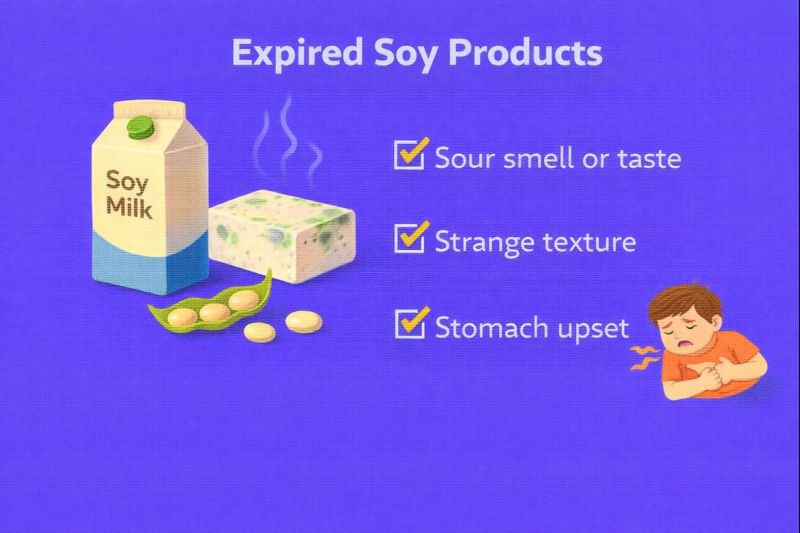
When in doubt, it is safer to discard the item.
Common Soy Products and Storage Awareness
Soy Milk
-
Once opened, it usually keeps about a week in the refrigerator.
-
Spoilage signs can include sour smell, lumps, or bloated cartons.
-
Consuming spoiled soy milk may lead to nausea, stomach cramps, vomiting, or diarrhea.
Soy Sauce
-
High salt content gives it a long shelf life when sealed.
-
After opening, flavour may gradually change, but obvious spoilage is uncommon.
-
Keep the bottle tightly closed and stored as directed on the label.
Soy Meats and Tofu
-
Plant-based meat substitutes and tofu are perishable once opened.
-
Discard if the surface feels slimy, smells sour, or shows mould.
-
Cross-contamination with raw foods can increase spoilage risk.
Soybeans and Edamame
-
Fresh or cooked beans should be refrigerated promptly.
-
Colour changes, bruising, or fuzzy growth indicate mould.
-
Dry beans may simply lose quality over time but should still be stored in cool, dry conditions.
First Aid Awareness and General Comfort Measures
If mild stomach upset follows suspected spoiled food, public-education guidance emphasizes hydration, rest, and hygiene:
-
Sip water or clear fluids regularly
-
Rest and avoid heavy or greasy meals temporarily
-
Wash hands thoroughly and clean food-prep surfaces
-
Monitor for ongoing fever, weakness, or dehydration signs and seek further guidance if symptoms persist or worsen
These steps support comfort and cleanliness rather than medical treatment.
Prevention and Everyday Considerations in Canada
-
Check best-before dates and follow refrigeration instructions
-
Keep refrigerators at safe temperatures and avoid overfilling
-
Label leftovers with dates and use older items first
-
Avoid leaving soy foods at room temperature for extended periods
-
Practise clean utensils, cutting boards, and handwashing
Frequently Asked Questions
Do all soy products spoil at the same rate?
No. Liquids and fresh items spoil faster than high-salt or dried products.
Is a slight separation in soy milk normal?
Some separation can occur, but strong sour smell or lumps suggest spoilage.
Can expired soy sauce be harmful?
It rarely spoils quickly, but flavour quality may decline over time.
Why are slimy textures a concern?
They often indicate bacterial growth or breakdown of the food surface.
When should stomach symptoms be checked further?
If vomiting, diarrhea, or fever persists or dehydration signs appear, further assessment is advisable.
Educational Note
This article is intended for general public and workplace education in Canada. It supports food-safety awareness and first aid recognition but does not replace evaluation or care from qualified healthcare professionals.
About The Author

Mark Kascha
Certified First Aid Instructor Trainer with 30+ years of real-world experience, including lifeguarding, workplace emergency response, and first aid program development across Canada. Has worked with WorkSafeBC, WSIB, and Manitoba Health.
👉 [View full credentials]🔗 View LinkedIn Profile
Last reviewed: March 2026