What Is Peroneal Tendonitis?
Peroneal tendonitis is a condition involving irritation and inflammation of the peroneal tendons, which run along the outside of the lower leg and pass behind the outer ankle bone (lateral malleolus). When these tendons become overworked or repeatedly stressed, pain and swelling can develop on the outer side of the ankle.
This is a common overuse injury, particularly in people who are physically active or whose work involves repeated walking on uneven surfaces.
First Aid and Workplace Relevance in Canada
Peroneal tendonitis is relevant in Canadian workplaces and recreational settings, including construction, landscaping, warehousing, healthcare, sports, and dance environments. Activities that involve repetitive ankle movement, uneven ground, or frequent side-to-side motion can increase risk.
First aid awareness helps individuals recognize early ankle pain, reduce aggravating activities, and support proper recovery before symptoms worsen.
A Simple, Realistic Scenario
A delivery worker who walks on sloped sidewalks begins to notice soreness and swelling on the outside of their ankle after long shifts. The pain eases with rest but returns during work. Remembering first aid education, they reduce aggravating activity, apply cold therapy, and avoid pushing through pain.
Common Symptoms
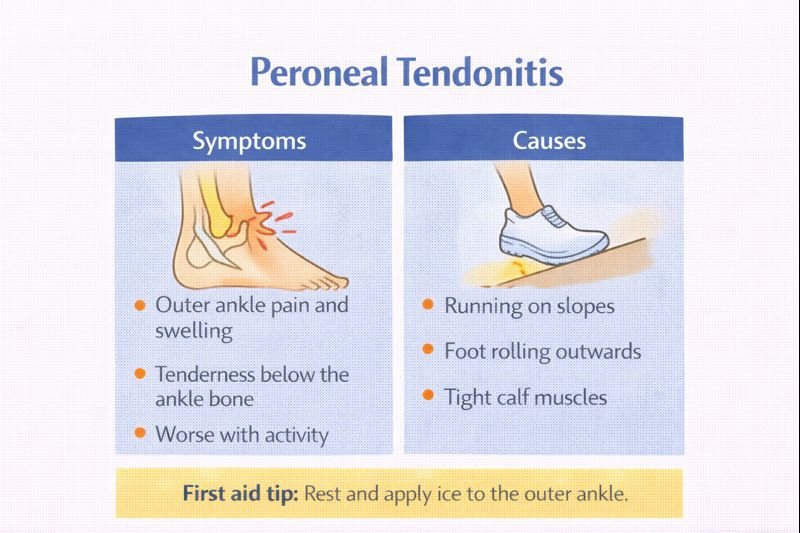 Symptoms of peroneal tendonitis often include:
-
Pain along the outer side of the ankle, just below the ankle bone
-
Swelling on the outside of the ankle
-
Tenderness when pressing over the tendon
Pain may increase when:
-
The foot is turned inward
-
The ankle is moved outward against resistance
These movements place extra tension on the peroneal tendons.
How Peroneal Tendonitis Develops
The peroneal muscles are located at the back of the lower leg, and their tendons curve around the lateral malleolus before attaching to the foot. With repetitive use, the tendon can rub against the bone, leading to irritation.
Common contributing factors include:
-
Running or walking on sloped or uneven surfaces
-
Repeated outward rolling of the foot
-
Tight calf or peroneal muscles
-
Overuse in sports such as basketball, running, or dance
-
Foot mechanics that increase tendon friction
When the foot rolls outward repeatedly, tension on the tendon increases, worsening friction at the ankle.
First Aid and Early Management
From a first aid perspective, early care focuses on reducing tendon irritation and preventing further strain.
General first aid considerations include:
-
Resting from activities that trigger pain
-
Avoiding uneven or sloped surfaces
-
Applying cold therapy to the outer ankle
-
Monitoring swelling and discomfort
Continuing painful activity can delay healing and increase inflammation.
Management and Recovery Considerations
Recovery typically involves addressing both symptoms and contributing factors.
Supportive strategies may include:
-
Temporary activity modification
-
Gentle stretching of the calf and peroneal muscles
-
Gradual return to activity once pain settles
-
Strength and flexibility work to reduce tension on the tendon
Stretching tight muscles is important, as ongoing tension can continue to irritate the tendon even with rest.
Prevention and Workplace Ankle Health
To reduce the risk of peroneal tendonitis:
-
Vary walking and running surfaces when possible
-
Use supportive footwear appropriate for the activity
-
Warm up before physical activity
-
Address muscle tightness early
-
Avoid pushing through outer ankle pain
Workplace awareness and early reporting of ankle discomfort can help prevent chronic issues.
Frequently Asked Questions
Where is the pain located with peroneal tendonitis?
Pain is usually felt on the outside of the ankle, just below the ankle bone.
Does rest help peroneal tendonitis?
Yes. Rest reduces irritation and allows inflammation to settle.
Can uneven ground cause this condition?
Yes. Sloped or uneven surfaces increase stress on the peroneal tendons.
Is swelling always present?
Swelling is common but may be mild in early stages.
How does first aid training help with ankle injuries?
First aid education promotes early recognition, rest, and safe activity modification.
Educational Note
This article is intended for general public education and workplace first aid awareness in Canada. It does not replace medical assessment, diagnosis, or individualized treatment for ankle or tendon conditions.
About The Author

Mark Kascha
Certified First Aid Instructor Trainer with 30+ years of real-world experience, including lifeguarding, workplace emergency response, and first aid program development across Canada. Has worked with WorkSafeBC, WSIB, and Manitoba Health.
👉 [View full credentials]🔗 View LinkedIn Profile
Last reviewed: March 2026