
 Understanding Viral Gastroenteritis
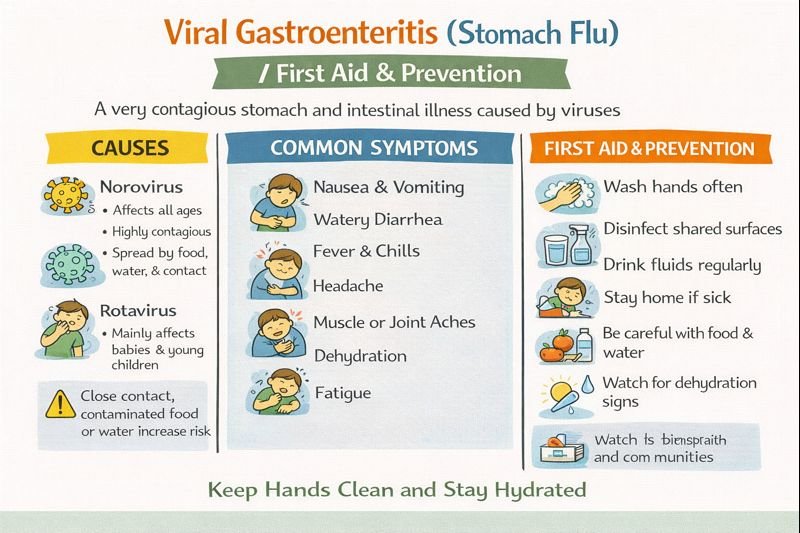
Viral gastroenteritis — often called the stomach flu — is an inflammation of the stomach and intestines caused by several types of viruses. Despite the name, it is not related to influenza. This condition is highly contagious and can affect people of all ages. It spreads easily through close contact with infected individuals, contaminated food or water, and shared surfaces.
Outbreaks are more likely in close-quarter environments such as schools, childcare centres, hospitals, long-term care facilities, and workplaces with shared kitchens or washrooms.
First Aid & Workplace Relevance in Canada
In Canadian workplaces and community settings, viral gastroenteritis can spread quickly if hygiene practices are not followed. First aid awareness helps people recognize symptoms early, encourage rest and hydration, and reduce transmission through proper handwashing and surface cleaning. Calm, informed responses can help protect both the affected individual and others nearby.
A Short Realistic Scenario
At a childcare centre, a staff member begins to feel nauseated and develops stomach cramps during a shift. A coworker familiar with first aid awareness helps arrange coverage, encourages frequent handwashing, and ensures shared surfaces are disinfected. The staff member rests at home, helping prevent further spread within the centre.
Common Viruses That Cause Gastroenteritis
Several viruses can lead to viral gastroenteritis, each with different patterns and peak seasons.
Norovirus
-
Affects people of all ages
-
Extremely contagious
-
Spreads through food, water, surfaces, and close contact
-
Common in crowded or shared environments
-
Symptoms may include nausea, vomiting, diarrhea, fever, and body aches
Rotavirus
-
Most commonly affects infants and young children
-
Spreads through oral contact
-
Symptoms often begin within two days
-
Includes vomiting, watery diarrhea, loss of appetite, and fever
Early childhood vaccination programs have reduced the severity of rotavirus illness in many communities.
Who Is Most at Risk?
While anyone can develop viral gastroenteritis, higher-risk groups include:
-
Children under 5 years of age
-
Older adults, especially those in long-term care settings
-
Individuals with weakened immune systems
These groups are more likely to experience complications such as dehydration.
Common Symptoms
Symptoms usually begin 1–2 days after exposure and may last from 1 to 10 days, depending on the virus and the individual.
Typical symptoms include:
-
Nausea and vomiting
-
Watery diarrhea
-
Abdominal cramping
-
Fever and chills
-
Headache
-
Muscle or joint aches
-
Sweaty or clammy skin
-
Fatigue
-
Loss of appetite
-
Temporary weight loss
Potential Complications
The most serious complication of viral gastroenteritis is dehydration, particularly in young children, infants, and older adults.
Signs of Dehydration to Watch For
-
Persistent nausea or vomiting
-
Diarrhea lasting several days
-
Very dry mouth or lips
-
Dark or infrequent urine
-
Dizziness or lightheadedness
-
Lethargy or confusion
-
Sunken eyes
-
Reduced or absent tears
-
In infants: sunken soft spot (fontanelle)
If these signs appear, further medical assessment is generally recommended.
First Aid Awareness and General Care
Management focuses on supportive care and hydration rather than specific treatment.
General comfort measures include:
-
Encouraging frequent small sips of fluids
-
Using ice chips if drinking is difficult
-
Resting until energy returns
-
Eating small, bland meals as tolerated
-
Avoiding foods and drinks that may worsen symptoms
Maintaining hydration is the main priority during recovery.
Prevention and Infection Control
Preventive measures are key to limiting spread:
-
Wash hands thoroughly and often, especially after bathroom use
-
Clean and disinfect shared surfaces
-
Avoid preparing food for others while symptomatic
-
Use safe food-handling practices
-
Avoid potentially contaminated food or water
-
Encourage early childhood vaccination where available
Workplace and Community Considerations
-
Encourage employees to stay home when symptomatic
-
Ensure access to handwashing facilities
-
Clean shared kitchens and washrooms regularly
-
Promote hygiene education as part of first aid training
-
Support flexible sick-leave practices to reduce outbreaks
Frequently Asked Questions
Is viral gastroenteritis the same as food poisoning?
They can have similar symptoms, but food poisoning is often caused by bacteria or toxins, while gastroenteritis is viral.
How contagious is the stomach flu?
Very contagious. It spreads easily through close contact and shared surfaces.
How long does recovery usually take?
Many people recover within 2–3 days, though symptoms can last longer in some cases.
Can adults catch viruses usually seen in children?
Yes. Adults can become infected, especially through close contact with children.
What is the biggest risk during illness?
Dehydration, particularly in young children, older adults, and vulnerable individuals.
Educational Note
This information is provided for general public education and first aid awareness. Gastrointestinal illnesses vary in severity, and learning early recognition and supportive care strategies helps people respond calmly and responsibly.
About The Author

Mark Kascha
Certified First Aid Instructor Trainer with 30+ years of real-world experience, including lifeguarding, workplace emergency response, and first aid program development across Canada. Has worked with WorkSafeBC, WSIB, and Manitoba Health.
👉 [View full credentials]🔗 View LinkedIn Profile
Last reviewed: March 2026