What Is Osteitis Pubis?
Osteitis pubis is a condition that causes groin pain originating from the pubic bones, located at the front of the pelvis. The discomfort is usually centred where the two pubic bones meet at a joint called the pubic symphysis.
Although it was once thought to be an inflammatory joint condition, current understanding describes osteitis pubis more accurately as a pubic bone stress injury. It develops gradually and is often linked to repetitive stress or overuse rather than a single traumatic event.
First Aid and Workplace Relevance in Canada
Osteitis pubis is relevant in Canadian workplaces and recreational settings that involve repetitive lower-body movements, lifting, twisting, or prolonged standing. It is also seen in sports such as hockey and soccer, as well as during pregnancy, when pelvic forces change.
First aid awareness helps individuals recognize persistent groin pain patterns, reduce aggravating activities early, and seek assessment before symptoms become long-lasting.
A Simple, Realistic Scenario
A recreational hockey player notices ongoing groin pain during skating drills and sit-ups. At first, they assume it is a muscle strain, but the pain slowly worsens and begins to affect walking. Remembering first aid education, they reduce activity, apply cold therapy, and arrange an assessment to rule out more serious causes.
Common Symptoms
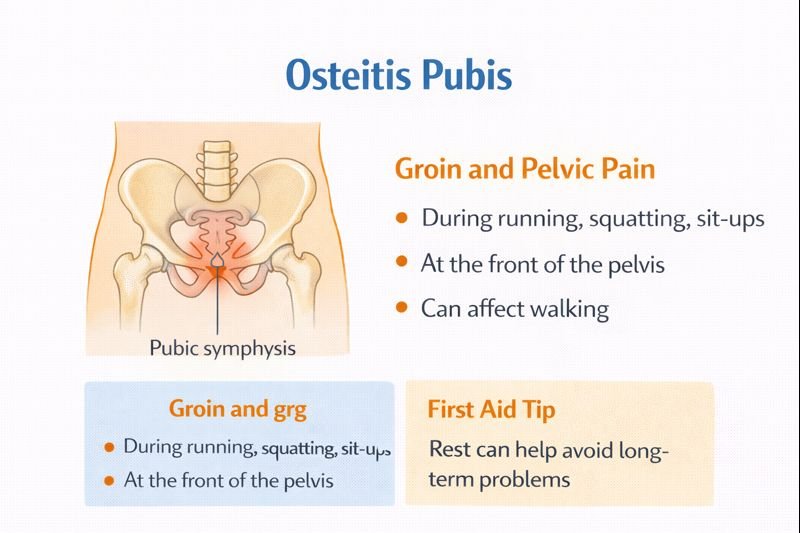 Symptoms of osteitis pubis often develop gradually and may include:
-
Groin or pelvic pain during running, squatting, or sit-ups
-
Pain centred at the front of the pelvis
-
Pain that radiates around the groin
-
Discomfort that worsens with activity
-
Stiffness or difficulty walking
-
A waddling gait in more severe cases
Because symptoms overlap with muscle strains, the condition is frequently mistaken for a groin or adductor injury.
Causes and Contributing Factors
Osteitis pubis is typically caused by repetitive stress to the pubic bones and surrounding structures.
Common contributing factors include:
-
Overuse from running, kicking, or twisting motions
-
Repetitive abdominal or hip flexor activity
-
Sudden increases in training or workload
-
Direct impact to the pelvic area
-
Pregnancy-related pelvic stress
The condition is uncommon but often used as an umbrella term for long-standing groin pain when other causes have been ruled out.
First Aid and Early Management
From a first aid perspective, early care focuses on activity reduction and symptom control.
General first aid measures may include:
-
Rest from aggravating activities
-
Applying cold therapy to reduce discomfort
-
Avoiding exercises that provoke groin pain
-
Monitoring symptoms over time
Early recognition and rest can help prevent prolonged recovery.
Diagnosis and Assessment
Medical assessment is important to rule out other causes of groin pain, such as hernias. Imaging such as X-rays may show changes at the pubic symphysis, including irregular bone surfaces or thickening. These findings help support the diagnosis when combined with symptoms and activity history.
Treatment and Recovery Considerations
Rest is the primary treatment for osteitis pubis. The length of rest depends on severity:
-
Mild cases may require several days of activity reduction
-
More severe cases may require weeks to months of modified or complete rest
Healthcare providers may recommend additional strategies to support recovery and guide a gradual return to activity.
Rehabilitation and Return to Activity
Recovery is typically gradual and occurs in stages:
-
Early phase: Rest and cold therapy
-
Mid phase: Gentle stretching that does not increase pain
-
Later phase: Progressive strengthening of abdominal, hip, and thigh muscles
-
Final phase: Gradual return to sport- or work-specific activities
Progression should be symptom-guided. Because recovery can take several months, structured rehabilitation and professional guidance are often helpful.
Prevention and Workplace Considerations
Preventive strategies include:
-
Gradual increases in activity or workload
-
Proper warm-up before physical activity
-
Balanced strengthening of core and hip muscles
-
Avoiding repetitive strain without adequate recovery
-
Reporting persistent groin pain early
Workplace task modification and ergonomic awareness can help reduce ongoing stress to the pelvis.
Frequently Asked Questions
Is osteitis pubis the same as a groin strain?
No. While symptoms can be similar, osteitis pubis involves stress to the pubic bones rather than muscle fibres.
Can osteitis pubis affect walking?
Yes. In more severe cases, walking patterns may change due to pain.
Is the pain always felt in one spot?
Pain is usually centred at the front of the pelvis but may radiate around the groin.
Does osteitis pubis heal quickly?
Recovery varies. Some cases resolve in weeks, while others may take several months.
How does first aid training help with groin injuries?
First aid education promotes early recognition, rest, and appropriate referral for persistent symptoms.
Educational Note
This article is intended for general public education and workplace first aid awareness in Canada. It does not replace medical assessment, diagnosis, or individualized treatment for groin or pelvic conditions.
About The Author

Mark Kascha
Certified First Aid Instructor Trainer with 30+ years of real-world experience, including lifeguarding, workplace emergency response, and first aid program development across Canada. Has worked with WorkSafeBC, WSIB, and Manitoba Health.
👉 [View full credentials]🔗 View LinkedIn Profile
Last reviewed: March 2026