
Morning headaches—often referred to as tension headaches—are headaches that begin upon waking or shortly afterward. They may last only a short time or continue throughout the day. These headaches are commonly linked to sleep-related factors, muscle tension, or lifestyle habits rather than serious illness.
Understanding common triggers helps individuals recognize patterns and take early, practical steps to reduce recurrence.
First Aid & Workplace Relevance (Canada)
Morning headaches can affect concentration, alertness, and productivity in Canadian workplaces, particularly during early shifts, physically demanding roles, or jobs requiring screen use. Employees may arrive at work already experiencing discomfort, which can increase fatigue and reduce focus.
First aid awareness supports recognition of non-emergency headache patterns and encourages early adjustments to sleep habits, ergonomics, and daily routines.
Scenario: Noticing a Sleep-Related Pattern
An employee began experiencing headaches most mornings that eased slightly by midday. After reviewing sleep habits during a workplace wellness discussion, they realized the headaches were worse after poor sleep and long screen use. Making small changes to their sleep setup helped reduce the frequency of morning headaches.
What Causes Morning Headaches?
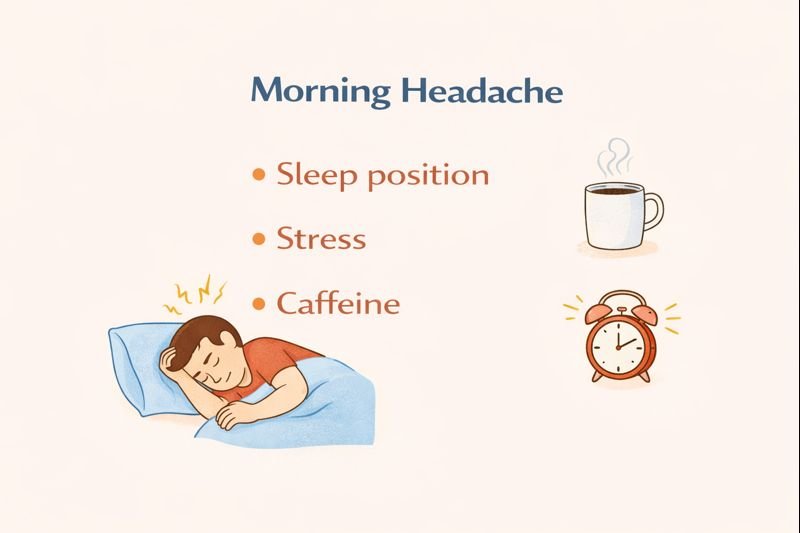 Morning headaches often develop due to tension or disrupted sleep during the night. Common contributors include:
-
Poor sleeping posture
-
Inadequate neck or head support
-
Insomnia or fragmented sleep
-
Muscle tension in the neck, shoulders, or jaw
-
Stress carried into sleep
Morning headaches are often felt on both sides of the head, especially around the temples or scalp, and may worsen with bright light.
The Role of Pillows and Sleep Support
Over time, pillows can lose their shape and no longer support the head and neck properly. Poor support may cause neck and shoulder tightness overnight, leading to tension headaches in the morning.
Awareness points include:
-
Noticing whether headaches improve when sleeping away from home
-
Checking if pillows are flattened, overly firm, or misshapen
-
Understanding that proper neck alignment helps reduce muscle strain
Sometimes, a small adjustment to sleep support can make a noticeable difference.
Sleeping Position and Headache Risk
Sleeping position plays a significant role in overnight muscle tension.
General observations include:
-
Side sleeping may reduce neck and lower back strain when supported properly
-
Stomach sleeping often places the neck in a rotated position for long periods
-
Back sleeping may contribute to disrupted sleep in some individuals, particularly those who snore or experience sleep-related breathing issues
Poor sleep quality can increase the likelihood of waking with a headache.
Stress and Tension Headaches
Stress is a common trigger for tension headaches, including those that appear in the morning. Stress-related muscle tightening during sleep may lead to scalp, neck, and shoulder discomfort upon waking.
Managing stress throughout the day may support better sleep quality and reduce morning tension.
Illness and Sinus-Related Factors
Occasional morning headaches may also appear during the early stages of:
-
Colds
-
Influenza
-
Upper respiratory infections
Sinus congestion and pressure can increase overnight, leading to head pain upon waking. These headaches are often temporary and occur alongside other early symptoms.
Caffeine and Morning Headaches
Caffeine intake can influence morning headaches in several ways:
-
Excessive caffeine may disrupt sleep quality
-
Reduced caffeine intake overnight may lead to withdrawal-related headaches
-
Caffeine’s mild diuretic effect can contribute to dehydration
Balancing caffeine intake and maintaining hydration may help reduce headache frequency.
First Aid Awareness and General Management
From a first aid education perspective, managing morning headaches focuses on awareness and prevention rather than treatment.
Key points include:
-
Tracking headache timing and frequency
-
Noticing links to sleep habits or stress
-
Making gradual adjustments to sleep routines
-
Avoiding sudden movements when waking with a headache
Persistent or worsening headaches should be assessed by a healthcare professional.
Frequently Asked Questions
Are morning headaches serious?
Most morning headaches are not serious, but persistent or worsening headaches should be evaluated.
Can sleep position really cause headaches?
Yes. Poor neck alignment or muscle strain during sleep can trigger tension headaches.
Does stress affect morning headaches?
Stress can contribute to muscle tension and poor sleep, increasing headache risk.
Can caffeine cause morning headaches?
Yes. Both excess caffeine and overnight withdrawal may trigger headaches.
When should morning headaches be checked?
If headaches occur frequently, worsen, or interfere with daily activities, medical assessment is recommended.
Educational Note
This article is intended for general public education and first aid awareness. It does not provide medical diagnosis or treatment advice. First aid training focuses on recognizing patterns, reducing triggers, and understanding when professional assessment may be appropriate.
About The Author

Mark Kascha
Certified First Aid Instructor Trainer with 30+ years of real-world experience, including lifeguarding, workplace emergency response, and first aid program development across Canada. Has worked with WorkSafeBC, WSIB, and Manitoba Health.
👉 [View full credentials]🔗 View LinkedIn Profile
Last reviewed: March 2026