
What Is Metatarsalgia?
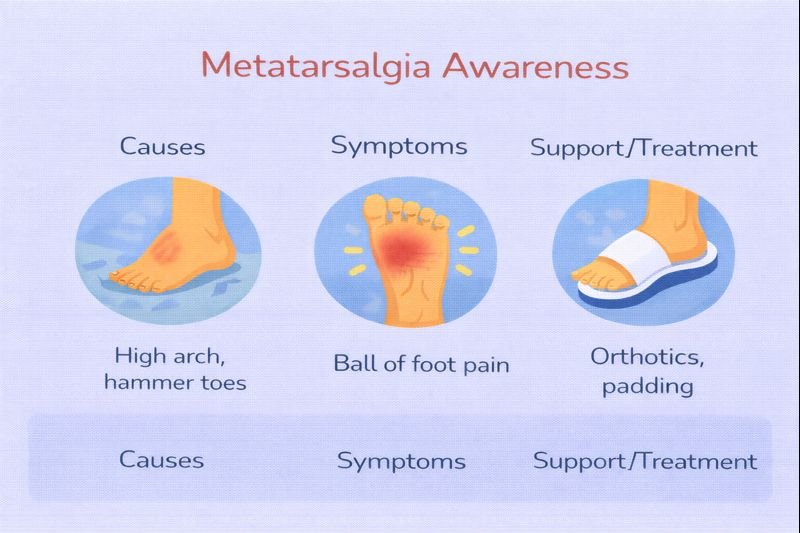
Metatarsalgia refers to pain and discomfort beneath the ball of the foot, the area formed by five metatarsophalangeal joints where the toes bend and push off during walking. Pain develops when excess pressure is repeatedly placed on this part of the foot. A common contributor is foot structure, such as high arches or toe deformities (for example, hammer toes), which can shift weight forward onto the ball of the foot.
Why This Matters for First Aid and Workplaces in Canada
Ball-of-foot pain can affect people who stand, walk, or lift for long periods—common in retail, healthcare, warehousing, construction, and outdoor work across Canada. First aid awareness helps workers recognize early signs, reduce aggravating pressure, and seek timely assessment before pain interferes with safety or mobility.
A Realistic Scenario
A retail worker who stands most of the day notices aching and burning under the ball of one foot by mid-shift. A supervisor trained in first aid recognizes possible metatarsalgia, suggests a rest break, checks footwear fit, and encourages follow-up if symptoms persist—helping prevent worsening pain and altered gait.
Common Causes of Metatarsalgia
Any condition that increases pressure under the ball of the foot can contribute. Often, calluses form as a stress response; while protective, they can also add to discomfort.
Trauma
-
Chronic micro-trauma from repetitive loading may lead to bone bruising, bursitis, arthritis, or soft-tissue inflammation.
-
Acute injuries—such as sesamoid bone injury, metatarsal fracture, or ligament injury at the big toe—can also cause ball-of-foot pain.
High-Arched Foot (Pes Cavus)
High arches do not distribute pressure evenly during walking, concentrating force at the heel and ball of the foot. People with high arches often find hard surfaces uncomfortable and benefit from shoes with supportive, cushioned soles.
Thinning of the Plantar Fat Pad
The sole of the foot normally has a dense cushioning layer. With aging, this fat pad can thin, making the ball of the foot more sensitive to pressure during standing and walking.
Other Contributing Factors
-
Neuroma: nerve thickening/irritation, often between the 3rd and 4th toes
-
Abnormal metatarsal length: one bone longer or shorter than others
-
Sesamoid problems: inflammation or fracture of small bones under the big toe
-
Hallux limitus: limited motion at the big-toe joint, shifting pressure to other metatarsals
Symptoms to Watch For
-
Localized pain or burning under the ball of the foot
-
Tenderness that worsens with standing or walking
-
Callus formation over painful areas
-
Discomfort when pushing off during gait
Persistent pain that disrupts daily activities at home or work warrants medical assessment.
First Aid Awareness and Early Management
 From a first aid and workplace perspective, the focus is on reducing pressure and monitoring symptoms:
-
Encourage rest and activity modification when pain flares
-
Check footwear fit and support; avoid thin, unsupportive soles
-
Reduce repetitive loading where possible (task rotation, micro-breaks)
-
Protect tender areas with padding if appropriate
-
Monitor for swelling, increasing pain, or changes in walking pattern
Treatment Overview (Educational)
Management depends on the underlying cause and may include:
-
Foot support: over-the-counter or custom orthotics
-
Padding or modifications to redistribute pressure under the ball of the foot
-
Callus care performed safely by trained professionals
-
Targeted therapies for inflammation or structural issues
-
Surgical options in select cases to address bone abnormalities
First aid education emphasizes awareness and referral rather than diagnosis or prescribing.
Prevention and Workplace Considerations
-
Wear well-fitting, supportive footwear with adequate cushioning
-
Replace worn shoes regularly
-
Use supportive insoles when standing or walking for long periods
-
Address high-impact tasks with ergonomic adjustments
-
Report foot pain early to prevent compensation injuries
Frequently Asked Questions (FAQ)
What does metatarsalgia feel like?
It often feels like aching, burning, or sharp pain under the ball of the foot, worse with standing or walking.
Can foot structure cause ball-of-foot pain?
Yes. High arches, toe deformities, and joint motion limits can shift pressure forward.
Do calluses cause the pain?
They form in response to pressure and can add to discomfort, but the underlying pressure is the main issue.
Is metatarsalgia common in standing jobs?
Yes. Prolonged standing and walking increase load on the forefoot.
Why is first aid awareness important?
Early recognition and pressure reduction can prevent worsening pain and secondary injuries.
Educational Note
This article is intended for general first aid and workplace safety education in Canada. It supports awareness of ball-of-foot pain but does not replace medical assessment or treatment.
About The Author

Mark Kascha
Certified First Aid Instructor Trainer with 30+ years of real-world experience, including lifeguarding, workplace emergency response, and first aid program development across Canada. Has worked with WorkSafeBC, WSIB, and Manitoba Health.
👉 [View full credentials]🔗 View LinkedIn Profile
Last reviewed: March 2026