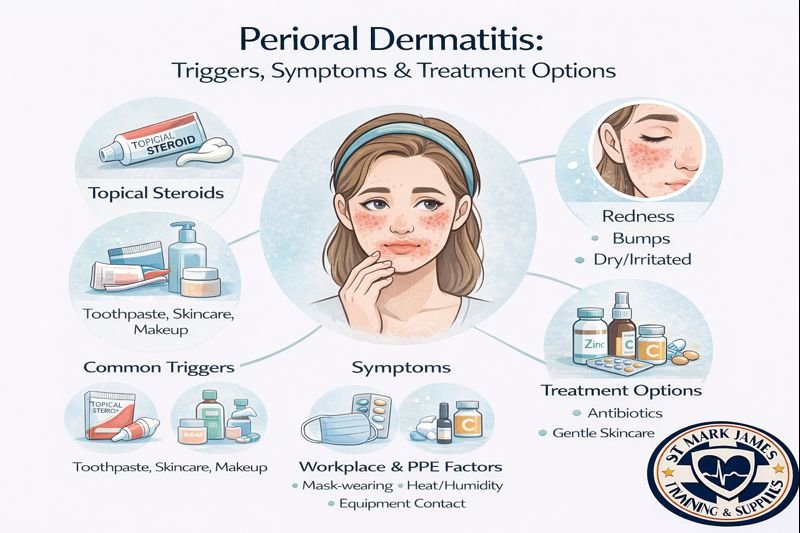
 Perioral dermatitis is a type of facial rash that commonly appears around the mouth, but it may also occur near the nose, eyes, or forehead. The rash consists of small, red bumps and may feel itchy, dry, or irritated. While the exact cause isn’t fully understood, several skincare ingredients and topical medications can worsen symptoms.
Many individuals find this condition frustrating because it affects a visible area of the face and can take time to improve.
Common Triggers
Topical Steroids
Facial corticosteroid creams (including hydrocortisone) can temporarily calm irritation, but prolonged use often worsens perioral dermatitis. When discontinued, a short “rebound flare” can occur before the skin settles.
Toothpaste & Skincare Ingredients
Certain ingredients can aggravate symptoms, including:
-
Sodium lauryl sulfate (SLS)
-
Tartar-control toothpaste ingredients
-
Fluoride (in some cases)
-
Fragrance or cinnamon flavouring
-
Heavy petrolatum/paraffin-based moisturizers
-
Harsh cleansers or exfoliants
-
Occlusive makeup products
Switching to gentler, SLS-free products can be helpful while the skin recovers.
Antibiotic Treatment
Perioral dermatitis often responds best to prescription therapy. Healthcare providers may prescribe:
-
Oral antibiotics: doxycycline, minocycline, or tetracycline
-
Topical medications: erythromycin, clindamycin, metronidazole, or benzoyl peroxide
Because improvement can be slow, treatment may last several months under medical supervision.
Supportive Skin Care
While treatment is ongoing, supportive measures may help:
-
Use mild, fragrance-free cleansers
-
Avoid heavy or oily moisturizers
-
Pause makeup or irritating cosmetics
-
Launder pillowcases and face towels frequently
Some Canadians find relief using mineral-based sunscreens during flare-ups, especially if working outdoors.
Natural & Nutritional Strategies (Supportive, Not Primary Treatment)
Non-prescription options may help calm irritation for mild cases, but should not replace medical guidance:
-
Tea tree or lavender oil (only diluted in carrier oils and used cautiously to avoid irritation)
-
Zinc or vitamin C supplements, if appropriate for overall skin health
If symptoms worsen, return to medical care for further assessment.
Workplace & PPE Considerations
Perioral dermatitis sometimes appears or worsens with:
-
Heat and humidity
-
Cosmetic use in food service, hospitality, or retail settings
-
Repeated skin contact from helmets, equipment straps, or PPE
These trends became more noticeable during prolonged mask use in healthcare and frontline workplaces across Canada.
When to Seek Medical Guidance
Consult a healthcare provider if:
-
Symptoms persist for several weeks
-
The rash spreads toward the eyes
-
Over-the-counter changes don’t help
-
You rely on topical steroids for facial irritation
Disclaimer
This content is for public education only and not a substitute for diagnosis or treatment. Individuals with persistent or worsening facial rashes should seek care from a qualified healthcare professional.
About The Author

Mark Kascha
Certified First Aid Instructor Trainer with 30+ years of real-world experience, including lifeguarding, workplace emergency response, and first aid program development across Canada. Has worked with WorkSafeBC, WSIB, and Manitoba Health.
👉 [View full credentials]🔗 View LinkedIn Profile
Last reviewed: March 2026