
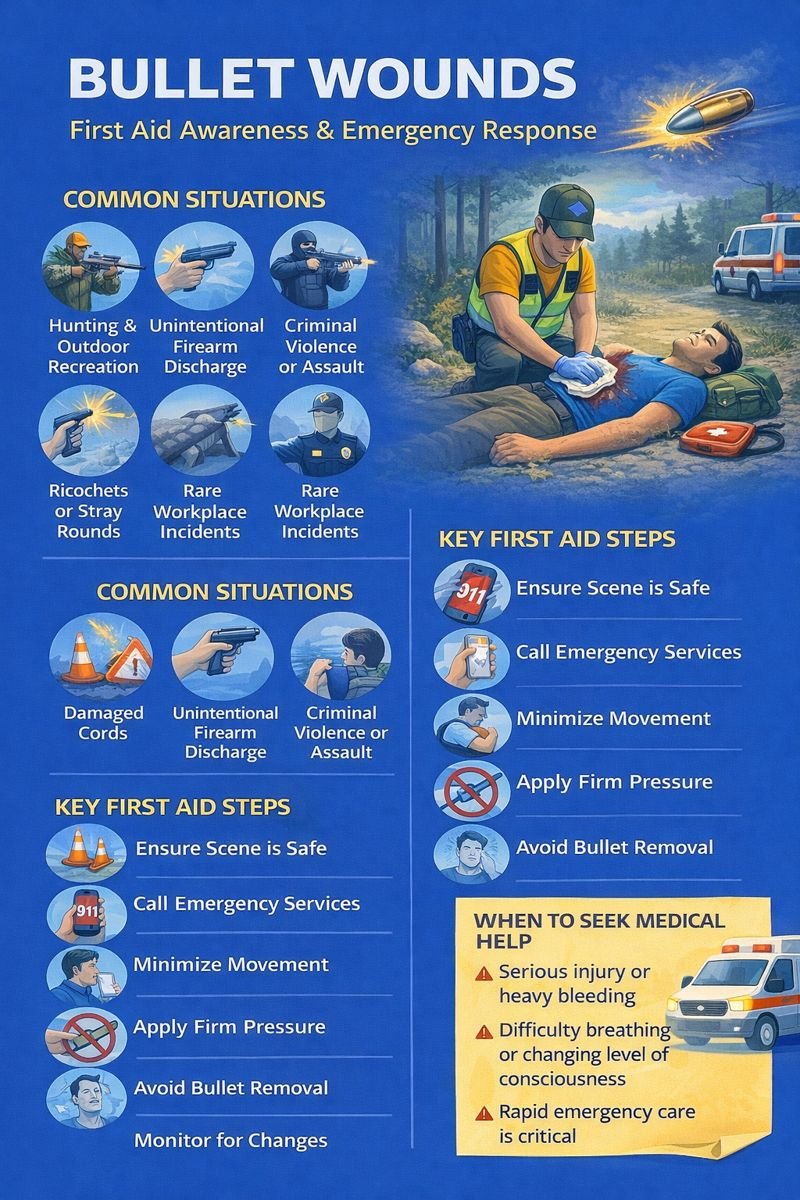
 Firearm injuries can occur in hunting settings, rural environments, or during violent incidents. Any suspected bullet wound is a medical emergency and requires rapid activation of emergency services. Early access to professional care greatly influences outcomes.
First aid and community relevance (Canada)
In Canada, firearm injuries are relatively uncommon but still occur through hunting, recreation, workplace settings, and interpersonal violence. First aid responders should focus on scene safety, calling for emergency help, and basic bleeding control rather than attempting advanced procedures.
Scenario story
During a fall hunting trip, two adults heard a loud report and realized a stray round struck a nearby hiker. One person called 911 immediately while the other ensured the area was safe, helped keep the injured person calm, and waited for paramedics to arrive. The quick call allowed emergency services to reach the remote area promptly.
Common situations where bullet wounds may occur
Bullet wounds may result from:
-
Hunting and outdoor recreation
-
Unintentional firearm discharge
-
Criminal violence or assault
-
Ricochets or stray rounds
-
Rare workplace or security-related incidents
Regardless of context, the injury mechanism involves high-energy penetration, which may affect internal tissues even if the wound looks small externally.
Key first aid awareness priorities
When someone may have sustained a bullet wound, first aid goals include:
1. Ensure scene safety
A responder should only approach if it is safe to do so. Moving to a safer location or waiting for law enforcement may be required.
2. Activate emergency services
Call emergency assistance immediately. If alone, put the call on speakerphone if possible.
3. Support the person and minimize movement
Have the person remain as still as possible to avoid worsening injuries. Encourage calm and steady breathing.
4. Address visible bleeding if safe
If external bleeding is visible, applying firm, steady pressure with a clean cloth or bandage can help slow blood loss until professionals arrive. Avoid exploring or probing the wound.
5. Do not attempt advanced care
Removing a bullet or foreign object is not appropriate in a first aid setting and must be done by trained healthcare professionals in a controlled environment.
6. Monitor for changes
Loss of consciousness, difficulty breathing, cool skin, or confusion are concerning signs and should be relayed to emergency dispatchers.
Hospital evaluation
Emergency departments are equipped to assess for internal and external injuries. Treatment may include imaging, wound care, bleeding control, and surgeries when needed.
Safety and prevention considerations
-
Use safe storage and handling practices for firearms
-
Follow provincial hunting regulations and training requirements
-
Wear appropriate outdoor visibility gear during hunting seasons
-
Follow firearm safety rules at ranges and recreation facilities
FAQ
Why are bullet wounds considered medical emergencies?
Even small entry wounds can involve internal bleeding or organ injury, which requires professional care.
Should a bystander remove a bullet or object?
No. Removing objects can increase bleeding and infection risk. This is a job for trained medical teams.
Can bullet wounds occur without criminal activity?
Yes. Many cases involve recreational contexts such as hunting or sport shooting.
What matters most in first aid for bullet wounds?
Scene safety, rapid activation of emergency services, and basic bleeding control if safe to do.
Do bullet wounds always bleed heavily?
Not always. The absence of heavy bleeding does not indicate a minor injury.
Educational note
This information supports public first aid awareness and safety education and does not replace emergency care or clinical evaluation.
About The Author

Mark Kascha
Certified First Aid Instructor Trainer with 30+ years of real-world experience, including lifeguarding, workplace emergency response, and first aid program development across Canada. Has worked with WorkSafeBC, WSIB, and Manitoba Health.
👉 [View full credentials]🔗 View LinkedIn Profile
Last reviewed: March 2026