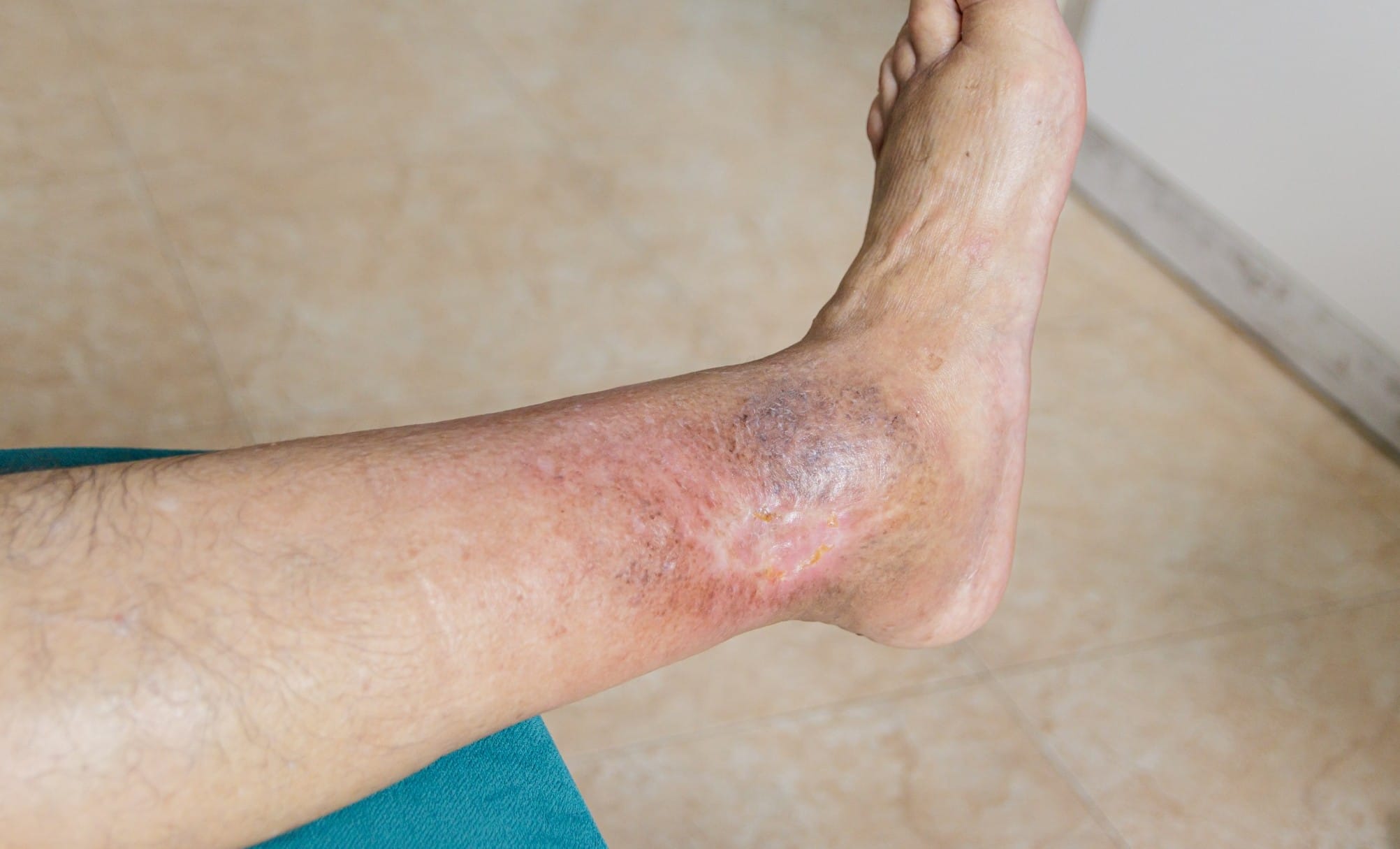
 A leg ulcer is an open wound on the leg that is slow to heal or fails to heal properly. These wounds are most often linked to poor circulation, diabetes, or problems with the veins or valves in the legs. Without proper care, leg ulcers can persist for months and may become infected.
The most common type is a venous stasis leg ulcer, typically found below the knee and just above the ankle, often on the inner or outer aspect of the lower leg. Medical treatment may include antibiotics (if infection is present), compression therapy, and medications to improve circulation or reduce clot risk.
Home Care Measures for Leg Ulcers
Once medical treatment has been started, supportive care at home plays an important role in healing.
Elevation and Activity
Keeping the legs elevated to heart level helps reduce swelling and fluid buildup in the lower extremities, which supports wound healing and helps prevent new ulcers from forming.
- Elevate the legs several times a day
- Avoid long periods of sitting or standing
- Gradual, gentle activity such as walking or light stretching improves circulation
⚠️ Always consult a healthcare provider before starting an exercise routine, especially if mobility has been limited.
Proper Cleansing and Wound Care
Because a leg ulcer is an open wound, daily wound care is essential to monitor healing and reduce infection risk.
- Clean the ulcer gently with water and mild soap
- Remove dead tissue and drainage carefully
- Keep the wound covered with a clean dressing as advised by a healthcare professional
Signs of Infection to Watch For
Seek medical advice if any of the following develop:
- Increasing redness or warmth
- Swelling around the wound
- Drainage of pus or foul-smelling fluid
If infection is present, prescription ointments and daily dressing changes may be required.
Compression Therapy
Compression is a cornerstone of treatment for venous leg ulcers.
- Compression stockings help reduce swelling and improve blood flow
- Stockings are available in different compression strengths
- They should be put on first thing in the morning before getting out of bed
- Worn throughout the day as directed
Proper compression can significantly improve healing outcomes and reduce recurrence.
First Aid & Wound Care Disclaimer
This information is provided for educational and first aid awareness purposes only and is not a substitute for professional medical care. Chronic or infected leg ulcers require assessment and ongoing management by healthcare professionals.
Learning how to recognize, clean, dress, and monitor wounds is an essential part of First Aid training. Canadians are encouraged to take a First Aid and CPR course to better manage wounds, circulation-related conditions, and infection risks.
About The Author

Mark Kascha
Certified First Aid Instructor Trainer with 30+ years of real-world experience, including lifeguarding, workplace emergency response, and first aid program development across Canada. Has worked with WorkSafeBC, WSIB, and Manitoba Health.
👉 [View full credentials]🔗 View LinkedIn Profile
Last reviewed: March 2026