
 Understanding Knee Clicking
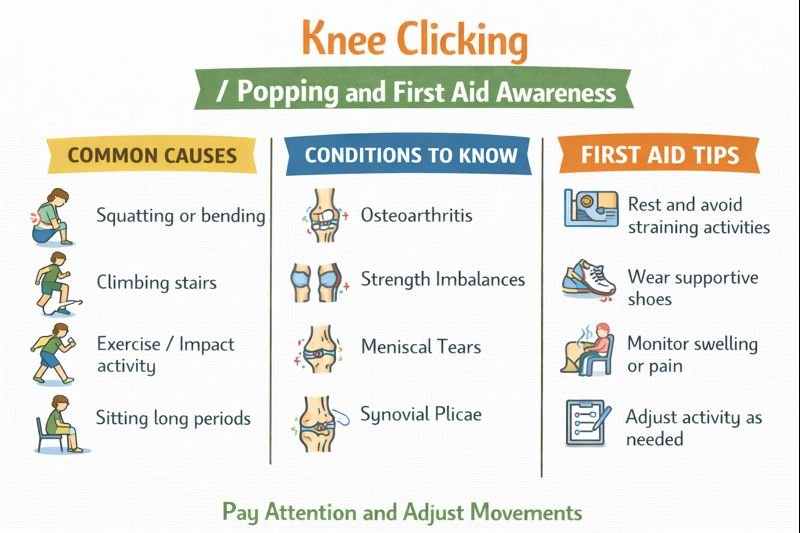
Knee clicking or popping is a common experience and, in many cases, is harmless. The knee is a complex joint made up of bones, cartilage, ligaments, tendons, and muscles that work together to support body weight during standing, walking, bending, and exercise. During movement — especially squatting, climbing stairs, or high-impact activities like running — these structures shift and glide, sometimes producing sounds.
While knee clicking is often normal, it can occasionally point to strain, muscle imbalance, or an underlying joint condition. Knowing when clicking is likely harmless and when it deserves attention is an important part of basic first aid awareness.
First Aid & Workplace Relevance in Canada
In Canadian workplaces, knee discomfort can affect employees who stand for long periods, lift loads, kneel, or participate in physically demanding tasks. First aid awareness helps coworkers recognize early joint strain, encourage rest or activity modification, and reduce the risk of further irritation. Calm, informed responses support mobility and workplace safety without assuming injury.
A Short Realistic Scenario
A warehouse employee notices a clicking sound in their knee when squatting to pick up boxes. There is no pain, but the sensation feels unusual. A coworker with first aid awareness suggests taking a short break, avoiding deep squats for the rest of the shift, and paying attention to any swelling or discomfort. The employee adjusts their movements and experiences no further issues that day.
Common Characteristics of Knee Clicking
Knee clicking may occur:
-
When bending or straightening the knee
-
During squatting or climbing stairs
-
After long periods of sitting
-
During exercise or high-impact activities
Clicking without pain, swelling, or instability is often not a cause for concern.
Possible Causes of Knee Clicking
Osteoarthritis
Osteoarthritis develops gradually as joint cartilage wears down over time. In the knee, this may cause:
-
Clicking or grinding sounds
-
Stiffness, especially after rest
-
Reduced flexibility
The condition may affect one or both knees and often progresses slowly.
Strength Imbalances (Runner’s Knee)
Muscle imbalances around the knee can cause the kneecap to move slightly off its normal path during motion.
-
The outer thigh muscles may be stronger than the inner muscles
-
This imbalance can lead to clicking during bending or squatting
This issue is commonly referred to as runner’s knee and may or may not involve pain.
Meniscal Tears
The meniscus is a piece of cartilage that cushions and stabilizes the knee joint. Twisting the knee while bearing weight can sometimes lead to a tear. Possible signs include:
-
Clicking or popping
-
A feeling of weakness or instability
-
Swelling or discomfort in some cases
Minor tears may settle over time, while persistent symptoms generally warrant professional assessment.
Synovial Plicae
The synovium is soft tissue that lines the knee joint. Small folds in this tissue, called plicae, can sometimes become noticeable during movement.
-
Plicae may cause clicking during bending
-
They are often harmless
-
In some cases, they may become irritated and sore
First Aid Awareness and General Comfort Measures
For mild knee clicking without pain:
-
Reduce repetitive deep squatting or kneeling.
-
Avoid high-impact activity if discomfort develops.
-
Use supportive footwear.
-
Pay attention to swelling, stiffness, or pain.
-
Allow rest periods during physically demanding tasks.
If clicking is accompanied by pain, swelling, locking, or instability, professional assessment is generally recommended. First aid awareness focuses on early recognition and activity modification rather than diagnosis.
Prevention and Workplace Considerations
-
Encourage proper lifting techniques.
-
Rotate tasks to reduce repetitive knee strain.
-
Use knee pads or supportive flooring when kneeling is required.
-
Maintain good footwear with adequate support.
-
Promote warm-up movement before physically demanding tasks.
-
Include joint awareness and injury prevention in workplace first aid training.
Frequently Asked Questions
Is knee clicking always a sign of injury?
No. Clicking without pain or swelling is often normal and related to joint movement.
Why does my knee click more when squatting?
Squatting places extra load on the knee joint, which can make normal joint movement more noticeable.
Can muscle imbalance cause knee sounds?
Yes. Uneven muscle strength around the knee can affect how the kneecap moves during bending.
Should exercise stop if clicking occurs?
Not necessarily. Exercise may continue if there is no pain, swelling, or instability, but movements may need adjustment.
What should coworkers watch for?
Pain, swelling, locking, or difficulty bearing weight are signs that further assessment may be needed.
Educational Note
This information is for general public education and first aid awareness. Knee sounds are common, and learning how to recognize normal versus concerning symptoms can help individuals respond calmly and safely during daily activities.
About The Author

Mark Kascha
Certified First Aid Instructor Trainer with 30+ years of real-world experience, including lifeguarding, workplace emergency response, and first aid program development across Canada. Has worked with WorkSafeBC, WSIB, and Manitoba Health.
👉 [View full credentials]🔗 View LinkedIn Profile
Last reviewed: March 2026