 Automated external defibrillators (AEDs) are portable devices designed to assess heart rhythm and, when indicated, deliver an electric shock intended to restore a normal heart rhythm during sudden cardiac arrest. While CPR keeps blood circulating, AEDs can help re-establish a workable rhythm, which is why many public spaces now include them as part of emergency preparedness plans.
Relevance in Canadian Homes & Workplaces
AEDs are common in public venues such as airports, arenas, schools, and workplaces. Increasingly, some people consider AEDs for home settings, particularly because many cases of sudden cardiac arrest occur in residential environments. Conversations about home AEDs often relate to family health planning, first aid awareness, and comfort with emergency response.
Scenario (Mild & Realistic)
After a CPR and first aid course at work, Alex learned how AEDs provide prompts for use during a cardiac emergency. At home, this sparked a discussion with family members about emergency preparedness and how to recognize when to call 9-1-1 during a sudden medical event.
Research & Public Discussion on Home AEDs
Studies have explored whether home AEDs add benefit in settings where sudden cardiac arrest risk is known or suspected. Findings suggest that AEDs are generally safe and easy to use when responders are present, but public health experts also note that outcomes depend on many factors, including whether someone is nearby to respond and how quickly emergency services are contacted.
Public discussion around home AEDs often includes:
-
Ease of use (voice prompts guide operation)
-
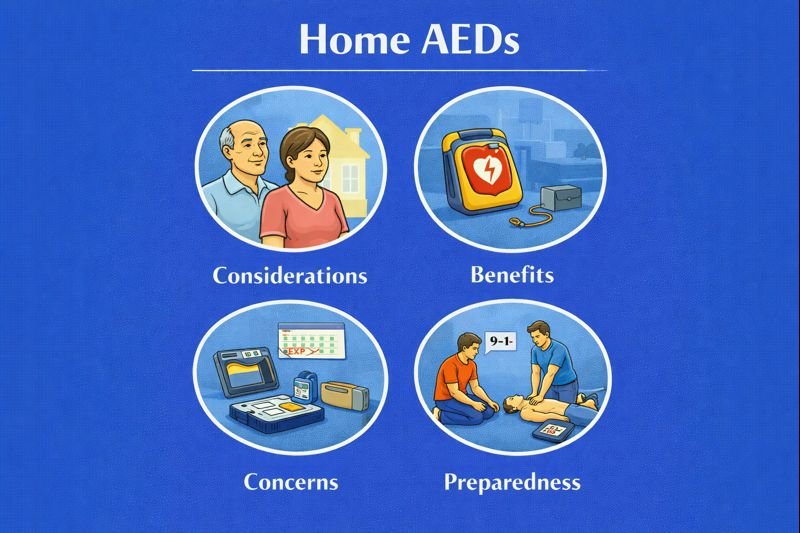
Maintenance considerations (pads and batteries have expiry dates)
-
Emergency coordination (AEDs complement, not replace, calling emergency services)
-
Household readiness (comfort with CPR and first aid)
Considerations for Home Settings
Whether a home benefits from an AED may depend on situational factors such as:
-
The presence of individuals at higher risk of cardiac events
-
Household size (someone must be available to operate the device)
-
Familiarity with CPR and AED use
-
Comfort with first aid preparedness
-
Storage, visibility, and maintenance
These points reflect preparedness planning, not medical decision-making.
Barriers & Challenges Discussed in Studies
Common concerns raised by researchers and health educators include:
-
Confidence in device use if no training has occurred
-
Whether AED availability changes how quickly emergency services are called
-
Maintenance and pad/battery replacement awareness
-
Physical positioning (AEDs are operated at floor level)
-
Longevity and readiness of equipment over time
CPR & AED Awareness
Workplace and community courses often teach:
-
When CPR is started
-
How AED prompts guide responders
-
Why emergency services must still be contacted
These skills can increase confidence in both public and home settings.
FAQ
Are home AEDs the same as public AEDs?
Most commercially available AEDs function similarly and are designed for use by lay responders with voice guidance.
Do you need training to use an AED?
AEDs provide prompts and are designed for untrained responders, although CPR/AED training can build confidence.
Do AEDs replace emergency response?
No. AEDs complement CPR and emergency medical services.
Can a person use an AED on themselves?
No. AEDs require someone else to apply pads and follow prompts.
Educational Note
This article supports public education on AED awareness and home preparedness considerations. Decisions about equipment, health risk, and emergency planning vary across individuals and households, and circumstances differ widely.
About The Author

Mark Kascha
Certified First Aid Instructor Trainer with 30+ years of real-world experience, including lifeguarding, workplace emergency response, and first aid program development across Canada. Has worked with WorkSafeBC, WSIB, and Manitoba Health.
👉 [View full credentials]🔗 View LinkedIn Profile
Last reviewed: March 2026