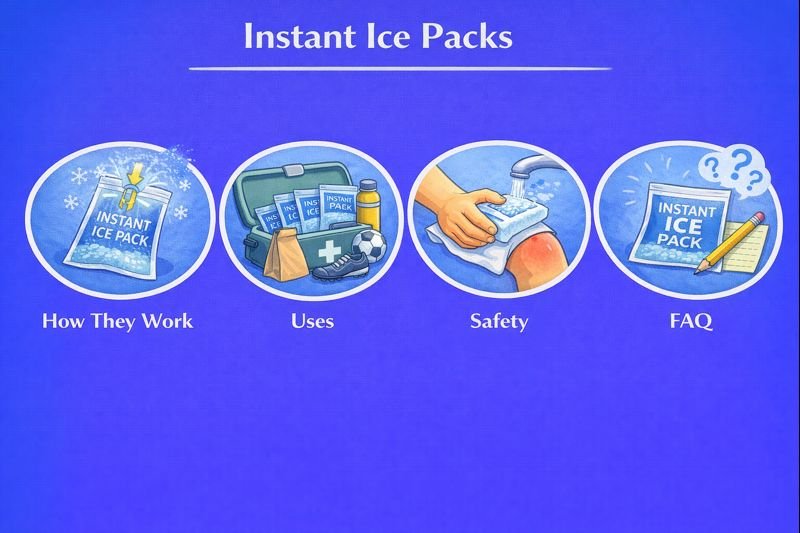
 Instant ice packs are cold packs that activate without refrigeration. They are commonly found in first aid kits, sports bags, workplaces, schools, and outdoor activity kits.
Relevance in Canada & Workplace Settings
Cold packs are frequently used in Canadian workplaces and sports settings for minor injuries such as bumps, strains, or soft tissue soreness. Because they do not require freezing, they are convenient for field environments, outdoor worksites, remote camps, recreation programs, and travel.
Scenario (Mild & Realistic)
During a community soccer tournament, a player bumps their knee during a slide tackle. A coach retrieves an instant cold pack from the first aid kit, activates it, and places a cloth barrier before lightly applying cold to ease discomfort while the player rests briefly on the sidelines.
What Makes Instant Ice Packs “Instant”?
Unlike freezer packs, instant packs produce cold through a chemical reaction. Most commercial designs keep two components separated inside the pouch. When squeezed or popped, the materials mix and rapidly absorb heat, creating a cold effect.
Common Uses
Instant cold packs are often used for:
-
Minor bumps and soft tissue strains
-
Sports and recreation activities
-
Workplace first aid kits
-
Outdoor or travel settings where coolers aren’t available
-
Temporary cooling for food and supplies
Cold can provide temporary comfort and may reduce sensation in the area where applied.
How They Work (Simplified)
Many instant packs create cold through an endothermic reaction, a chemical process that absorbs heat from the surroundings. This allows the pack to reach a cold temperature quickly without pre-chilling.
Safety & First Aid Awareness (Non-Prescriptive)
When using cold packs, public guidance generally emphasizes:
-
Placing a cloth barrier between the pack and skin to protect from cold injury
-
Monitoring skin for changes such as numbness or irritation
-
Using cold for short periods rather than prolonged exposure
-
Checking packaging instructions, as products vary
-
Avoiding direct ice-to-skin contact
Individuals with impaired sensation or circulatory concerns may require clinical advice for cold therapies.
Prevention & Practical Considerations
Workplaces and recreational groups can:
-
Stock instant packs in first aid kits
-
Train staff on basic first aid awareness
-
Store packs according to manufacturer instructions
-
Replace expired or damaged packs as needed
-
Select products labelled for single-use or multi-use depending on need
FAQ (Educational)
Q: Are instant ice packs reusable?
Many are single-use. Some gel-based cold packs in first aid kits are reusable. Packaging provides the accurate information.
Q: Why not apply cold directly to skin?
Direct contact may irritate the skin or cause cold injury. A cloth barrier helps reduce that risk.
Q: Are instant cold packs only for injuries?
No. They are also used for transporting food or medications when refrigeration is not available.
Q: Why are they common in workplace kits?
They activate instantly and do not require power, making them practical for mobile or remote environments.
Educational Note
This article supports public first aid education and workplace awareness. It does not provide medical treatment instructions or replace clinical or occupational guidelines.
About The Author

Mark Kascha
Certified First Aid Instructor Trainer with 30+ years of real-world experience, including lifeguarding, workplace emergency response, and first aid program development across Canada. Has worked with WorkSafeBC, WSIB, and Manitoba Health.
👉 [View full credentials]🔗 View LinkedIn Profile
Last reviewed: March 2026