
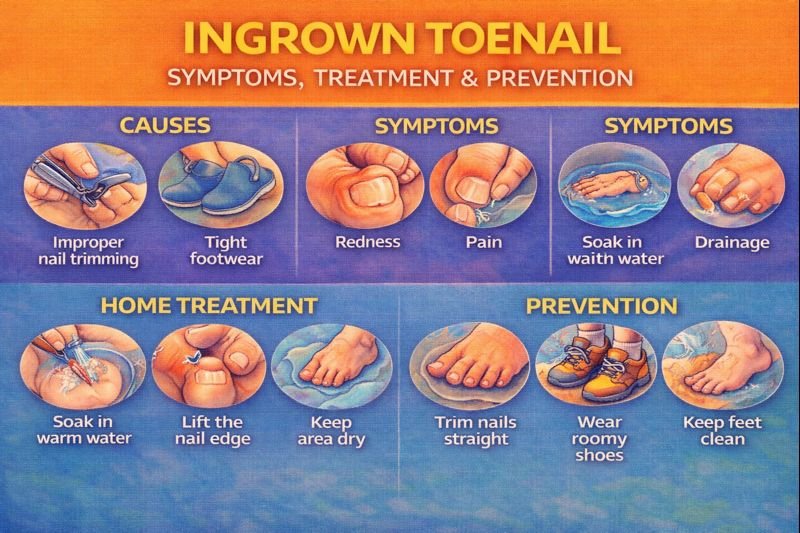
 An ingrown toenail occurs when the edge or corner of a nail grows into the surrounding skin, causing pain and swelling. It most commonly affects the big toe, but any toenail can be involved. Early awareness of ingrown toenails and first aid can often prevent infection and avoid the need for medical procedures.
This condition is frequently seen at home and workplace environments where footwear or physical activity affects the toes.
Mild Scenario Example
A teen trims their toenails short before sports practice. A few days later, the corner of the big toe becomes tender, red, and swollen along one side of the nail, making walking uncomfortable. Early care reduces inflammation and helps prevent infection.
Common Symptoms
At early stages:
-
Local pain or tenderness
-
Redness along one side of the nail
-
Mild swelling
-
Firm skin along the nail edge
Signs infection may be developing:
-
Increased redness or warmth
-
Pus or drainage
-
Escalating pain
-
Difficulty wearing shoes
What Causes Ingrown Toenails?
Common factors include:
-
Improper nail trimming (cut too short or curved at the corners)
-
Tight footwear that compresses the toes
-
Toe trauma (for example, stubbed toe or object dropped onto the foot)
-
Congenital factors, such as nails that are naturally wider or curved
-
Sweaty or moist feet, which soften skin around the nail
-
Sports and activities requiring tight footwear or repeated pressure
First Aid & Home Care (Non-Surgical)
Early home treatment may help prevent infection:
-
Warm water soaks
Soak the foot for 10–20 minutes, 3–4 times daily. -
Keep the foot dry between soaks.
-
Choose wide or open-toed footwear to relieve pressure.
-
Pain relief
Over-the-counter options such as acetaminophen or ibuprofen may help with discomfort. -
Gently lift the nail edge (only if safe and not infected)
A small piece of cotton or waxed dental floss can be placed under the nail edge to help it grow outward. Replace daily.
If symptoms worsen over 48–72 hours, infection is suspected, or pain increases, seek medical care.
Medical Treatment
If infection or severe inflammation develops, a clinician may recommend:
-
Antibiotics (if infection is present)
-
Partial or full nail removal
-
Removal of part of the nail bed or growth tissue to prevent recurrence (in repeated cases)
These are minor procedures performed in outpatient settings.
Prevention Strategies
To reduce risk of recurrence:
-
Trim toenails straight across, not curved
-
Avoid cutting nails too short
-
Select footwear with adequate toe room
-
Protect feet from trauma during sports
-
Keep feet clean and dry
-
Modify socks/footwear during sweating or humid conditions
FAQs
Are ingrown toenails dangerous?
Mild cases are manageable, but untreated infections can become painful and may require medical care.
Do all ingrown toenails need surgery?
No. Many improve with early first aid and footwear changes.
When should I see a doctor?
If symptoms worsen, pain increases, pus develops, or walking becomes difficult.
Educational Note
This overview supports first aid education and awareness. It does not replace advice or assessment from a regulated healthcare professional.
About The Author

Mark Kascha
Certified First Aid Instructor Trainer with 30+ years of real-world experience, including lifeguarding, workplace emergency response, and first aid program development across Canada. Has worked with WorkSafeBC, WSIB, and Manitoba Health.
👉 [View full credentials]🔗 View LinkedIn Profile
Last reviewed: March 2026