
Understanding Eye Infections
Eye infections — often referred to as conjunctivitis or “pink eye” — occur when bacteria, viruses, fungi, or parasites irritate the surface of the eye or the inner eyelids. In many cases, one eye becomes affected first and the infection may spread to the other eye through hand contact or shared items. Symptoms can range from mild irritation to more noticeable discomfort, which is why early awareness and good hygiene are important.
First Aid & Workplace Relevance in Canada
In Canadian workplaces, schools, and care settings, eye irritation can spread quickly through shared keyboards, tools, towels, or hands. Basic first aid awareness helps coworkers recognize common symptoms and take simple preventative steps such as handwashing, avoiding eye rubbing, and not sharing personal items. Calm awareness helps reduce unnecessary alarm while supporting a clean and respectful environment.
A Short Realistic Scenario
During a morning shift, an employee notices one eye becoming red and watery with a gritty feeling. A colleague familiar with basic first aid awareness suggests frequent handwashing, avoiding touching the eye, and using a clean tissue if watering occurs. The employee decides to monitor symptoms and arrange a professional assessment if irritation continues. Simple hygiene steps help prevent spread to others.
Common Symptoms of Eye Infections
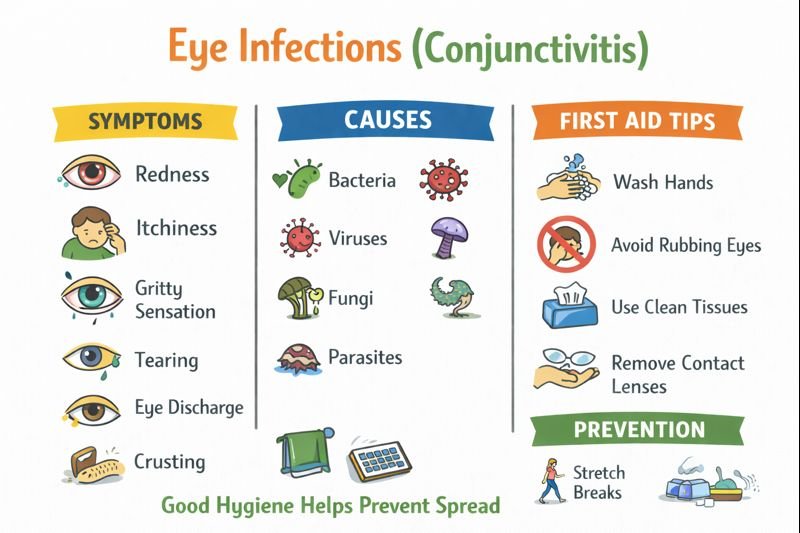 Eye infections can present with one or several of the following:
-
Redness of the white part of the eye or inner eyelids
-
Itchiness or irritation
-
A scratchy, sandy, or gritty sensation
-
Tearing or watery eyes
-
Yellow, green, or clear discharge
-
Crusting on the eyelashes after sleep
-
Sensitivity to light (photophobia)
-
Mild blurred vision
-
Eye discomfort or pain in some cases
Not all symptoms occur together, and intensity can vary.
Possible Causes and Mechanisms
Eye infections may be triggered by:
-
Bacteria — often associated with thicker yellow or green discharge
-
Viruses — commonly linked with watery eyes and mild crusting
-
Fungi — less common but sometimes associated with contact lens use or improper lens hygiene
-
Parasites — rare, but possible in certain environmental exposures
Irritation occurs when the eye’s surface tissues become inflamed. This inflammation leads to redness, tearing, and the sensation that something is inside the eye even when it is clear.
First Aid Awareness and General Management
For mild eye irritation:
-
Wash hands thoroughly and frequently.
-
Avoid touching or rubbing the eyes.
-
Use clean tissues if watering or discharge occurs.
-
Do not share towels, makeup, or eye products.
-
Remove contact lenses until the eye feels comfortable again.
If discomfort is significant, vision changes occur, or symptoms persist or worsen, professional assessment is generally recommended. First aid awareness focuses on hygiene and comfort rather than treatment decisions.
Prevention and Workplace Considerations
-
Promote regular handwashing in shared spaces.
-
Disinfect commonly touched surfaces such as keyboards and door handles.
-
Avoid sharing personal items like towels or cosmetics.
-
Follow proper contact lens hygiene.
-
Encourage employees to rest their eyes if irritation appears.
-
Include eye hygiene awareness in workplace health or first aid training.
Frequently Asked Questions
Can eye infections spread easily?
Yes. Many forms of conjunctivitis can spread through hand contact or shared items, which is why hand hygiene is important.
Is itchiness always an infection?
Not always. Allergies can also cause itchy eyes, often affecting both eyes equally. Infections may start in one eye first.
Why does discharge form overnight?
During sleep, natural eye secretions can accumulate along the eyelashes, leading to crusting in the morning.
Are contact lens users at higher risk?
Improper cleaning or extended wear can increase irritation risk, so careful lens hygiene is important.
What role does workplace awareness play?
Clean shared surfaces and respectful communication help reduce spread and support comfort for everyone.
Educational Note
This information is for general public education and first aid awareness. Learning simple hygiene and comfort measures can help individuals respond calmly to everyday eye irritation.
About The Author

Mark Kascha
Certified First Aid Instructor Trainer with 30+ years of real-world experience, including lifeguarding, workplace emergency response, and first aid program development across Canada. Has worked with WorkSafeBC, WSIB, and Manitoba Health.
👉 [View full credentials]🔗 View LinkedIn Profile
Last reviewed: March 2026