 Understanding Head Bumps & Head Injuries
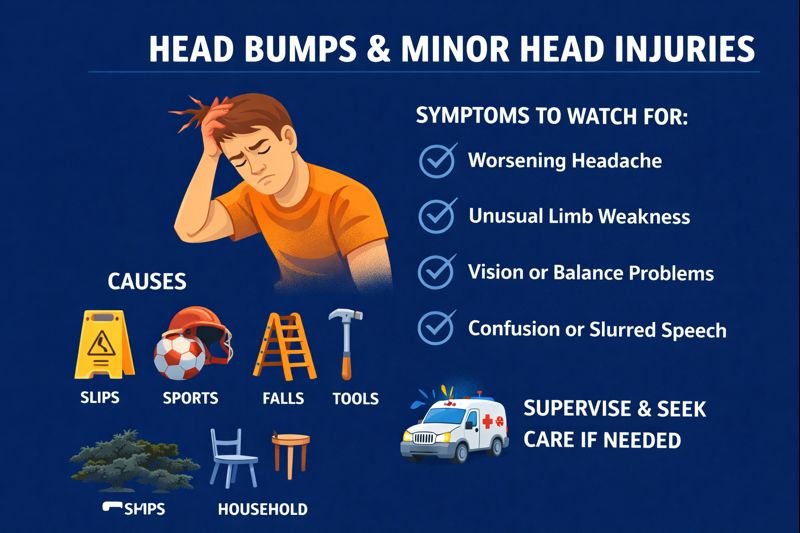
A bump to the head can happen during sports, play, work, recreation, or daily activities. Most minor bumps improve quickly, but some injuries can be more serious. First aid awareness helps people recognize when to monitor someone, when to seek medical assessment, and how to keep the person calm and safe.
Why This Matters for First Aid & Workplaces
Canadian workplaces — from construction and manufacturing to schools, hospitality, and recreation — encounter occasional head impacts. Awareness supports safer responses and helps supervisors decide whether a worker should pause activities, be monitored, or get checked by a healthcare professional.
Scenario: Mild & Realistic
During an after-school soccer game, a teenager collided gently with another player and bumped their head. Teammates sat them on the sidelines, kept them calm, and checked in to make sure they felt okay. A coach contacted a guardian and recommended follow-up with a healthcare provider before resuming sports.
Common Causes
-
Slips, trips, and falls
-
Sports and recreation
-
Work involving ladders or tools
-
Household accidents
-
Bumping into furniture or equipment
Symptoms & Signs to Watch For
Head injury symptoms vary widely. Signs that may appear after a bump include:
-
Headache
-
Sensitivity to light or noise
-
Mild confusion or “foggy” feeling
-
Nausea
-
Tiredness
More concerning signs that warrant prompt healthcare assessment may include:
-
Vomiting
-
Trouble staying alert
-
Worsening headache
-
Problems with vision or balance
-
Unusual limb weakness
-
Slurred speech
-
Seizure-like activity
First Aid Awareness & Monitoring
Public first aid education encourages:
-
Keeping the person calm and resting
-
Observing for changes in behaviour or alertness
-
Avoiding unnecessary movement if a neck or spine injury is suspected
-
Seeking medical attention when symptoms worsen or seem unusual
-
Not assuming someone is “fine” just because they feel okay immediately afterward
Healthcare professionals determine if imaging, rest, or follow-up is needed.
What Not to Rely On
Older advice such as “wake them every hour” or forcing the person to stay awake is not recommended as a universal rule today. Healthcare professionals provide guidance based on the situation, age, and symptoms.
Eye & Limb Movement Considerations
Some head injuries can temporarily affect coordination or movement. Difficulty moving limbs, extreme dizziness, eye rolling, or seizure-like signs should be treated as medical emergencies. Professional assessment can evaluate neurological function safely.
Bleeding from Ears, Nose, or Mouth
Bleeding or clear fluid from the ears or nose after a head injury can indicate a more serious condition and requires prompt medical care.
Prevention & Workplace Considerations
-
Wear appropriate protective equipment for sports or tasks
-
Keep walkways and work areas free of tripping hazards
-
Use helmets where required (cycling, construction, snow sports)
-
Document workplace injuries for safety follow-up
-
Encourage staff and students to report head bumps early
FAQ — Head Bumps & Head Injuries
1. Do all head bumps need medical care?
Not always. Many are mild, but concerning or worsening symptoms should be assessed by a healthcare professional.
2. Can someone seem fine at first and worsen later?
Yes. Monitoring after a head impact helps catch delayed symptoms.
3. Should people be kept awake after a bump?
There is no one-size rule. Healthcare providers consider symptoms, age, and injury type when giving advice.
4. Are children more sensitive to head injuries?
Children and teens may need closer monitoring due to developing brains and sports exposures.
5. Can head injuries happen in low-risk workplaces?
Yes — slips, falls, or impacts can occur in offices, schools, retail settings, or during recreational breaks.
Educational Note
This article supports public learning about safely recognizing possible head injuries and when medical assessment may be beneficial. Healthcare professionals provide individualized guidance for diagnosis and recovery decisions.
About The Author

Mark Kascha
Certified First Aid Instructor Trainer with 30+ years of real-world experience, including lifeguarding, workplace emergency response, and first aid program development across Canada. Has worked with WorkSafeBC, WSIB, and Manitoba Health.
👉 [View full credentials]🔗 View LinkedIn Profile
Last reviewed: March 2026