Hypoglycemia refers to blood glucose levels dropping too low for the body to function normally. It is commonly associated with diabetes, but may also occur during illness, exertion, or after extended periods without eating.
Workplace & Canadian Relevance
Low blood sugar emergencies can occur in classrooms, workplaces, fitness settings, and public environments. In Canada, many individuals manage diabetes with medications and insulin, and awareness of hypoglycemia symptoms helps coworkers, coaches, teachers, and first aid responders support early recognition and response.
Scenario (with a trained first aid rescuer)
During a morning team meeting, an employee with diabetes began shaking and appeared confused. A trained first aid rescuer recognized possible hypoglycemia, provided a quick source of sugar from the workplace first aid kit, and asked colleagues to stay with the person while monitoring alertness. Symptoms improved while waiting for additional support.
Symptoms of Hypoglycemia
S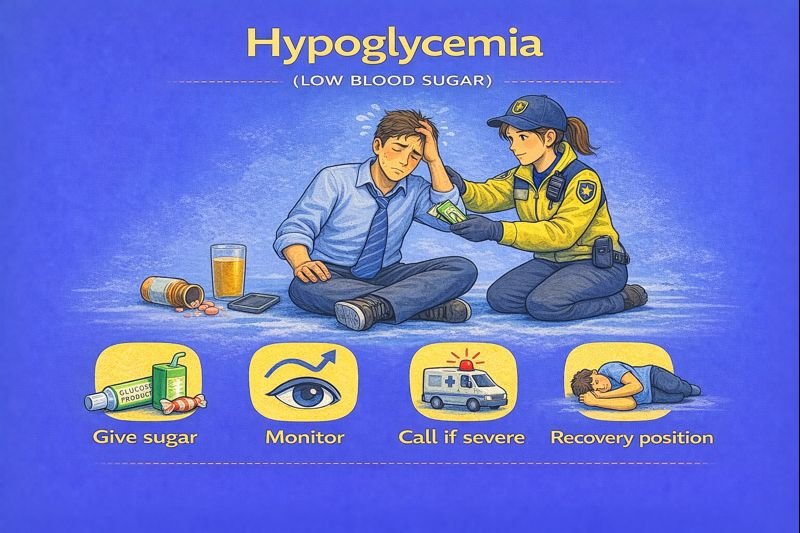 ymptoms may vary from person to person but often follow a recognizable pattern.
Early symptoms:
-
Hunger
-
Shakiness or tremors
-
Mild nausea
-
Sweating
-
Irritability or difficulty concentrating
Progressive symptoms:
-
Dizziness or confusion
-
Weakness
-
Behaviour changes or reduced alertness
-
Loss of coordination
-
Seizures*
-
Decreased responsiveness or unconsciousness*
*These are considered medical emergencies requiring urgent care.
Common Causes
Hypoglycemia can occur when:
-
A person with diabetes takes medication or insulin without enough food
-
Eating is delayed or skipped after activity
-
Exertion increases energy use during sports or work
-
Illness affects appetite or metabolism
-
Alcohol is consumed without food
Hypoglycemia may also occur in individuals without diabetes due to certain medical conditions, prolonged exertion, or other metabolic factors.
First Aid Considerations
If you suspect hypoglycemia and the individual is awake and able to follow instructions:
-
Offer a quick source of sugar (e.g., sweet beverage, candy, glucose product if available)
-
Encourage resting until symptoms improve
-
Monitor for worsening alertness
If the individual becomes unconscious, seizing, or cannot follow instructions:
-
Place in the recovery position
-
Call for emergency assistance
-
Monitor breathing and responsiveness until help arrives
Avoid placing food or drink in the mouth of an unconscious person.
When to Seek Emergency Medical Care
Call for emergency assistance if:
-
The person becomes unconscious or unresponsive
-
Symptoms do not improve with sugar intake
-
Seizures occur
-
The person’s level of alertness continues to decline
-
You are unsure of the cause of symptoms
Prevention & Awareness
-
Regular meals and snacks as per personal health plans
-
Awareness of medication timing
-
Carrying carbohydrate sources when physically active
-
Encouraging workplaces and schools to include glucose products in first aid kits
FAQ
Q: Can hypoglycemia happen without diabetes?
Yes, although less common. It may occur with exertion, illness, or metabolic conditions.
Q: How fast can symptoms develop?
Symptoms may appear gradually or suddenly, depending on the person and situation.
Q: Are seizures common?
Seizures are not typical for mild hypoglycemia, but can occur in severe cases, which require emergency care.
Q: Can hypoglycemia happen during exercise?
Yes. Physical activity increases energy use and may lower blood sugar faster.
Q: Does caffeine or water help?
They do not raise blood sugar. Hypoglycemia requires carbohydrates for improvement.
Educational Note
This information supports general first aid learning and public awareness. It is not a substitute for medical assessment, diagnosis, or treatment.
About The Author

Mark Kascha
Certified First Aid Instructor Trainer with 30+ years of real-world experience, including lifeguarding, workplace emergency response, and first aid program development across Canada. Has worked with WorkSafeBC, WSIB, and Manitoba Health.
👉 [View full credentials]🔗 View LinkedIn Profile
Last reviewed: March 2026