 Sunburn occurs when skin is exposed to ultraviolet (UV) radiation from the sun for longer than it can tolerate. Sunburn can be uncomfortable and may increase sensitivity, swelling, or blistering depending on the severity. Public awareness and prevention help reduce skin damage and discomfort.
First Aid & Workplace Relevance (Canada)
Sunburn is common during leisure activities like swimming, gardening, festivals, outdoor sports, and camping. It can also occur in work environments such as landscaping, construction, roadwork, parks, agriculture, and tourism. Sun protection and hydration are routine safety considerations for these settings.
Scenario (with trained first aid rescuer)
During an outdoor soccer game, a teen with fair skin noticed their shoulders turning bright red and painful in the sun. A trained first aid rescuer encouraged them to take a break in the shade, cool their skin with water at the field station, and reminded them to reapply sunscreen and wear protective clothing for the rest of the day.
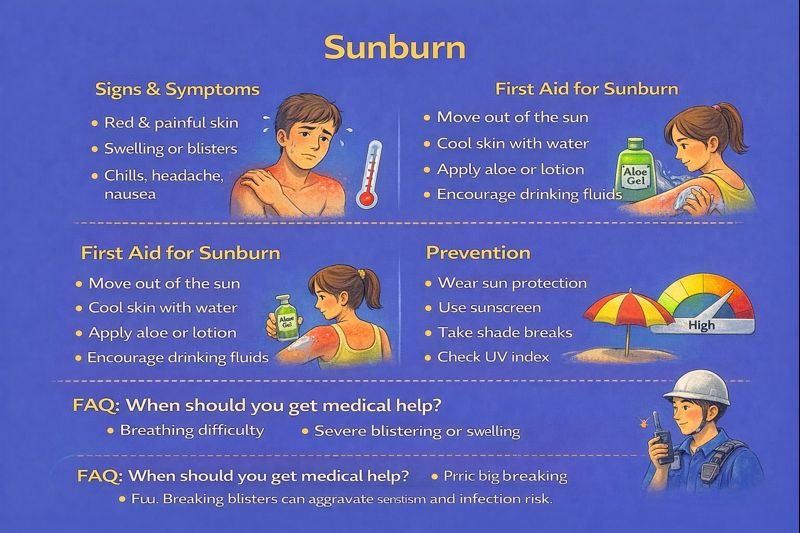
Signs & Symptoms of Sunburn
Sunburn appearance varies by skin type, UV intensity, and duration of exposure. Common symptoms include:
-
Red, warm, tender skin
-
Swelling in affected areas
-
Itching or peeling after several days
More pronounced reactions may include:
-
Blistering
-
Chills, headache, nausea, or fatigue
-
Flu-like sensations after prolonged exposure
These symptoms can indicate deeper skin irritation and dehydration risk.
Causes & Mechanism
Sunburn is caused by exposure to ultraviolet (UV) radiation, which damages the outer skin layers. The skin plays a role in:
-
Temperature regulation
-
Barrier protection against infection
-
Fluid balance
When burned, these roles may temporarily be affected.
First Aid Education for Sunburn
Public first aid guidance commonly includes:
-
Remove the individual from direct sun
-
Cool the skin with a cool bath or shower
-
Use soothing agents such as aloe-based gels to calm irritation
-
Avoid butter, oil, or heavy ointments that trap heat
-
Avoid breaking blisters
-
Encourage hydration to support comfort
If blistering is extensive or covers large areas (e.g., an entire arm), medical assessment may be helpful.
Prevention & Outdoor Safety
Prevention plays the biggest role in sunburn management. Common strategies include:
-
Broad-brimmed hats & sun-protective clothing
-
Shade breaks during peak sunlight hours
-
Sunscreen used as directed
-
Awareness of UV index forecasts
When to Seek Medical Attention
Medical care may be appropriate if there is:
-
Difficulty breathing (due to swelling near face or neck)
-
Extensive blistering covering large surface areas
-
Numbness or bluish discoloration in extremities
-
Persistent vomiting, dizziness, confusion, or fever
FAQ
Q1: Why does sunburn peel?
Peeling removes damaged or dead skin cells as part of the natural healing process.
Q2: Can darker skin tones get sunburned?
Yes. While melanin provides some natural protection, UV rays can affect all skin types.
Q3: Do clouds block UV exposure?
UV rays can penetrate clouds, so sunburn can still occur on overcast days.
Q4: Does saltwater or chlorine make sunburn worse?
Skin that is already irritated may feel more sensitive in saltwater or pools.
Educational Note
This content supports public first aid awareness and sun safety education. Individuals with significant or persistent symptoms may seek assessment from a healthcare professional.
About The Author

Mark Kascha
Certified First Aid Instructor Trainer with 30+ years of real-world experience, including lifeguarding, workplace emergency response, and first aid program development across Canada. Has worked with WorkSafeBC, WSIB, and Manitoba Health.
👉 [View full credentials]🔗 View LinkedIn Profile
Last reviewed: March 2026