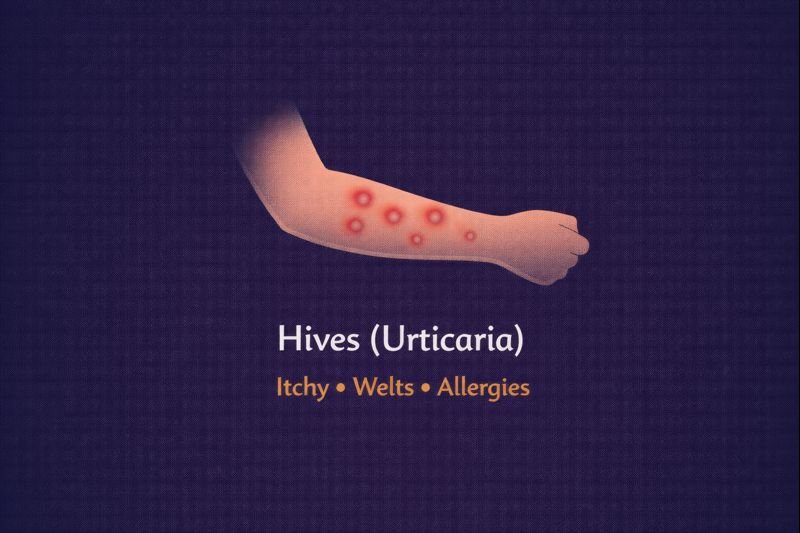
Hives, also called urticaria, are raised, itchy welts on the skin that may appear red and then fade to a lighter tone in the centre when pressed. Hives tend to appear suddenly and may resolve within minutes or hours. Many people experience hives at some point in their lives.
While hives are often mild and short-lived, they can occasionally occur alongside deeper tissue swelling known as angioedema. In rare cases, hives may accompany severe allergic responses.
Relevance in Schools & Canadian Workplaces
 Hives can appear during activities involving food sharing, outdoor exposure, temperature changes, or physical exertion. Awareness can be useful in:
-
recreation settings
-
schools and camps
-
outdoor occupations
-
sports environments
Scenario (Mild & Realistic)
After a workplace potluck, a staff member noticed small, itchy welts on their forearms. The hives faded within an hour and did not recur, but the employee later discussed symptoms with a healthcare provider to explore possible triggers.
What Can Trigger Hives?
Hives can have many triggers, and sometimes no clear trigger is found. Possible contributors include:
-
foods or food ingredients
-
environmental allergens (pollen, animals, etc.)
-
temperature changes (cold, heat, exertion)
-
pressure on skin (tight clothing or friction)
-
infections or immune responses
-
stress or fatigue
Some individuals have chronic or recurrent patterns, while others experience isolated episodes.
Symptom Features
Hives commonly present as:
-
raised welts
-
red or pink skin patches
-
itching or tingling
-
welts that change shape or size
-
spots that come and go in different areas of the body
Angioedema may involve swelling of the eyelids, lips, or other soft tissues.
Severe or Systemic Symptoms
Rarely, hives may occur during more serious allergic responses that affect breathing, circulation, or multiple body systems. Severe reactions require urgent medical attention and should be taken seriously.
Healthcare professionals guide individuals who require long-term planning for severe allergies, including emergency action plans.
Assessment & Management (Educational Awareness Only)
Healthcare providers may ask about:
-
timing and pattern of hives
-
recent foods or exposures
-
infections, physical exertion, or temperature changes
-
history of asthma or allergies
-
any swelling beyond the skin
For recurrent cases, clinicians may explore medication options, allergy testing, or specialist referral.
Prevention & Lifestyle Considerations
Depending on triggers, individuals may learn to:
-
identify foods or exposures that correlate with symptoms
-
monitor environmental factors (e.g., cold, exertion, or heat)
-
wear non-restrictive clothing
-
reduce unnecessary skin irritation
These strategies vary widely between individuals and are guided by professional assessment.
FAQ
1. Are hives always caused by allergies?
No. Hives can be triggered by physical factors, infections, or stress. Sometimes, no cause is identified.
2. Can hives last a long time?
Most episodes are brief. Some individuals develop chronic patterns lasting weeks or longer and require medical evaluation.
3. Do hives spread?
Welts may appear in one area and fade as new welts appear elsewhere.
4. When should hives be medically assessed?
Persistent, recurrent, or severe symptoms, or symptoms involving breathing or swelling of deeper tissues should be assessed by a healthcare professional.
5. Can adults and children both develop hives?
Yes. Hives can occur at any age.
Educational Note
This information is intended for public health and first aid awareness. Healthcare professionals determine appropriate evaluation and management of allergic skin conditions.
About The Author

Mark Kascha
Certified First Aid Instructor Trainer with 30+ years of real-world experience, including lifeguarding, workplace emergency response, and first aid program development across Canada. Has worked with WorkSafeBC, WSIB, and Manitoba Health.
👉 [View full credentials]🔗 View LinkedIn Profile
Last reviewed: March 2026