 A broken leg (leg fracture) is a common injury resulting from falls, sports, recreational activities, or motor vehicle incidents. While often painful and mobility-limiting, most broken legs are not life-threatening. Early recognition of fractures and safe first aid awareness can help prevent further harm.
Relevance in Canadian First Aid & Workplaces
Leg fractures are seen in winter slips, construction and industrial settings, sports leagues, and among older adults during falls. Awareness of safe handling and fall prevention helps reduce secondary injuries and supports timely assessment.
Scenario (Mild & Realistic)
While helping with yard work, Chris slipped off a small step and landed awkwardly on one leg. The leg was painful and difficult to stand on, so friends helped Chris sit down in a safe place, supported the leg using towels, and kept movement minimal while arranging transportation to a health clinic for evaluation.
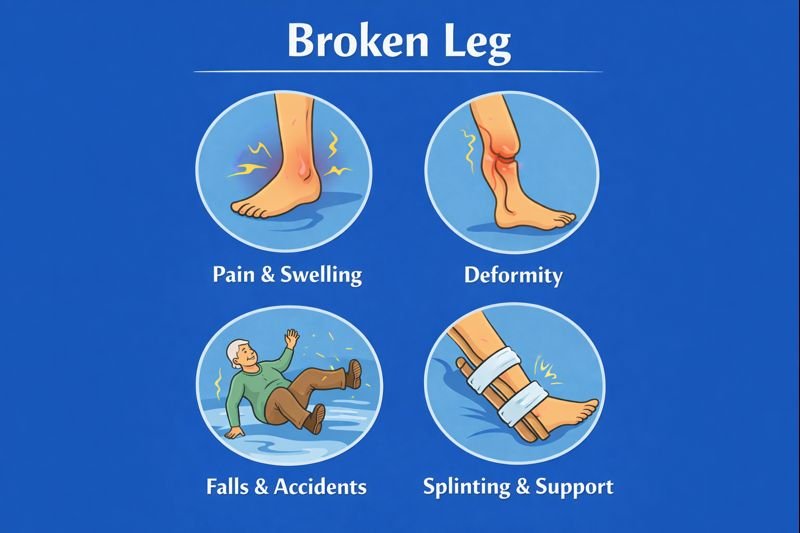
Signs & Symptoms of a Broken Leg
Symptoms vary with severity. They can include:
-
Pain that increases with movement
-
Swelling or bruising
-
Difficulty putting weight on the leg
-
Visible deformity or misalignment
-
Tingling or numbness
-
Limited mobility
-
Rarely, skin injury with visible bone
Not all fractures cause obvious deformity; inability to bear weight may be an early sign.
Causes & Mechanisms
Broken legs commonly result from:
-
Slips, trips, and falls (especially in winter)
-
Contact or collision sports (e.g., soccer, hockey, football)
-
Cyclist or motor vehicle incidents
-
Workplace impacts, dropped loads, or uneven surfaces
-
Falls among older adults due to balance or bone changes
First Aid & Immediate Care Awareness
Public first aid priorities focus on comfort, safety, and minimizing movement:
-
Help the person sit or remain in a safe position
-
Support the injured leg without straightening or pulling
-
Apply a cold pack wrapped in cloth to support comfort and reduce swelling
-
Avoid encouraging the person to walk on the injury
-
Arrange medical assessment if a fracture is suspected
If splinting materials are available, soft supports such as rolled towels, pillows, or clothing can help limit movement until medical assessment is obtained. Supports should be gentle and not wrapped tightly.
Workplace & Fall Prevention Considerations
Workplaces can help reduce fracture risk through:
-
Slip and trip hazard control
-
Safe ladder and equipment practices
-
Winter maintenance plans
-
Personal protective gear for specific tasks
-
Encouraging reporting of near-miss incidents
-
Older adult mobility and balance supports in community programs
FAQ
Does a broken leg always prevent walking?
Not always. Some fractures still allow limited weight bearing, which can make recognition tricky.
How can I tell if it’s a break or a sprain?
Both cause pain and swelling. Deformity or inability to bear weight may suggest a fracture, but imaging is required for confirmation.
Should the leg be straightened if it looks crooked?
Straightening attempts can worsen injury and are not part of lay public first aid.
Why are older adults at higher risk of leg fractures?
Bone density changes, balance challenges, and slips—especially in winter—can increase fall risk.
Educational Note
This article supports public and workplace education about musculoskeletal injuries and basic first aid awareness. Severity and recovery vary, and trained health professionals can assess concerns that affect mobility, safety, or daily activities.
About The Author

Mark Kascha
Certified First Aid Instructor Trainer with 30+ years of real-world experience, including lifeguarding, workplace emergency response, and first aid program development across Canada. Has worked with WorkSafeBC, WSIB, and Manitoba Health.
👉 [View full credentials]🔗 View LinkedIn Profile
Last reviewed: March 2026