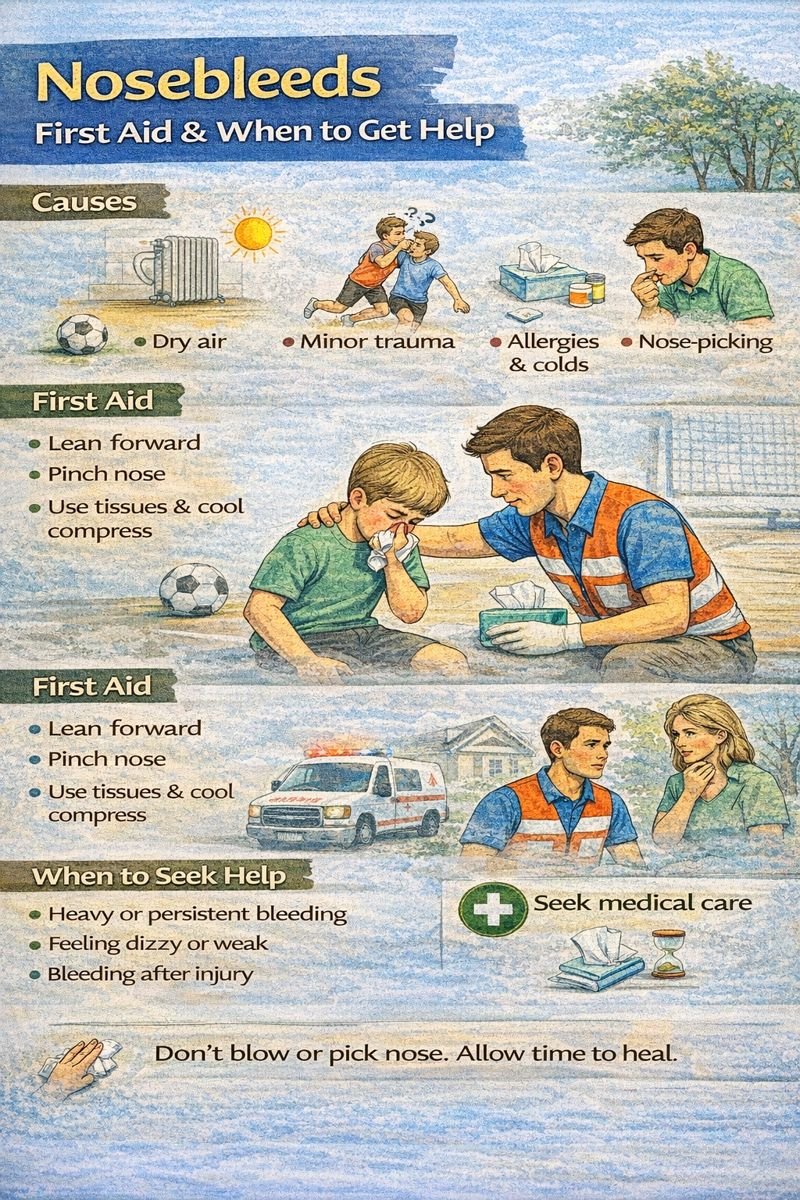
 A nosebleed (epistaxis) can look dramatic, especially in children, but most are minor and stop on their own. Dry air, allergies, nose-picking, colds, and minor bumps are common causes. In adults, frequent or unexplained nosebleeds may be tied to underlying medical conditions, so follow-up with a healthcare professional can be helpful.
First Aid & Workplace Relevance
Nosebleeds are common in schools, sports programs, childcare settings, and workplaces. Awareness ensures bystanders respond calmly, support the person, and recognize when medical care may be needed.
Scenario (with trained first aid rescuer)
At an indoor sports practice, a child bumped another player and began bleeding from the nose. A trained first aid rescuer encouraged the child to lean slightly forward, provided tissues, and reassured them while monitoring for dizziness. The bleeding stopped within several minutes, and the child returned to play after being checked by a caregiver.
What Causes Nosebleeds?
Common triggers:
-
Dry indoor air or heated environments
-
Allergies, colds, or sinus irritation
-
Nose-picking or rubbing
-
Minor trauma (e.g., sports bump)
Less common or more serious causes may include:
-
Bleeding disorders
-
Certain medications
-
High blood pressure
-
Head injury (especially when accompanied by other concerning symptoms)
First Aid Awareness (Non-Prescriptive)
Public first aid education generally recommends:
-
Keeping the person calm and seated
-
Leaning forward (to avoid swallowing blood)
-
Applying gentle pressure to the soft part of the nose
-
Using cool compresses if desired
-
Avoiding nose-blowing until bleeding has fully stopped
Medical attention may be helpful if bleeding is heavy, does not stop, or happens frequently.
When to Seek Medical Care or Emergency Help
Consider prompt medical assessment if:
-
Bleeding continues despite supportive measures
-
Nosebleeds happen often or without clear cause
-
The person feels lightheaded, weak, or faint
-
The nosebleed follows a head injury or significant trauma
-
Nosebleeds occur in adults with new or unexplained symptoms
Emergency care is recommended if there are signs of shock, altered level of consciousness, major trauma, or significant difficulty breathing.
Prevention & Everyday Tips
To reduce irritation:
-
Use humidifiers during dry winter months
-
Encourage gentle nose care in children
-
Consult healthcare providers about recurring episodes
FAQ
Are children more prone to nosebleeds?
Yes. Dryness, allergies, and minor bumps make nosebleeds common in school-aged children.
Is leaning back recommended?
No. Leaning back can lead to swallowing blood, which may upset the stomach or cause gagging.
Can nosebleeds indicate a serious problem?
Most are minor, but recurrent, unexplained, or adult-onset nosebleeds may warrant medical assessment.
Can dry weather cause nosebleeds?
Yes. Heated indoor environments can dry nasal membranes and make them more fragile.
Should someone blow their nose afterward?
Blowing the nose too soon can dislodge clots and restart bleeding. Waiting is often recommended.
Educational Note
This content supports public and workplace awareness of nosebleeds, first aid considerations, and when to seek medical care. It encourages calm, informed responses without replacing professional assessment or training.
About The Author

Mark Kascha
Certified First Aid Instructor Trainer with 30+ years of real-world experience, including lifeguarding, workplace emergency response, and first aid program development across Canada. Has worked with WorkSafeBC, WSIB, and Manitoba Health.
👉 [View full credentials]🔗 View LinkedIn Profile
Last reviewed: March 2026