
What is chafing?
Chafing is a common skin irritation caused by repeated friction combined with moisture, such as sweat. It often develops where skin rubs against skin or clothing during movement. While chafing is sometimes associated with body size, it can affect people of any body type, including those who are very active or have slimmer builds.
Chafing is most often seen during walking, running, physical work, or prolonged activity—especially in warm or humid conditions.
Why chafing matters in Canadian workplaces and daily life
 Chafing can occur during:
-
Physically demanding jobs
-
Outdoor work in warm weather
-
Long shifts involving repetitive movement
-
Recreational activities like walking, hiking, or running
Although usually mild, untreated chafing can become painful and interfere with comfort, mobility, and productivity. First aid awareness helps prevent irritation from worsening and supports quicker recovery.
Scenario: Managing early skin irritation
During a long summer shift involving repeated lifting and walking, a worker noticed skin irritation on their inner thighs by mid-day. A supervisor familiar with first aid encouraged them to take a short break, dry the area, and adjust clothing. Addressing the irritation early helped prevent worsening discomfort by the end of the shift.
Common signs and symptoms
Chafing may cause:
-
Red or inflamed skin
-
Burning or stinging sensations
-
Tenderness or soreness
-
Raw or broken skin in more severe cases
-
Discomfort that worsens with movement
Symptoms usually develop gradually and can worsen if friction and moisture continue.
Causes and contributing factors
Chafing develops when friction and moisture occur together.
Common contributors include:
-
Repetitive movement (walking, running, lifting)
-
Excess sweating
-
Damp or rough clothing
-
Prolonged physical activity
-
Hot or humid environments
Chafing is not a sign of poor fitness or health and can happen to anyone under the right conditions.
Prevention and workplace considerations
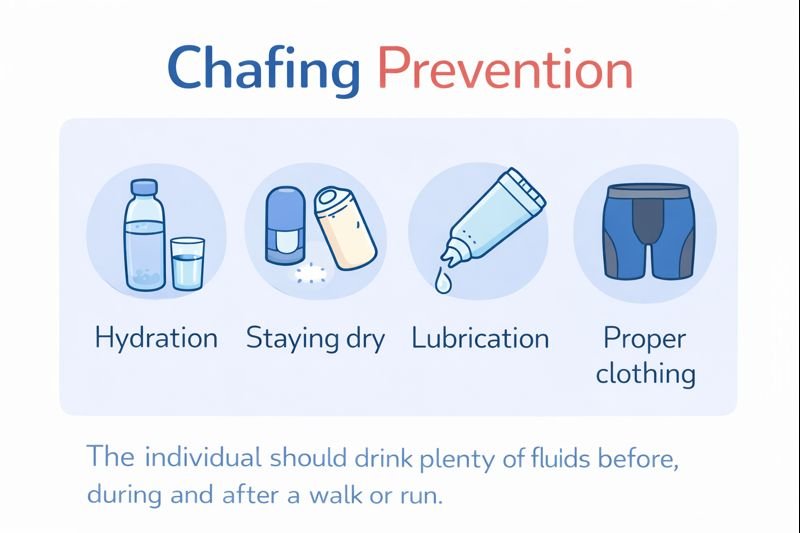
Preventing chafing focuses on reducing friction and managing moisture.
Hydration
Staying well hydrated helps the body regulate sweat more effectively. Adequate fluid intake before, during, and after physical activity supports normal perspiration and may reduce skin irritation during prolonged movement.
Staying dry
Keeping the skin as dry as possible can reduce friction. Some people use powders designed to absorb moisture, while others may find these products increase stickiness. If dryness alone is not effective, other protective strategies may be helpful.
Lubrication
Skin-safe lubricants are commonly used to reduce friction by allowing surfaces to glide rather than rub. These are often applied before activity in areas prone to chafing, such as thighs, underarms, or where clothing seams contact the skin.
Choosing appropriate clothing
Clothing plays a major role in chafing prevention:
-
Smooth, snug-fitting garments reduce fabric movement
-
Moisture-wicking materials help manage sweat
-
Seams and loose fabric can increase friction
For some individuals, targeted protection (such as soft coverings over sensitive areas) may reduce irritation during prolonged activity.
First aid awareness and general care
If chafing develops:
-
Gently clean the area with mild soap and water
-
Pat the skin dry rather than rubbing
-
Protect irritated skin from further friction
-
Allow the area to breathe while healing
Chafed skin should be monitored, especially if the skin is broken, as continued friction can delay healing.
Frequently Asked Questions
Is chafing only related to body weight?
No. Chafing is caused by friction and moisture and can affect people of all body types.
Can chafing happen during light activity?
Yes. Even moderate activity can cause chafing if movement is repetitive and moisture is present.
Why does sweat make chafing worse?
Moisture softens the skin and increases friction, making irritation more likely.
Are certain areas more prone to chafing?
Yes. Common areas include inner thighs, underarms, groin, chest, and areas where clothing seams rub.
Should chafed skin be ignored?
No. Early care helps prevent worsening irritation and supports faster healing.
Educational note
This article is intended for general first aid and workplace education. Skin irritation can vary in severity, and persistent or worsening symptoms should be assessed by a qualified healthcare professional.
About The Author

Mark Kascha
Certified First Aid Instructor Trainer with 30+ years of real-world experience, including lifeguarding, workplace emergency response, and first aid program development across Canada. Has worked with WorkSafeBC, WSIB, and Manitoba Health.
👉 [View full credentials]🔗 View LinkedIn Profile
Last reviewed: March 2026